
Crocheting is a versatile and creative craft that allows for the repurposing of materials in unique and functional ways. This DIY project tackles the issue of waste by transforming shredded plastic pool floats into a waterproof patio footstool. By using unconventional materials, this project not only helps reduce waste but also adds a quirky and personalized touch to your outdoor decor. The resulting footstool is durable, weather-resistant, and perfect for adding extra seating or a place to rest your feet on the patio.
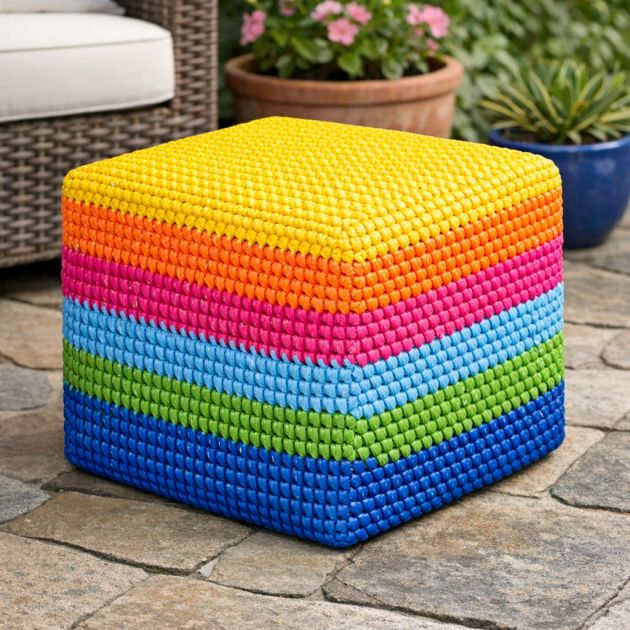
This waterproof patio footstool can be styled as a vibrant addition to an outdoor seating area. Consider using bright, summery colors like turquoise, coral, and lime green to complement the recycled pool float material. The footstool can act as a pop of color against neutral patio furniture. Its texture will be slightly rough due to the plastic, providing an interesting contrast to softer textiles like cushions or throws. Place it alongside potted plants for a cohesive outdoor oasis theme.
Waterproof Patio Footstool from Recycled Pool Floats
Materials
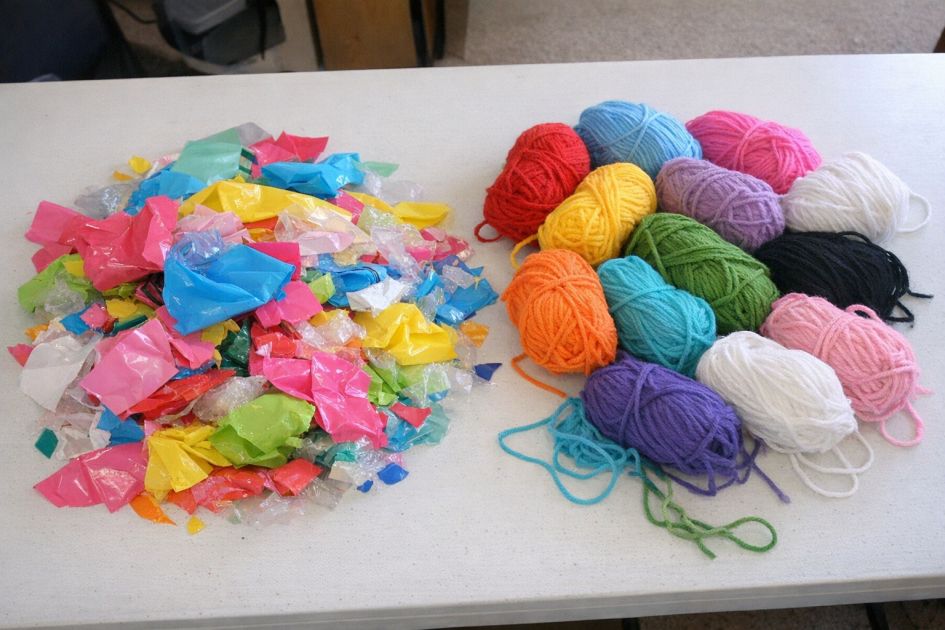
Shredded plastic pool floats (enough to create a 40x40x40 cm cube)
4 mm crochet hook
Sturdy yarn or string made from recycled plastic (approximately 500 meters)
Scissors
Tapestry needle
Directions
1. Prepare the shredded plastic by melting down the pieces and forming them into a thick, pliable string. This will be used as your base material.
2. With your 4 mm crochet hook, create a slip knot and chain 40 stitches to form one side of the footstool.
3. Work a single crochet (sc) into the second chain from the hook and in each chain across. You should have 39 stitches at the end of the row.
4. Turn your work and chain 1. Work a single crochet into each stitch across for a total of 39 stitches. Repeat this step until your piece measures 40 cm in height.
5. Repeat steps 2-4 to create five more identical panels.
6. Using the tapestry needle, sew the panels together into a cube shape, leaving one side open.
7. Stuff the cube with the remaining shredded plastic to ensure it is firm and holds its shape.
8. Sew the final panel onto the cube, closing it completely.
9. Weave in any loose ends with the tapestry needle and trim any excess yarn or plastic.
Variations & Tips
For variations, consider using different color schemes by incorporating various dyed recycled plastics for a multi-colored effect. Adjust the size by increasing or decreasing the initial chain length and the number of rows worked. To add a decorative touch, you could incorporate a simple pattern like stripes or checks by alternating colors. If a softer texture is desired, consider lining the interior with fabric or using a blend of materials for the crocheted panels.