
Transform rusted steel hardware nuts into rustic oxidized yard fixtures using a simple soaking process. This DIY is perfect for adding a unique and industrial charm to your outdoor space. Utilizing common household items, you can achieve a beautifully aged look without spending a fortune. The process revitalizes old hardware, making it both a sustainable and stylish choice for garden decorations.
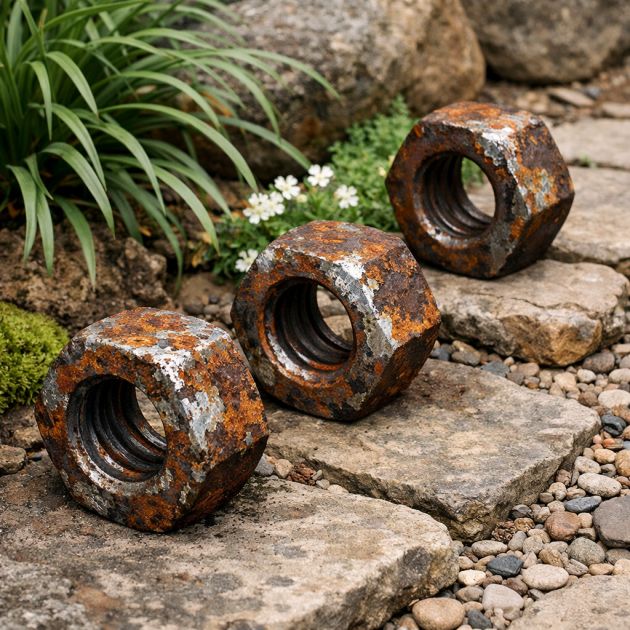
The finished rustic yard fixtures can be styled in a variety of outdoor settings. They work well in garden beds, along pathways, or even as part of a patio arrangement. Pair them with other metal elements or natural materials like wood and stone to enhance their industrial charm. The oxidized finish complements earthy tones and greenery, creating a cohesive and visually appealing outdoor environment.
Bleached Rusted Hardware Yard Fixtures
Materials
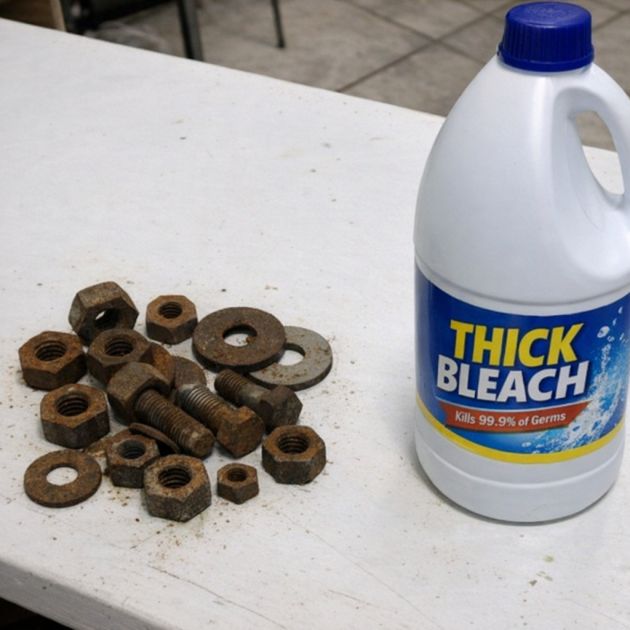
Thick bleach (1 cup)
Rusted steel hardware nuts (as many as needed for your project)
Table salt (1 tablespoon)
Directions
Place the rusted steel hardware nuts in a shallow container on a granite countertop.
Pour 1 cup of thick bleach over the nuts, ensuring they are fully submerged.
Sprinkle 1 tablespoon of table salt evenly over the nuts.
Allow the nuts to soak for 12 to 24 hours, periodically checking to see the rust transformation.
Once the desired level of oxidation is achieved, carefully remove the nuts from the bleach solution and rinse them thoroughly with water.
Let the nuts dry completely before using them in your yard fixtures.
Arrange the oxidized nuts as desired in your garden or yard, using them as decorative elements or as part of a larger fixture like a garden sculpture or pathway edging.
Variations & Tips
To add more variety to this DIY, consider experimenting with different types of metal hardware, such as bolts or washers, for varied shapes and sizes in your fixtures. You could also adjust the soaking time to achieve different levels of rust and patina, or add other household substances like vinegar for a different oxidation effect. Incorporate the finished pieces into larger garden sculptures or use them as weights for outdoor tablecloths. These variations still uphold the core method of using bleach and salt for transformation.