
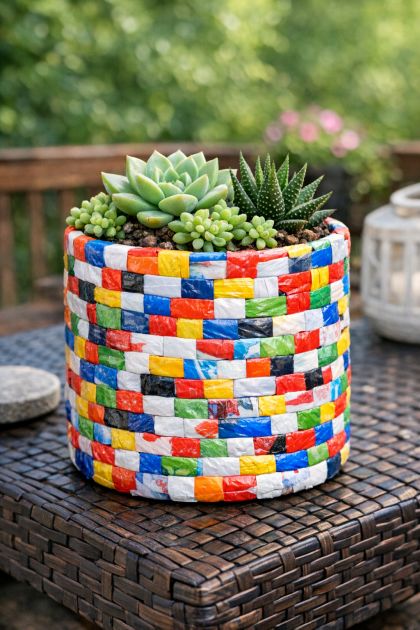
This DIY project transforms ordinary plastic grocery bags into a stunning woven patio planter. By creatively repurposing these often-discarded items, you not only reduce waste but also create a unique, stylish accessory for your outdoor space. The process of fusing and weaving the plastic adds durability and a modern aesthetic to your patio decor.
Place the woven planter on a patio table or hang it from a pergola. Pair it with neutral or earth-tone furniture to allow the vibrant, multi-hued plastic strands to stand out. Consider planting succulents or other low-maintenance greenery to complement the contemporary feel of the planter. The contrasting textures of the smooth plastic and organic plants create an eye-catching visual display.
Woven Plastic Bag Patio Planter
Materials
10-15 plastic grocery bags in various colors
Parchment paper
Iron
Scissors
Ruler
Needle and thread or thin wire
Directions
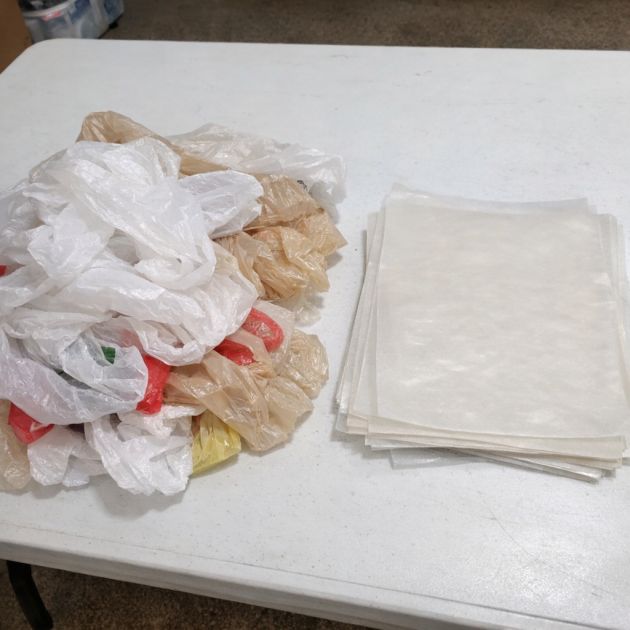
Cut the handles and bottoms off the grocery bags, then cut each bag open to create flat sheets of plastic.
Layer 3-4 sheets of plastic together, placing parchment paper above and below the stack. Use the iron on a medium setting to fuse the layers. Move quickly and evenly to avoid burning.
Once fused, cut the plastic into strips approximately 1 inch wide and 12-15 inches long.
Weave the strips together to form a rectangular mat, alternating colors for a pattern. Use a basic over-under weaving technique.
Fold the woven mat into a cylindrical shape, overlapping the edges slightly. Secure the seam with needle and thread or thin wire.
Create a circular base by cutting a fused plastic piece to fit the bottom of the cylinder. Attach it securely with thread or wire.
Trim any excess plastic for a clean look and adjust the shape as needed.
Variations & Tips
For a variation, try using only white or clear plastic bags for a minimalist, monochromatic look. Alternatively, incorporate colored plastic bags in a specific pattern or design, such as stripes or a checkerboard, to personalize your planter. You can also experiment with different shapes, such as a tapered vase or a wide bowl, by adjusting the dimensions of the woven mat before forming the cylinder.