
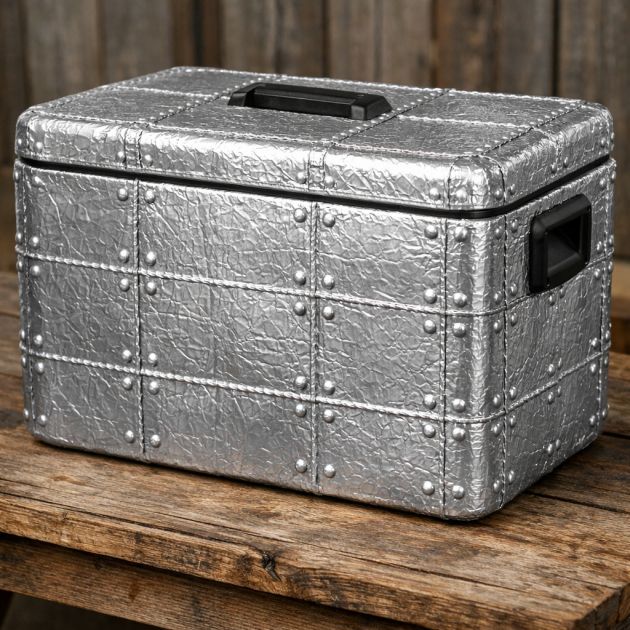
Creating a faux riveted metal cooler casing using heavy-duty aluminum foil, thick twine, and a couple of basic workshop items is a fantastic way to transform an ordinary cooler into a stylish and industrial-looking piece. This DIY project is perfect for those who love the look of metal but want a lightweight and cost-effective alternative. The final texture achieved by this method is impressive, giving the cooler a unique and rugged appearance that enhances its aesthetic appeal, making it a conversation starter at any gathering.
The finished DIY faux riveted metal cooler casing can be styled in a modern or industrial-themed home. Place it on a wooden deck or in an outdoor patio area where its metallic sheen can reflect natural light beautifully. Pair it with neutral-toned furniture or rustic wooden pieces to highlight the cooler's industrial charm. Incorporate elements like potted plants or lanterns to add warmth and contrast, creating a cozy yet stylish outdoor entertainment space.
Faux Riveted Metal Cooler Casing
Materials
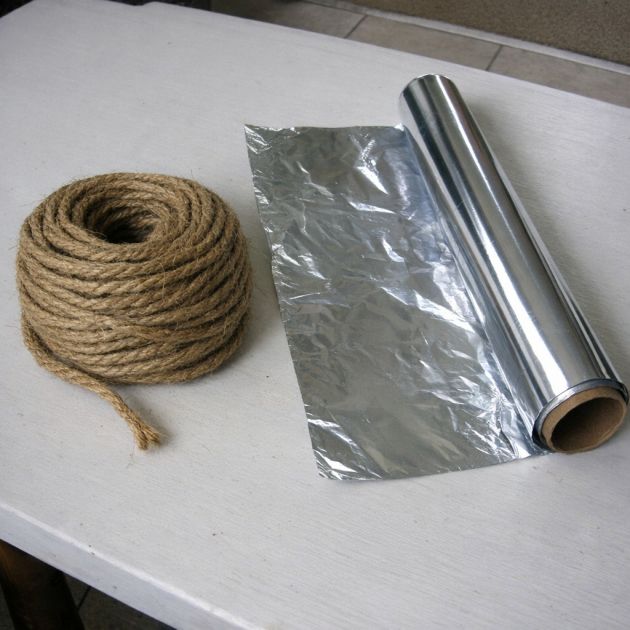
Heavy-duty aluminum foil (at least 10 feet in length)
Thick twine (4-5 strands, each 2 feet long)
Iron
Wooden workbench
Directions
Lay the thick twine on the wooden workbench, arranging it in a grid pattern to mimic the lines of rivets.
Cut a piece of heavy-duty aluminum foil large enough to cover the entire grid of twine.
Carefully place the aluminum foil over the arranged twine, ensuring it lies flat and without wrinkles.
Using the iron set to a medium heat, gently press and move it over the foil-covered twine. Apply even pressure to emboss the foil with the twine pattern beneath.
Continue ironing until the texture of the twine is clearly visible on the foil, creating the appearance of rivet lines.
Once satisfied with the embossed texture, allow the foil to cool before using it to wrap or cover the cooler casing.
Secure the foil around the cooler using additional pieces of twine or adhesive if necessary, ensuring a smooth and tight fit.
Variations & Tips
For a more personalized touch, consider using different widths of twine to create varied rivet patterns. Alternatively, experiment with colored aluminum foil to match specific interior design themes. Another variation could involve using a textured surface beneath the foil, such as a mesh or perforated board, to achieve different embossed patterns. These variations allow for customization while maintaining the core concept of a faux riveted metal appearance.