
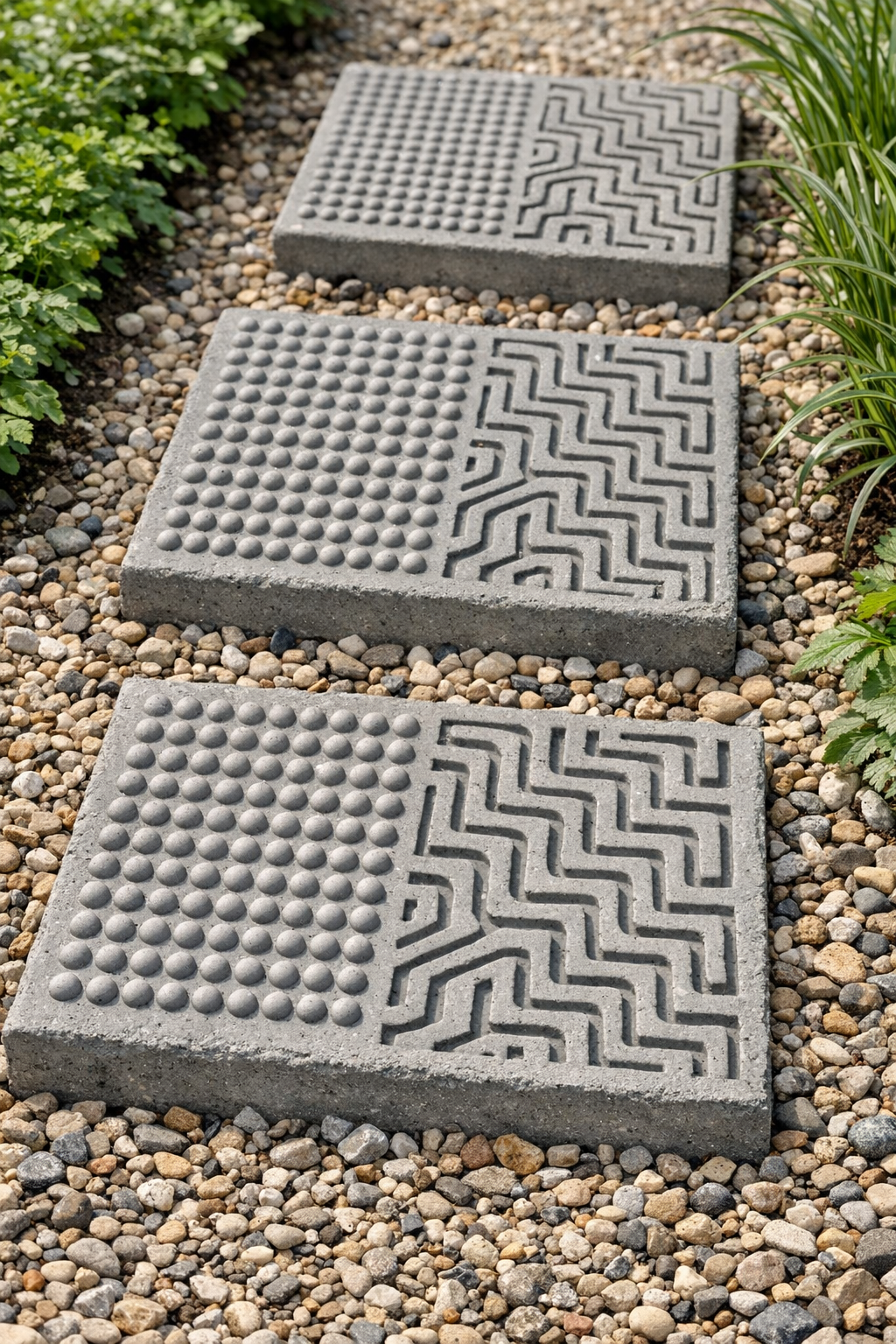
If you like outdoor projects that look far more expensive than they are, these heavy patio treads are a satisfying one to make. By pressing patterned silicone dog lick mats into thick cement, you can create sturdy stepping treads with a surprisingly polished surface texture that reads like carved stone or high-end pavers.
I’m always drawn to projects that borrow materials from one part of life and turn them into something useful somewhere else, and this is exactly that kind of build. These treads are ideal for a garden path, a muddy side yard, or the stretch between a patio door and the grill, especially if you want something substantial without buying premade stone pieces.
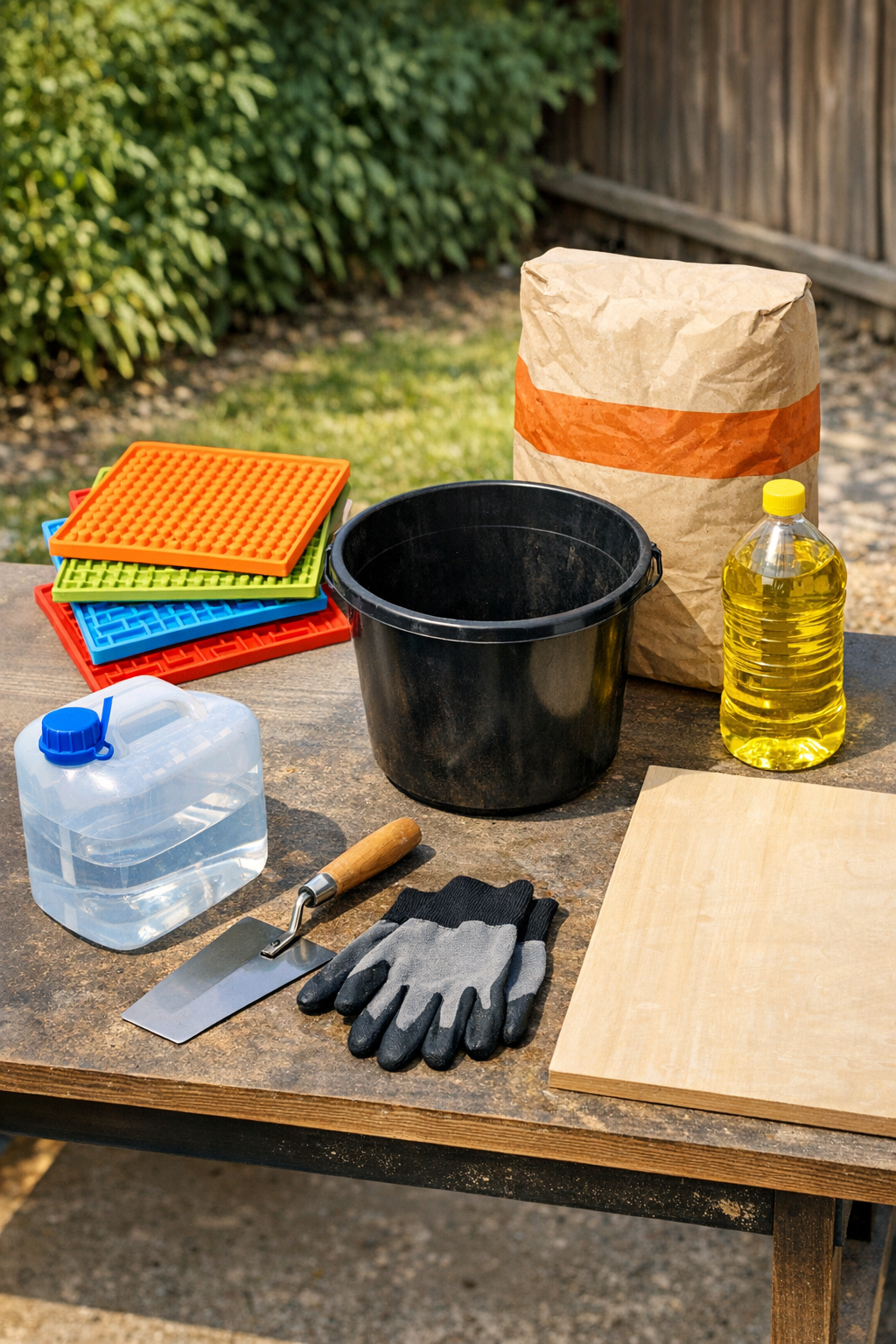
Materials
Instructions
1. Set your plywood or melamine board on a flat surface and cover it with a plastic drop cloth. Lightly oil the patterned side of each silicone dog lick mat so the cement will release cleanly after curing.
2. Place the mats pattern-side up on the protected board, leaving at least 2 inches between them. Press them flat so they do not curl at the edges.
3. In a 5-gallon bucket, mix the concrete with water a little at a time until it reaches a thick, scoopable consistency similar to stiff mashed potatoes. Avoid a runny mix, because thicker cement holds the mat pattern better.
4. Scoop cement onto the center of each mat and spread it outward with the trowel until each tread is about 1 1/2 to 2 inches thick. Keep the thickness as even as possible so the finished treads sit solidly on the ground.
5. Tap the board gently a few times or jiggle each mat slightly to settle the cement and reduce trapped air pockets. Use the straight scrap of wood or putty knife to smooth the back of each tread.
6. Let the treads sit undisturbed until the concrete firms up enough to hold its shape, usually 12 to 24 hours depending on temperature and humidity. If the weather is hot or windy, loosely cover them with plastic so they cure more evenly.
7. Peel the silicone mats away slowly from the edges to reveal the pattern. If any spot resists, flex the mat rather than pulling straight up.
8. Cure the treads for another 2 to 5 days before placing them in the yard, lightly misting once or twice a day if the air is very dry. Set them into compacted soil, sand, or gravel so each piece stays level and stable underfoot.
Variations & Tips
Change the shape: Round lick mats make softer-looking stepping stones, while square mats feel more architectural and work nicely alongside modern patios.
Add color: If you want a warmer or darker finish, mix a concrete pigment into the dry cement before adding water. I like earthy charcoal or sand tones for outdoor paths because they hide dirt well.
Use different textures: The best mats for this project have deeper grooves and raised patterns. Fine textures can look pretty, but bold patterns show up much more clearly in cement.
Make them heavier: For a more permanent tread, increase the thickness closer to 2 inches. That extra mass helps them stay put in high-traffic spots and gives them a more stone-like feel.
Prevent cracking: Don’t add too much water to the mix, and let the pieces cure slowly out of direct harsh sun. In my kitchen and garden projects alike, patience nearly always gives the better finished texture.
Set them properly: Even beautiful treads can wobble if the base is uneven. I like to scrape out a shallow bed of soil and add a little sand or fine gravel underneath each one before pressing it into place.