
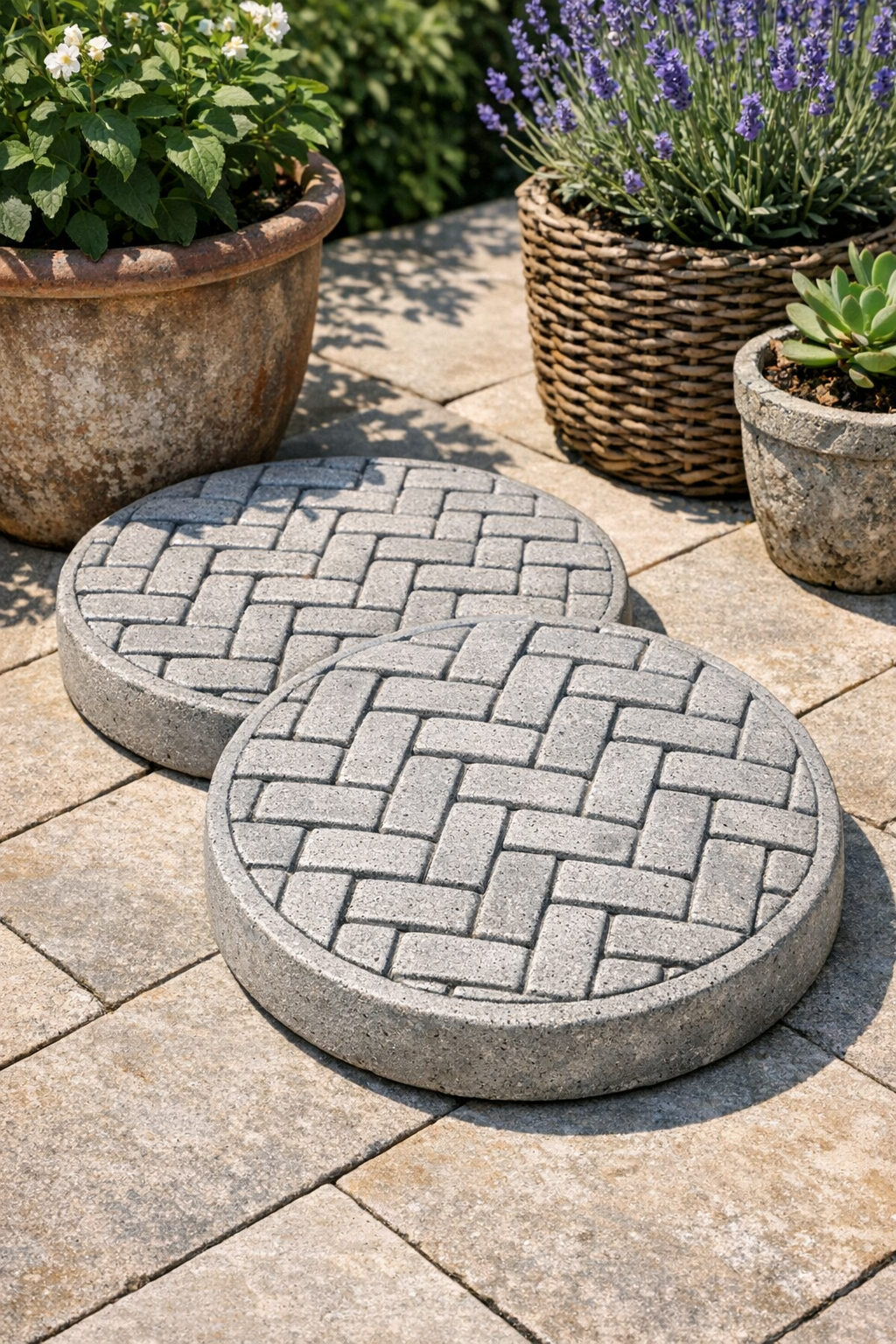
There’s something especially satisfying about turning a pair of inexpensive, everyday table pieces into sturdy patio décor with real presence. In this project, I use wicker paper plate holders as molds and texture makers, then press in wet cement to create heavy woven-look discs that can be styled as garden accents, tabletop risers, or layered décor on a porch. The finished pieces look far more expensive than the materials would suggest, and that contrast is exactly the kind of DIY transformation I love.
If you’re comfortable mixing a simple batch of cement, this is a very approachable project. I also appreciate that it borrows a little from the kitchen mindset I know so well: set out your materials, work in order, and let texture do the talking. Much like pressing dough into a patterned tart pan, the trick here is even pressure and patience while the shape sets.
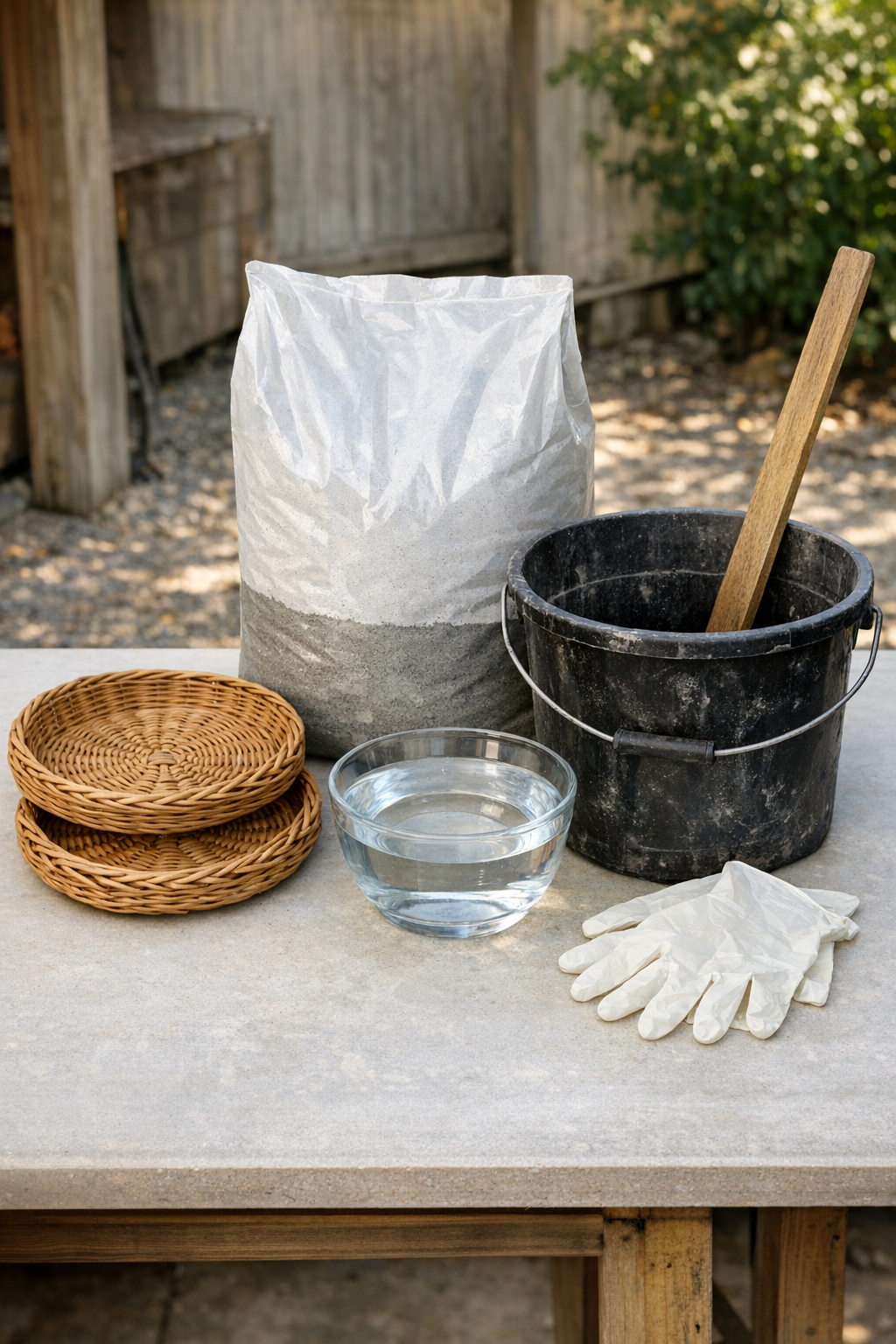
Materials
2 wicker paper plate holders, 10 to 12 inches wide each
Instructions
1. Cover your work surface with a plastic drop cloth and set the wicker paper plate holders on a flat, level area where they can remain undisturbed for at least 24 hours.
2. Coat the inside of each wicker holder generously with cooking oil or nonstick spray, making sure it gets into the woven grooves so the cement will release more easily later.
3. Pour the cement mix into the bucket, then add water a little at a time while stirring until you get a thick, scoopable consistency similar to stiff mashed potatoes.
4. Let the mixture rest for 1 to 2 minutes, then stir again to smooth out any dry pockets; it should hold its shape when dropped into the mold without running.
5. Divide the cement evenly between the two wicker holders, pressing it firmly into the weave with gloved hands or the back of the stir stick so the pattern transfers well.
6. Build each disc to about 1 to 1 1/2 inches thick, then smooth the back surface so the piece is compact and evenly supported across the mold.
7. Tap the holders gently against the table a few times to settle the cement and release trapped air, then re-press any areas that look shallow or uneven.
8. Leave the discs to cure in the holders for 24 to 48 hours, depending on temperature and humidity, until they feel hard and cool but no longer soft in the center.
9. Flex the wicker holders carefully and peel them away from the cement discs; if a section clings, loosen it gradually instead of pulling hard in one spot.
10. Let the unmolded discs cure for another 2 to 5 days before using them outdoors so they can continue to harden and dry thoroughly.
Variations & Tips
For a lighter gray finish: Use a lighter cement or concrete topping mix if you want a softer stone color that reads more modern on a patio.
For sharper texture: Press the first layer of cement very firmly into the wicker before adding the rest. In cooking, the first contact layer matters for detail, and the same idea applies here.
For use as plant risers: Make the discs slightly thicker, closer to 1 1/2 inches, so they feel more substantial under heavy pots.
For easier release: Don’t skimp on the oil. If the wicker is especially dry, apply one coat, let it soak in for a minute, and apply a second light coat.
For cleaner edges: Smooth and compress the outer rim while the cement is still wet. A neat edge makes the finished discs look intentional and almost store-bought.
Weather tip: Cure the discs in a shaded, mild spot rather than in harsh direct sun, which can dry the surface too quickly and encourage cracking.