
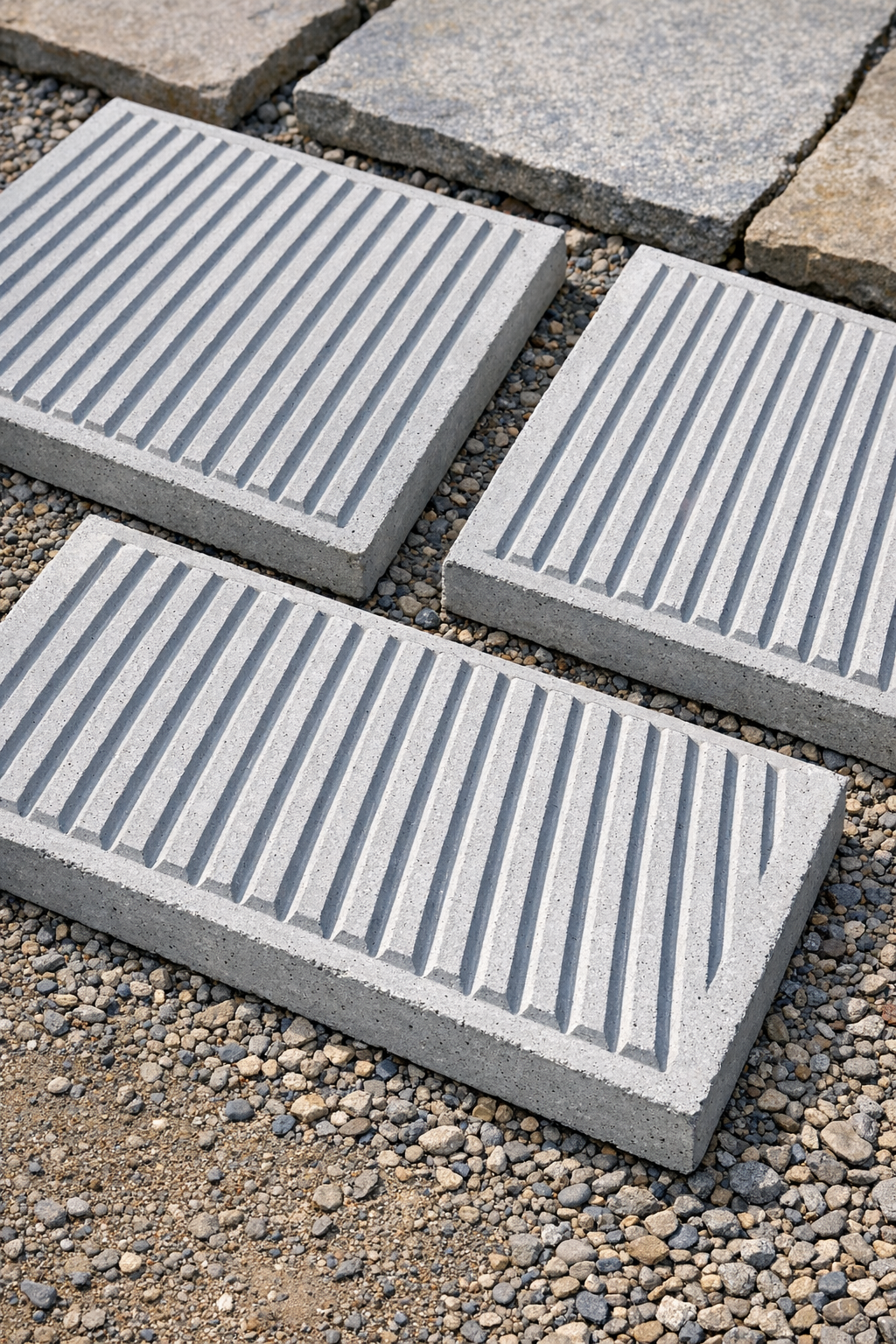
These ribbed patio slabs are one of those low-cost projects that look far more expensive than they are. By pouring cement into disposable aluminum roasting pans and using two simple household items to create texture and shape, you can make sturdy stepping stones or patio accents with a clean, repeating pattern that feels surprisingly architectural.
I love projects like this because they rely more on clever setup than fancy tools. If you're comfortable mixing a bag of cement and you want a weekend project that gives you something genuinely useful at the end, this is a very approachable build. The finished slabs are heavy, durable, and ideal for a small sitting area, a garden path, or filling a bare patch beside a back door.
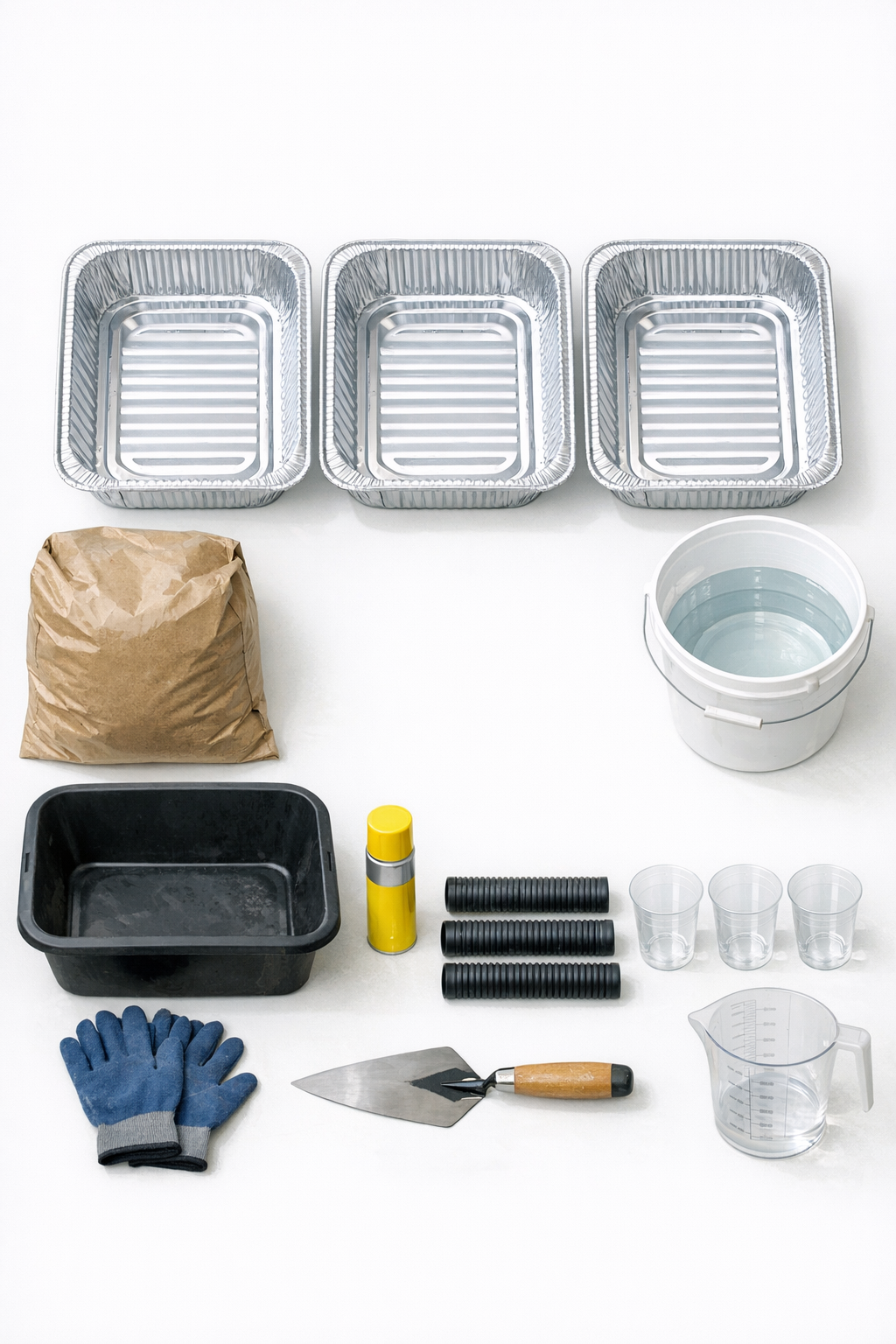
Materials
Instructions
1. Set the three aluminum roasting pans on a flat, level surface protected with the plastic drop cloth so the slabs cure evenly and release cleanly later.
2. Lightly coat the inside of each roasting pan with cooking spray or a thin film of vegetable oil, covering the bottom and corners without leaving puddles.
3. Place one corrugated hose piece into each pan and set a plastic cup at one end or in the center to create an extra molded detail, pressing them down so you can preview the ribbed layout before mixing cement.
4. Mix the cement in your tub or bucket, adding water a little at a time until it reaches a thick brownie-batter consistency that holds shape but still settles when tapped.
5. Fill each roasting pan halfway with cement, then tap the pans firmly on the work surface several times to release trapped air and help the mix flow into the corners.
6. Add more cement until each pan is filled to about 1 1/2 to 2 inches deep, keeping the hose and cup partially embedded so they form the ribbed pattern and recessed shape.
7. Smooth the top surface with a trowel, then gently shake and tap the pans again until the surface levels and most visible bubbles disappear.
8. Let the slabs sit undisturbed for 24 to 36 hours, or until the cement is firm enough to hold its shape when the pan edge is flexed.
9. Peel away the aluminum pans carefully, twist out the plastic cups and hose inserts, and let the slabs continue curing in a shaded spot for another 3 to 5 days before moving them into place.
Variations & Tips
Change the rib pattern: Try using two narrower corrugated hose pieces in each pan instead of one larger one if you want more parallel grooves across the slab.
For a smoother finish: Cover the slabs loosely with plastic during the first day of curing; this slows moisture loss and often leaves the concrete a bit denser and less dusty.
Add color: A small amount of concrete pigment can be mixed into the dry cement before adding water if you want charcoal, terracotta, or stone-toned slabs.
Make placement easier: These are heavy, so I like to build them close to where they'll live or use a small cart to move them after curing.
Prevent cracking: Do not make the slabs too thin; staying near 1 1/2 to 2 inches thick gives them much better strength for outdoor use.
Use them well: Set the finished slabs on compacted sand or fine gravel rather than bare soft soil so they stay level and are less likely to rock over time.