
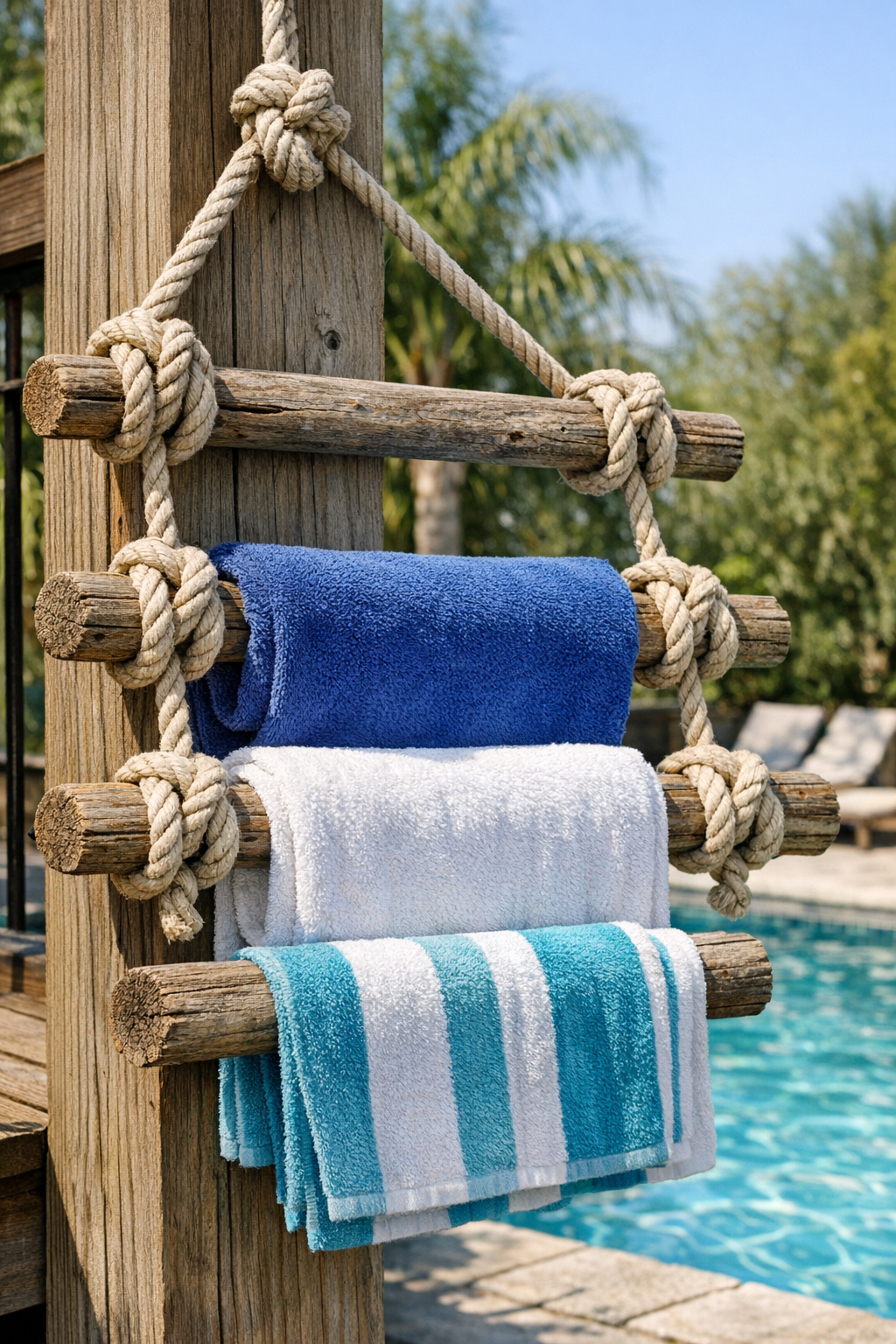
If you spend any time around a pool or on a back deck in summer, you know wet towels seem to migrate everywhere at once. This outdoor towel rack solves that problem with a simple, sturdy design: weathered wooden dowels threaded through knotted nautical rope and hung directly from a deck post. I like this kind of project because it feels practical without looking utilitarian—the rope gives it that relaxed lakeside look, while the dowels keep towels spread out so they can actually dry.
This is a very approachable build for beginners, and it is especially good if you want something useful without hauling out a full workshop. The construction is straightforward, but the finished piece has a polished, coastal character. As someone who spends plenty of time thinking about how materials behave—much like ingredients in a recipe—I appreciate that each part here has a job: exterior rope for strength, hardwood dowels for support, and simple knots for spacing.
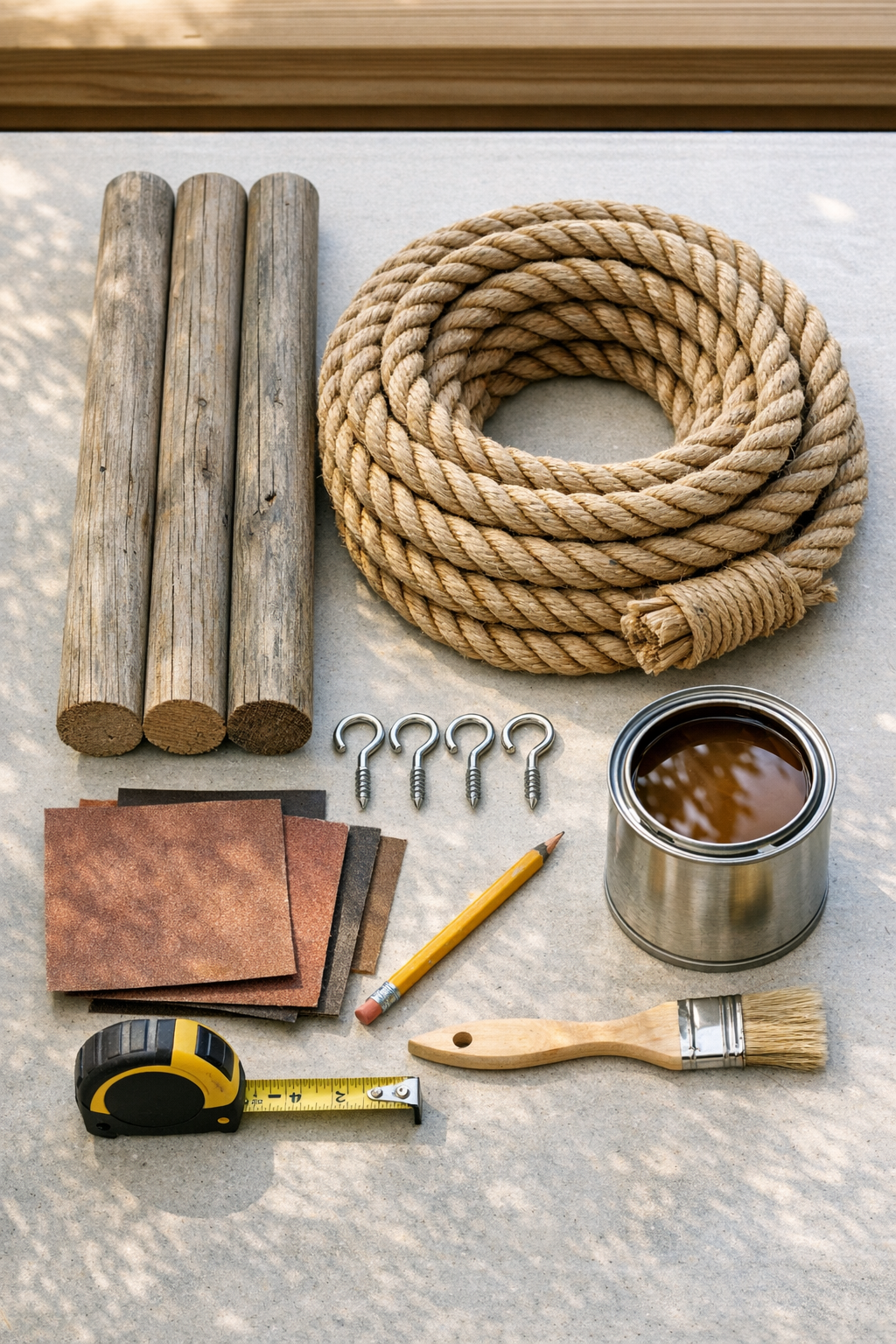
Materials
3 weathered or new hardwood dowels, 1 1/4-inch diameter x 24 inches long
Instructions
1. Sand each dowel first with 120-grit sandpaper and then with 220-grit until the surface feels smooth but still slightly rustic. Wipe away all dust so the sealer can bond properly.
2. Brush on a thin coat of exterior wood sealer over the dowels, covering the ends well, and let them dry completely according to the product directions. For a more weathered look, I keep the finish light rather than glossy.
3. Cut two rope lengths to 96 inches if they are not already trimmed, then wrap the cut ends tightly with painter's tape to prevent fraying while you work. Measure both ropes side by side so the hanger stays level later.
4. Lay the two rope lengths parallel on a flat surface and mark matching dowel positions on both ropes at 12 inches, 32 inches, and 52 inches from the bottom ends. Those marks create three towel bars with enough air space between them for drying.
5. Tie an overhand knot in each rope just below the first 12-inch mark, keeping the knots as even as possible. These bottom knots act like stoppers to hold the lowest dowel in place.
6. Feed one dowel through both ropes at the first marked position, threading one rope onto each end until the dowel rests on the two knots. Check that the dowel sits level before moving on.
7. Tie another overhand knot in each rope just above that dowel, leaving about 1/2 inch of space so the wood is secure but not pinched. If you want extra hold, add a small dab of exterior wood glue inside each knot.
8. Repeat the same process at the second and third marked positions: tie knots below, slide in the dowel, then tie knots above. Keep measuring from dowel to dowel so the spacing matches on both sides.
9. Hold the assembled rack up against the deck post and decide the hanging height, allowing at least 8 inches above the top dowel for the suspension loop. I usually position the lowest bar high enough to keep damp towels off the deck boards.
10. Form a loop at the top of each rope by folding the rope back on itself about 8 inches and tying a strong overhand or figure-eight knot. Make both loops the same size so the rack hangs straight.
11. Install the two stainless steel screw hooks into the deck post, spacing them to match the rope-to-rope distance of your rack. Drive them in securely at the same height so the towel rack will hang level.
12. Hang the rope loops on the hooks and test the rack with a couple of damp towels, adjusting knot tightness or hook spacing if needed. Trim excess rope if you like, then re-wrap or lightly seal the rope ends to reduce fraying.
Variations & Tips
Use cedar or teak: If you are starting with new wood instead of reclaimed-looking dowels, cedar and teak both hold up beautifully outdoors and resist moisture well.
Add more bars: For a larger family, add a fourth dowel and increase each rope length to 120 inches so you have enough room for extra knots and a top loop.
Choose the right rope: Natural fiber rope looks lovely, but for a truly exposed pool area I prefer synthetic marine rope because it dries faster and lasts longer in repeated wet conditions.
Keep spacing generous: Towels dry better when they are not packed together. I would rather build slightly wider spacing than squeeze in too many bars.
Prevent slipping: If a dowel wants to shift, tighten the knots above and below it or add a washer outside each rope opening to help keep the bar centered.
Match your deck style: You can stain the dowels a driftwood gray, leave them natural, or use a warm marine oil finish depending on whether you want a coastal, cabin, or more polished backyard look.