
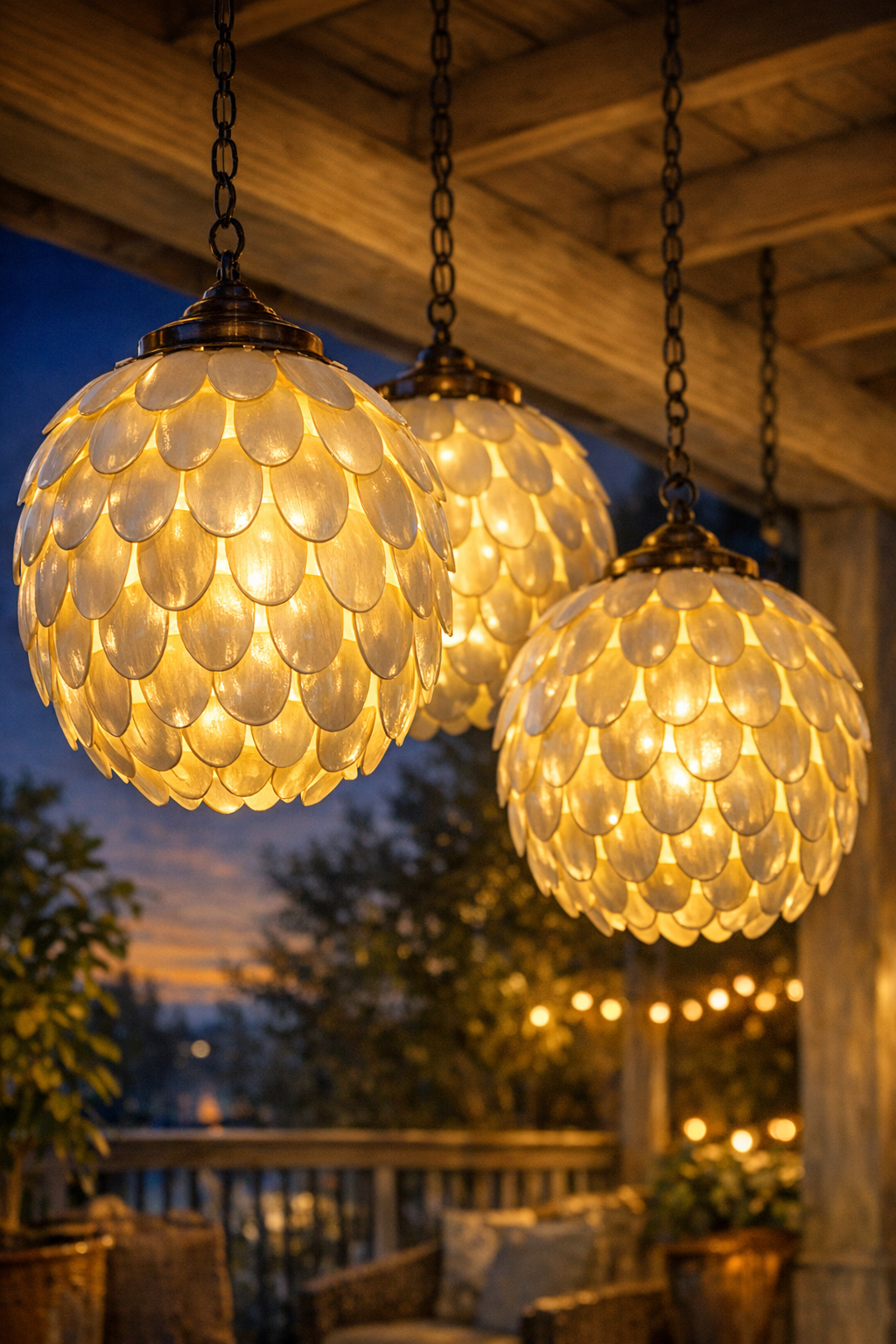
There’s something especially satisfying about turning the most ordinary household items into décor that looks far more expensive than it is. These faux capiz shell patio lanterns use white plastic spoons, clear string lights, and a simple round base to create that same soft, pearly glow you see in coastal lighting. The finished effect reminds me of capiz shells swaying in restaurant courtyards, but this version is budget-friendly, lightweight, and surprisingly approachable.
I love projects like this because they sit right at the intersection of crafting and entertaining. If you enjoy setting a pretty table, dressing up a balcony, or making a patio feel a little more special before guests arrive, this is the sort of project that pays off immediately. You do need to work carefully with heat, but the build itself is simple and repetitive in the best way.
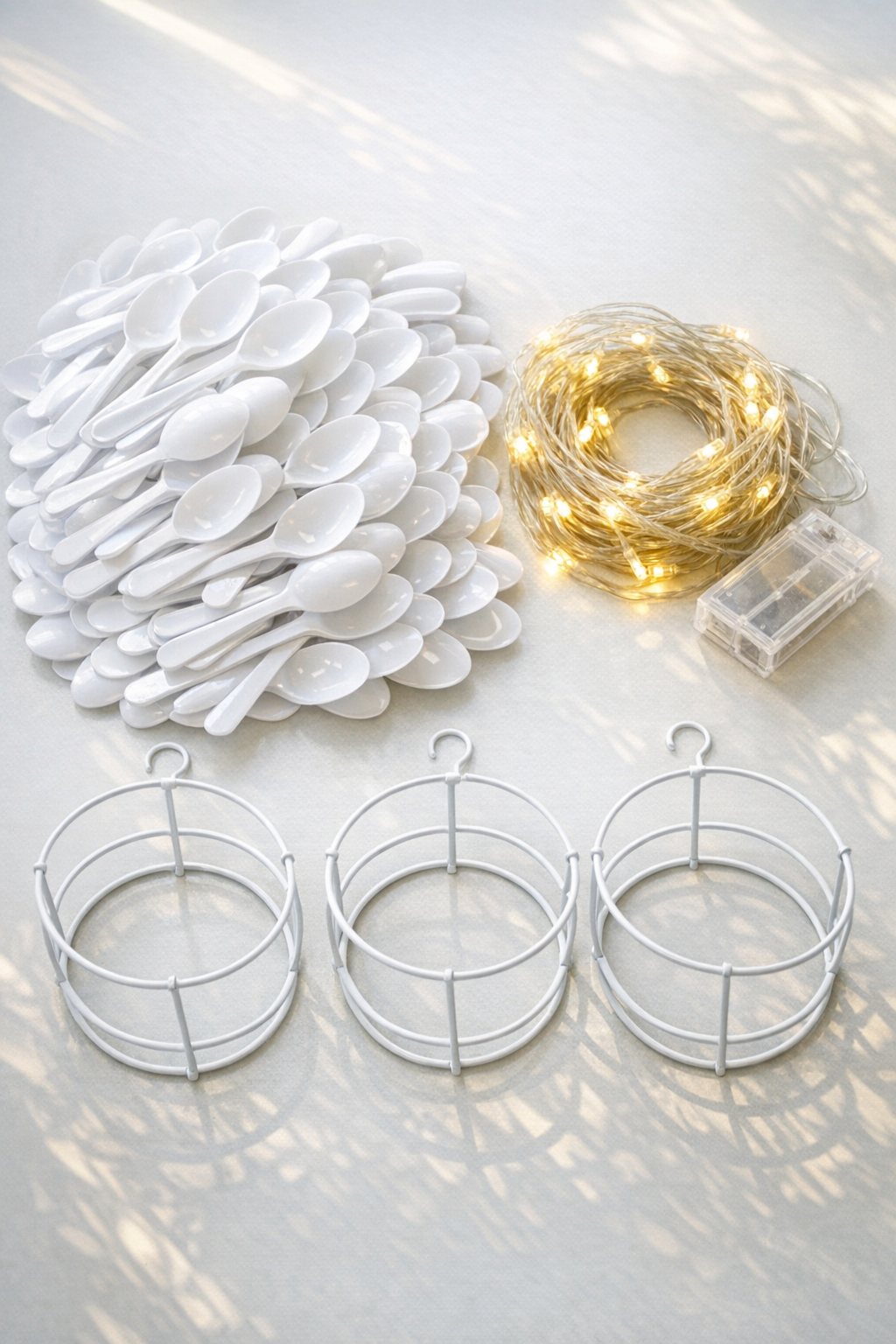
Materials
Instructions
1. Snap or cut the handles off all 150 plastic spoons, keeping only the bowl-shaped heads. Trim any sharp plastic bits so each piece sits smoothly against the frame.
2. Plug in or test your string lights before you begin so you know the strand works properly. Set them aside where they won’t tangle while you build the lantern shells.
3. Hold one spoon head with pliers or heat-safe fingers and carefully warm the cut edge until it softens slightly. Gently press or curl the edge so it looks more organic and shell-like rather than perfectly rigid.
4. Repeat the heating and shaping process for all spoon heads, varying the curl just a little so the finished lantern looks more natural. Work in small batches so the plastic doesn’t cool before you shape it.
5. Take one 10-inch wire frame and begin attaching spoon heads around the widest outer ring, overlapping them slightly like fish scales. Angle each piece downward so the rows will layer neatly as you work upward.
6. Continue adding spoon heads row by row, overlapping each new row over the top edge of the one below it. Leave a small opening at the top so you can insert the lights once the lantern shell is complete.
7. Build out the full lantern until the wire frame is covered and the surface looks full and even from every angle. Check for gaps by lifting it toward the light and filling in any thin spots with extra spoon heads.
8. Repeat the same layering process for the remaining two wire frames so you have a matching set of three lanterns. Try to keep the overlap and density similar for a cohesive look when they hang together.
9. Wind the string lights through the first lantern, tucking the bulbs into the hollow center so the glow diffuses through the spoon layers. If your strand is long enough, divide it evenly through all three lanterns; otherwise use one strand per lantern.
10. Hang the lanterns in a covered patio or porch area and turn the lights on to check the glow and spacing. Adjust the spoon layers gently by hand anywhere the light looks uneven or the shape needs smoothing.
Variations & Tips
Choose LED lights: LED string lights are the safest option here because they stay much cooler than incandescent bulbs. I strongly recommend them anytime plastic is part of a lighting project.
Work with ventilation: If you’re melting or softening plastic, do it in a well-ventilated area and use brief, controlled heat. You want softened edges, not scorched plastic.
Try different frame sizes: An 8-inch frame makes a sweet small cluster, while a 12-inch frame creates more of a statement piece. Just scale up the number of spoons accordingly.
Keep the color clean: White spoons give the most convincing capiz-like finish, but ivory can also look lovely and a little warmer. I’d skip bold colors for this one if you want that shell-inspired effect.
Use them in covered spaces only: These lanterns are best for covered patios, porches, sunrooms, or party backdrops where they’re protected from rain and strong wind. They’re decorative rather than weatherproof.
Make the glow softer: If the bulbs show too clearly through the openings, add a few more overlapping spoon pieces in the sparsest spots. That extra layering gives the lantern a richer, more diffused light.