
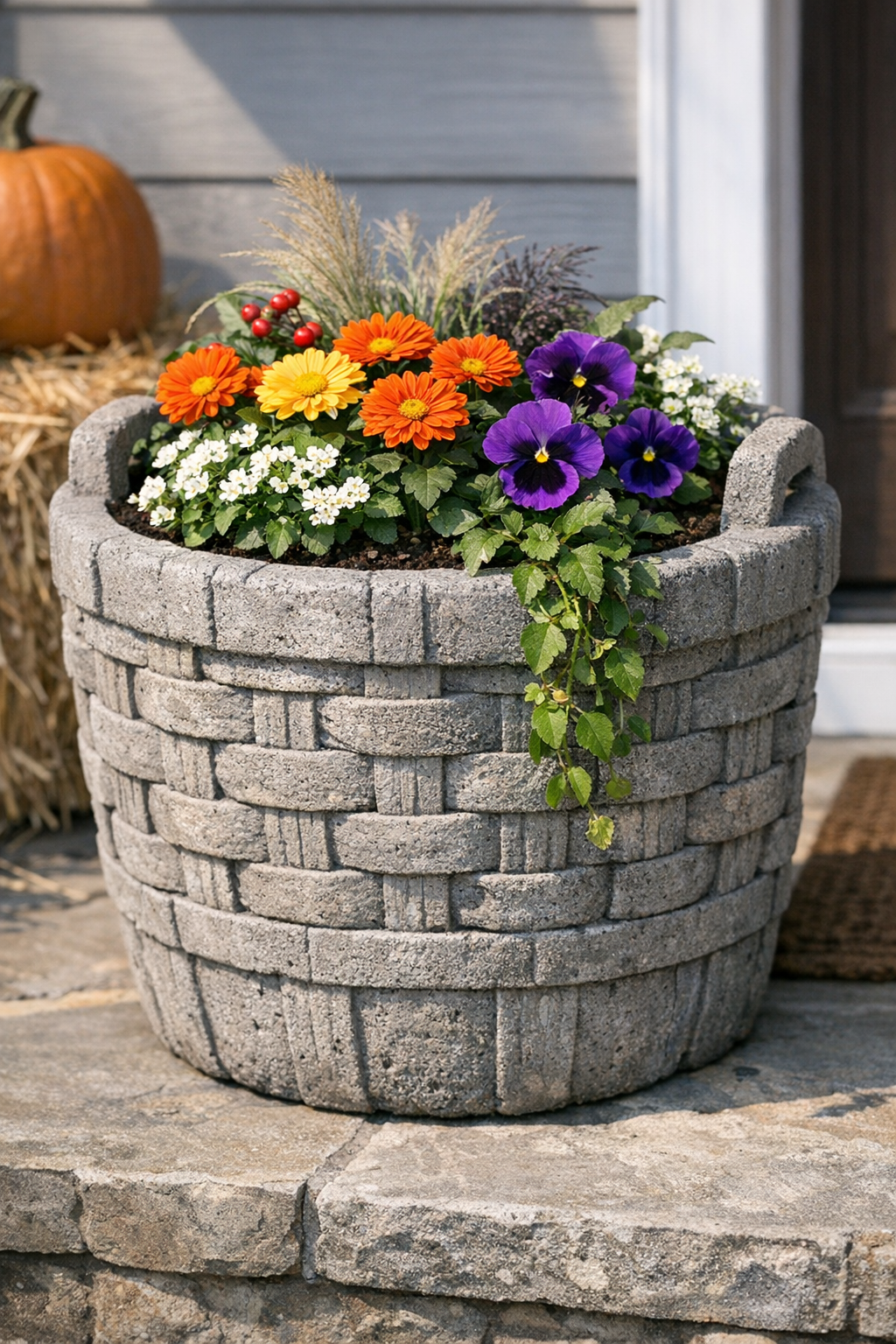
These harvest-style garden planters are one of my favorite kinds of weekend projects because they look far more expensive than they are. By pouring cement into a plastic apple bushel basket used as a mold, you get a sturdy planter with that charming orchard-inspired shape and texture that fits right in on a porch, patio, or tucked beside raised beds.
I love projects like this because they give you a big visual payoff without needing fancy tools or a full workshop. If you’re like me and want outdoor decor that can handle Midwest weather and still look good through the season, this is a very doable project. It’s especially great for anyone who enjoys gardening but also wants containers with a little more personality than the usual store-bought pots.
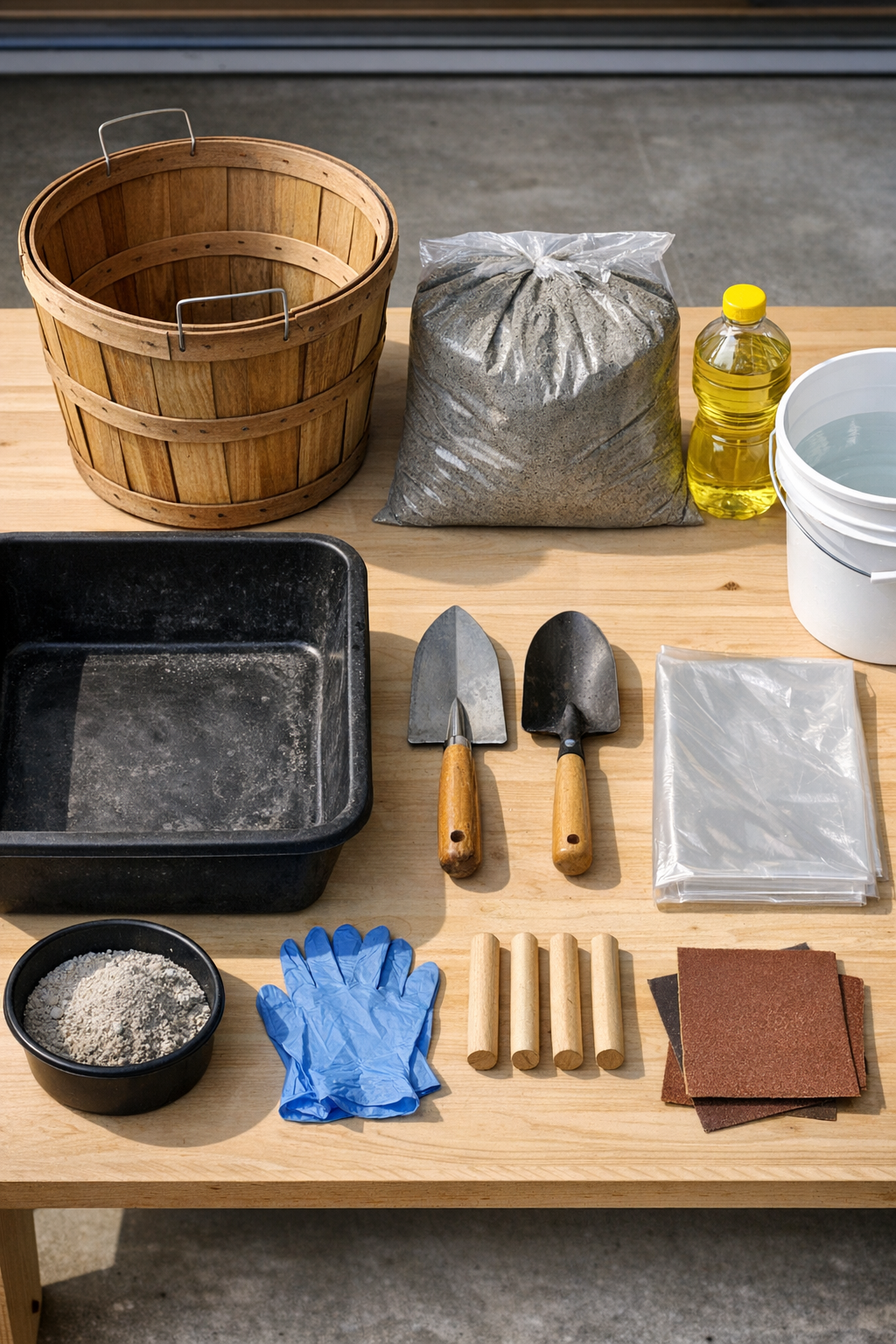
Materials
Instructions
1. Set up your work area on a flat surface and spread out the plastic drop cloth to catch spills. Put the apple basket on top and make sure it sits level so the planter cures evenly.
2. Rub a thin, even coat of oil all over the inside of the plastic basket, getting into the sides and bottom grooves. This makes demolding much easier later and helps preserve the basket texture in the cement.
3. If you want a solid, heavy planter, skip the inner form; if you want space for soil inside, center the small nursery pot or bowl in the basket and secure it loosely with painter’s tape. Leave at least 1 1/2 to 2 inches of space around all sides for strong cement walls.
4. In a mixing tub, combine the concrete mix with water a little at a time until it reaches the texture of thick oatmeal. Mix thoroughly so there are no dry pockets, but don’t make it runny or the details of the basket will soften.
5. Scoop the wet cement into the basket, pressing it firmly into the bottom and sides as you go to remove trapped air. If using an inner form, fill around it evenly in layers so it stays centered.
6. Tap the basket gently on the work surface and knock the outer sides with your hand several times to bring bubbles to the surface. Smooth the top edge with a trowel so the planter rim looks neat once it’s unmolded.
7. Push the three dowel pieces into the bottom area where the planting cavity will be to create drainage holes or channels. Space them evenly and keep them straight so they can be removed cleanly after the cement firms up.
8. Let the cement set until it is firm enough to hold its shape, usually according to the concrete mix directions, then carefully remove the dowels and the inner pot if you used one. Leave the planter in the basket mold for a full 24 hours to gain strength.
9. Gently peel or flex the plastic basket away from the cured cement planter. If any areas stick, work slowly around the edges instead of forcing it so you don’t chip the corners.
10. Sand any rough edges lightly with 80-grit sandpaper and let the planter cure in a shaded, dry spot for another 5 to 7 days before planting. Once cured, add potting soil and your plants, making sure water can drain freely.
Variations & Tips
For a lighter planter: Use the inner nursery pot to create a hollow center so you need less soil and the finished piece is easier to move. I do this anytime I know I’ll be rearranging the porch later in the season.
For better drainage: Make at least three drainage openings and keep them clear while planting. A thin layer of small gravel over the holes on the inside can help prevent potting mix from washing out.
For a more polished finish: After curing, brush off all dust and apply a masonry sealer made for outdoor planters. This can help with moisture resistance, especially in freeze-thaw climates.
For color variation: You can tint the concrete with a cement-safe pigment before mixing if you want a warmer stone tone. Earthy gray, terracotta, and soft charcoal all work beautifully with fall plants.
For easier demolding: Don’t skip the oil. The first time I tried a cement mold project years ago, I used way too little release oil and spent far too long coaxing the plastic free, so now I’m generous but still keep it to a thin coat.
Best plants to use: Mums, ornamental kale, rosemary, thyme, and trailing ivy all look great in this style of planter. If you want that harvest-market look neighbors always notice, mixing one upright plant with one trailing plant is my favorite combination.