
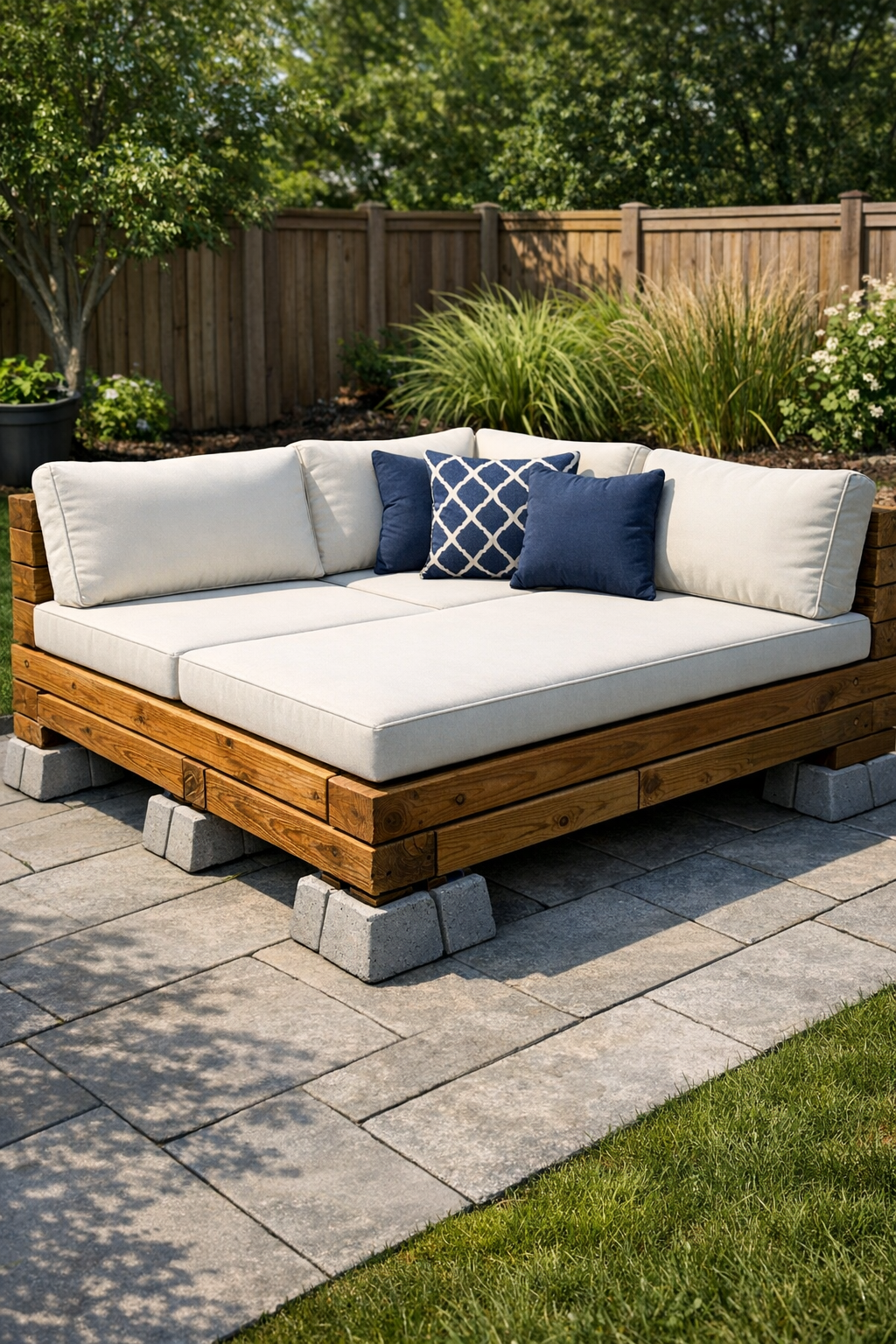
There’s something deeply satisfying about building a sturdy piece of outdoor furniture from simple, honest materials. This outdoor sectional frame is made by stacking pressure-treated lumber beams onto concrete deck blocks, then topping it with a cushion platform for a clean, substantial look that feels far more expensive than the parts that go into it. It reminds me of the kind of practical backyard projects folks around here have always loved—strong, weather-tolerant, and made to be used for years of summer evenings and family visits.
I especially like this project for anyone who wants a solid patio seating area without tackling complicated joinery or pouring footings. If you’re comfortable measuring carefully, lifting heavy lumber, and working your way through a straightforward build, you can make a handsome outdoor sectional that looks custom and polished, while still keeping the process simple and sensible.
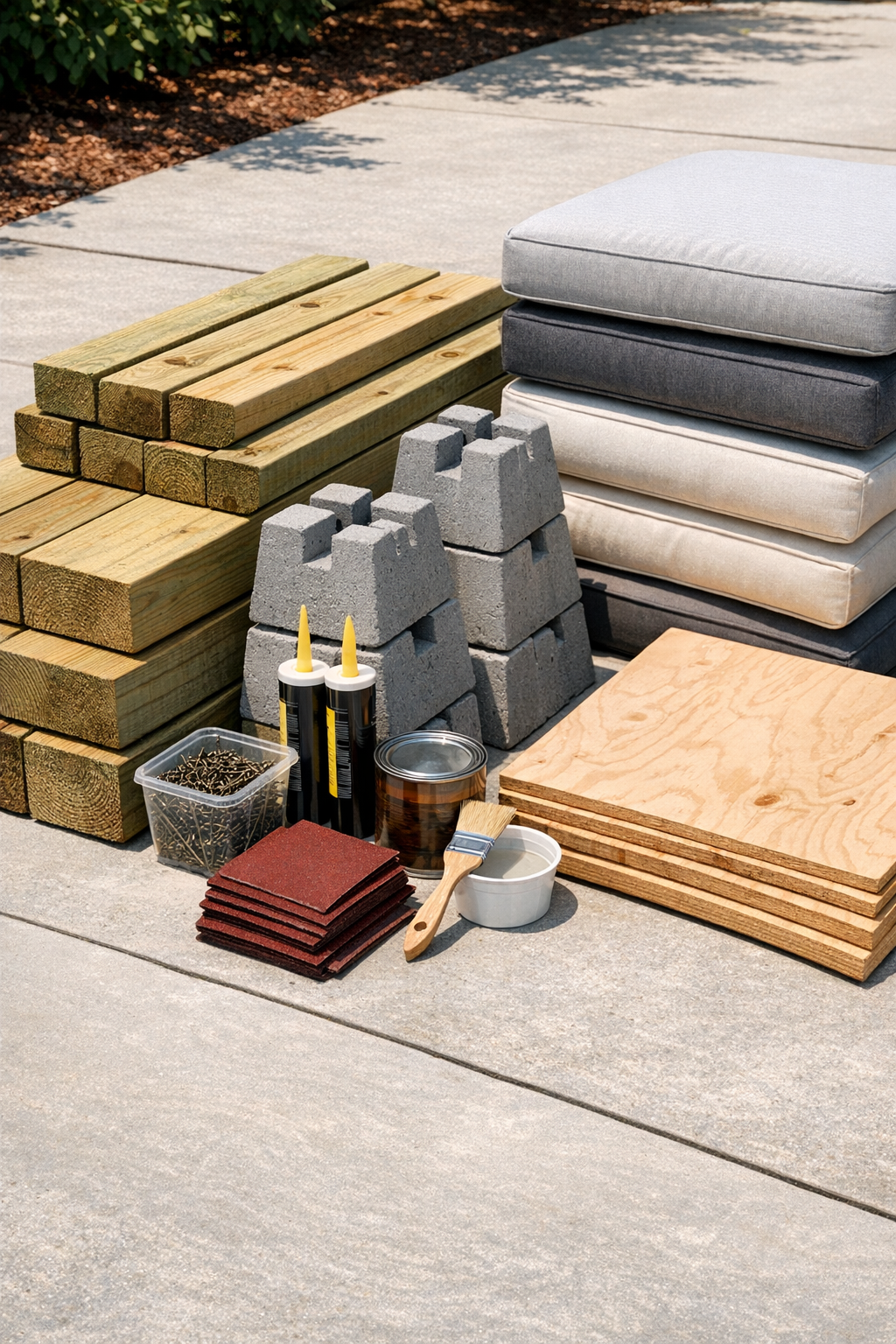
Materials
Instructions
1. Choose a flat spot in the backyard or on the patio for the sectional, and mark out an L-shape measuring 72 inches on one side and 48 inches on the other, both 24 inches deep. Check that there’s enough room around it for walking and for the cushion backs to sit comfortably.
2. Remove grass or loose debris from the footprint, then level the area as well as you can. Spread a thin layer of paver base or leveling sand where the blocks will sit so each support has a firm, even base.
3. Set the 10 concrete deck blocks in place to support both legs of the sectional, spacing them evenly so the long side has 6 blocks and the short side has 4, with one corner area shared by both sections. Use a level across the tops and adjust the sand underneath until all the blocks sit even with one another.
4. Lay the first course of pressure-treated beams across the deck blocks to form the long bench and short return of the sectional. Butt the corner tightly so the L-shape looks clean, and trim any beam ends if needed for a neat fit.
5. Apply a bead of exterior construction adhesive between the first and second layers of beams, then stack the second course directly on top. Drive 3-inch structural screws down through the upper beam into the lower beam every 16 to 24 inches to lock the layers together.
6. Add a third layer of beams if you want a taller, more lounge-like seat base, or stop at two layers for a lower modern profile. Keep checking level as you go, because a small shim or sand adjustment now saves frustration later.
7. Build a simple support frame for the cushion platforms by cutting the 2x4s to fit inside the tops of the long and short sections, then screwing them in place as interior cleats or cross supports. This gives the plywood something solid to rest on instead of floating across the beams.
8. Cut the exterior plywood to fit the top of each bench section, leaving the inside corner joint snug but not forced. Sand the edges lightly so there are no rough spots to catch on cushion covers or bare legs.
9. Fasten the plywood platforms to the supports with 1 5/8-inch exterior screws, keeping screws about every 8 to 10 inches around the perimeter and along support lines. If you want extra rigidity at the corner, install a few metal mending plates underneath where the two sections meet.
10. Sand any splintery edges on the exposed beams, then brush or wipe on exterior sealer or deck stain over all visible wood surfaces. Let it dry fully according to the product directions before adding cushions.
11. Place the bench cushions on the plywood platforms and fit the back cushions along the outer edges to complete the sectional. Test the seating, and if there’s any wobble at all, adjust the block bases before regular use.
Variations & Tips
For a softer look: Choose light neutral cushions and a warm cedar-toned sealer to make the heavy lumber feel more inviting and refined.
For a larger gathering space: Extend the long side to 96 inches by adding more deck blocks and one additional 8-foot beam per layer, then size the plywood and cushions to match.
For better drainage: Leave a small 1/8-inch gap between plywood pieces at the corner, and never trap water against sealed wood if the sectional will sit out in the weather.
For easier leveling: I like to check each block with a long straight board and level before any wood goes down; it’s an old-fashioned step, but it makes the whole build feel steadier from the start.
For a more finished platform: Round over the plywood edges with sandpaper and paint the plywood top with exterior porch paint before adding cushions, especially if the cushions will be moved often.
For long-term durability: Recoat the wood sealer once a year and inspect the screws each spring. Outdoor projects hold up beautifully when you give them a little seasonal attention, much like a porch swing or picnic table passed down through the family.