
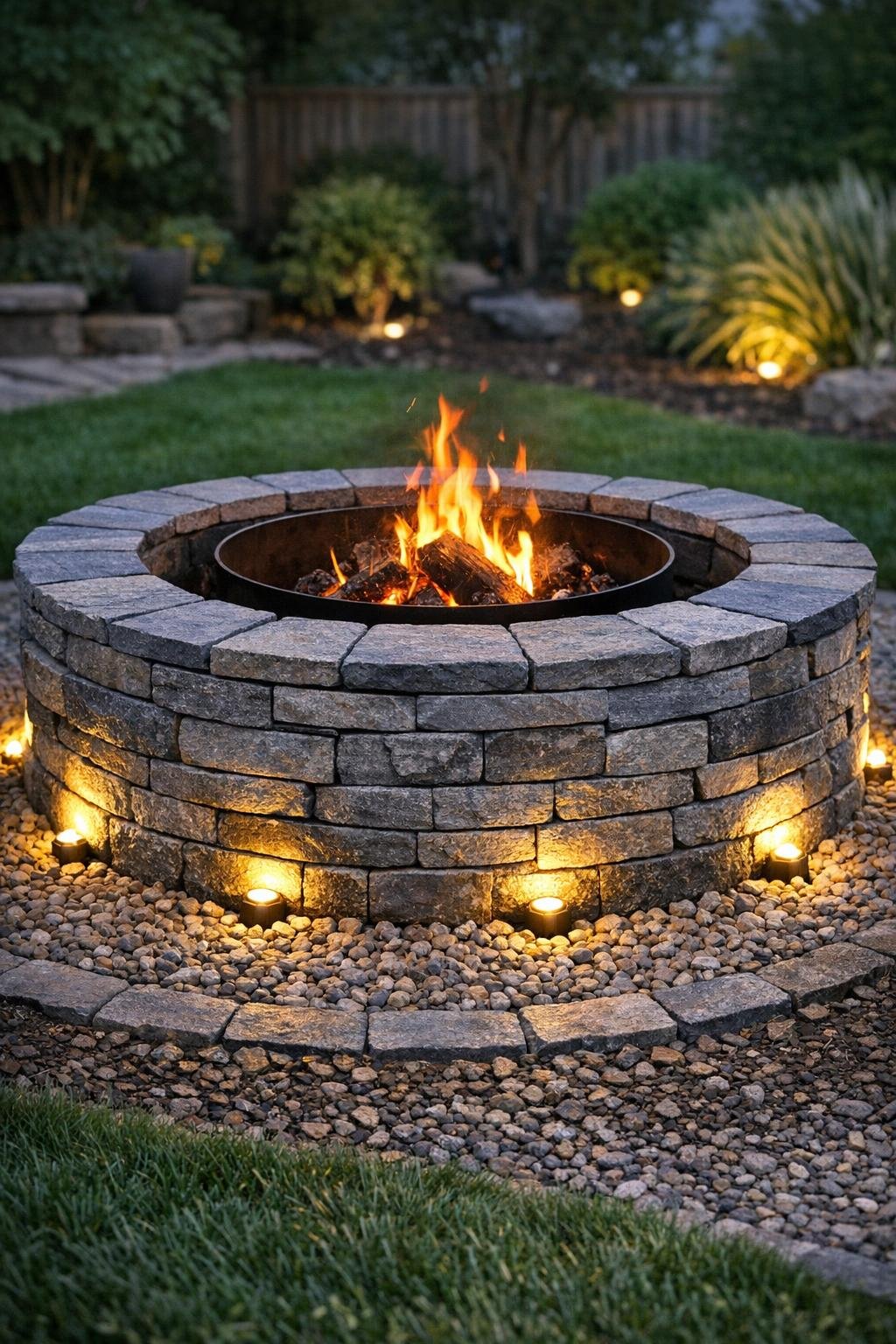
A stone fire pit surround is one of those backyard upgrades that looks custom-built, but it’s very achievable if you break it into clean, manageable steps. In this project, I’m stacking dry stack stone veneer panels around a steel fire ring to create a polished surround, then tucking in solar spotlights so the whole thing glows beautifully at dusk without needing any wiring.
I like this build for anyone who wants a high-end patio look on a realistic DIY budget. The steel ring handles the heat where it matters, and the stone veneer gives you that substantial, architectural finish. If you’re comfortable measuring carefully, moving some heavy materials, and taking your time with leveling, this is a very followable weekend project.
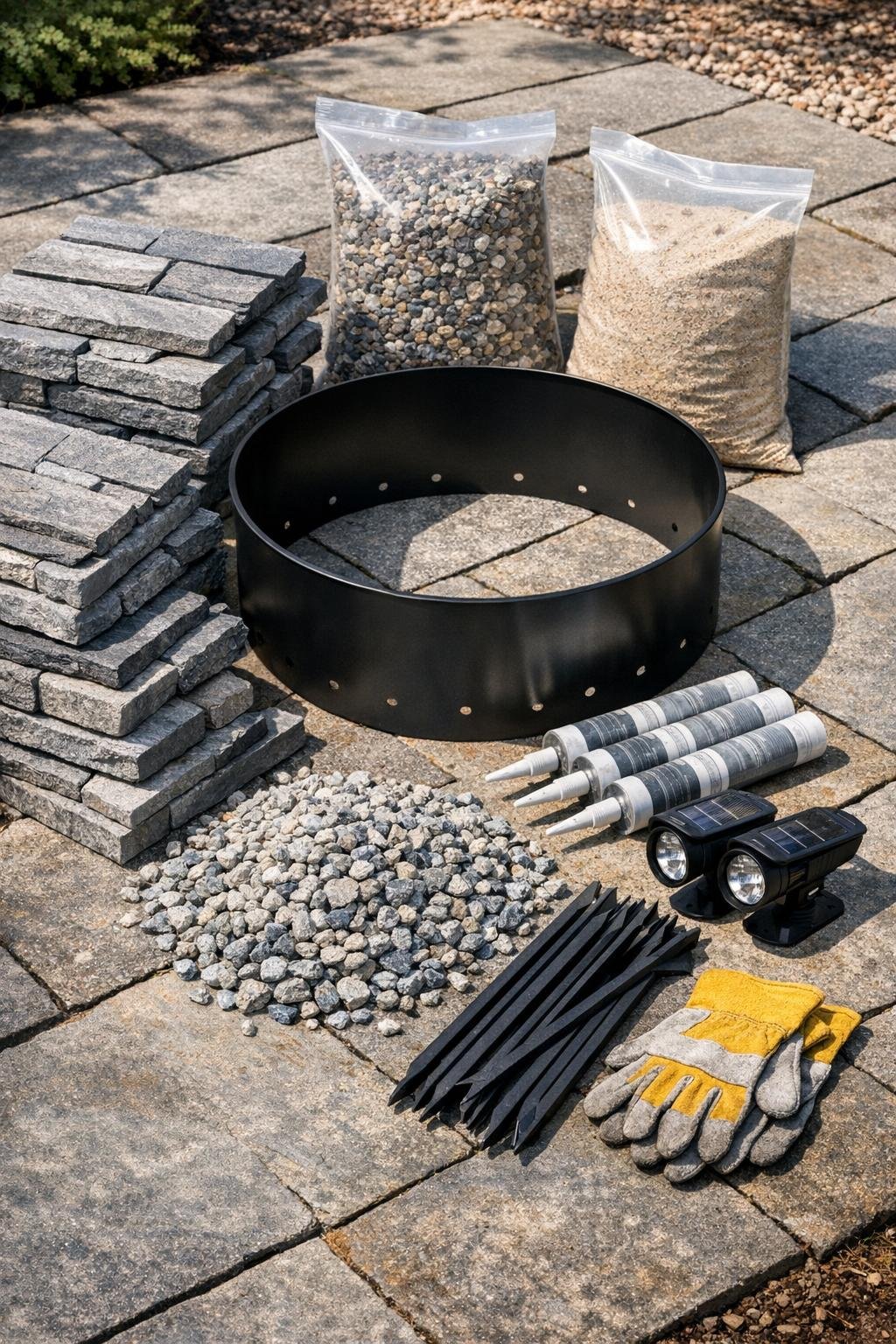
Materials
Instructions
1. Choose a flat, open location for the fire pit that meets your local clearance rules, keeping it well away from structures, fences, low branches, and anything combustible.
2. Set the steel fire ring on the ground and mark a circle around it, then mark a second larger circle that gives you room for the stone surround and a compacted base, usually 12 to 16 inches beyond the ring.
3. Excavate the marked area to a depth of about 6 inches, removing grass, roots, and loose soil so you have a stable base.
4. Lay landscape fabric across the excavated area and secure it with pins, then add 4 inches of paver base and compact it thoroughly in thin layers.
5. Spread 1 to 2 inches of leveling sand over the compacted base and screed it smooth, checking in several directions with a level.
6. Position the steel fire ring in the center and dry-fit the first course of stone veneer panels around it, leaving a small air gap of about 1 to 2 inches between the ring and the stone.
7. Adjust the first course until it is even and circular, using shims and a rubber mallet as needed; this is the part I never rush, because every course above it depends on this one.
8. Once the layout looks right, lift one panel at a time and apply exterior landscape block adhesive in generous beads, then reset each panel in the same position.
9. Stack the second course with staggered seams for strength and a more natural look, trimming panels as needed so the circle stays consistent.
10. Continue building until the surround reaches your preferred height, usually 18 to 24 inches, and keep checking level and alignment as you go.
11. Fill the interior area between the stone and the ring base with gravel where needed for drainage and stability, but do not block the ring’s intended airflow openings.
12. Plan the spotlight locations evenly around the outside of the surround, aiming for 6 to 8 lights set low so the stone texture catches the glow instead of the fixtures stealing attention.
13. Set the solar spotlights into the surrounding gravel or just behind the stone edge, making sure the solar panels get good daylight exposure and the lights are kept away from direct flame and extreme heat.
14. Backfill around the outside with gravel and sweep polymeric sand or pea gravel into any visible outer gaps for a clean finished edge.
15. Let the adhesive cure according to the manufacturer’s directions before using the fire pit, then test the solar lights at dusk and fine-tune their angle for an even glow.
Variations & Tips
For a larger gathering space: Increase the fire ring to 42 inches and widen the stone surround proportionally, but keep the same air gap between steel and stone so heat can dissipate properly.
If your yard slopes: Dig down on the high side rather than building up too much on the low side; a level base matters more than almost anything else in masonry-style work.
On cutting stone panels: Dry stack veneer often looks best when trimmed sparingly, so I try to hide cuts toward the back and alternate full and cut pieces to keep the pattern natural.
For a warmer nighttime look: Choose warm white solar spotlights instead of cool white; with gray stone especially, the warmer tone feels more inviting and less harsh.
About heat safety: The steel ring should be the part directly exposed to flame, not the veneer panels, so don’t skip the interior gap and always follow the fire ring manufacturer’s guidance.
For a more custom finish: Add a cap course of flat stone or coordinating wall caps if your veneer system offers them, which gives the surround a more substantial, furniture-like top edge.
Maintenance tip: I like to check the lights every few weeks during the season and brush off dust from the solar panels, because a little upkeep keeps that evening glow surprisingly strong.