
Every August, just when the garden starts looking a little tired and the air turns hot and dry, somebody around here notices a line of ants marching across the counter like they pay the mortgage. My nana had a simple answer for that, and I still use it today because it takes about 3 minutes to mix, costs very little, and works on the colony instead of only the ants you can see.
The trick is a homemade borax-and-sugar bait, but the real difference is using it the right way: the right consistency, the right placement, and a little patience. I’ll walk you through exactly how I do it, what not to do while it’s working, how long results usually take, and when it’s time to stop fiddling with homemade fixes and call in a professional.
1. Know why ants suddenly show up in late-summer heat
Most indoor ant invasions I see happen during stretches of hot, dry weather. When the soil outside dries out, ants start hunting harder for two things: moisture and easy food. That means they’ll head for damp spots under the sink, pet water bowls, sticky recycling bins, ripening peaches on the counter, or even one forgotten drip of jelly near the toaster.
In my part of the Midwest, late summer is prime time because gardens are producing, windows and doors are opening more often, and dry ground pushes insects closer to the house. If you understand that they’re not just “randomly appearing” but following scent trails to water and sugar, the bait method makes more sense: they carry it back home and share it.
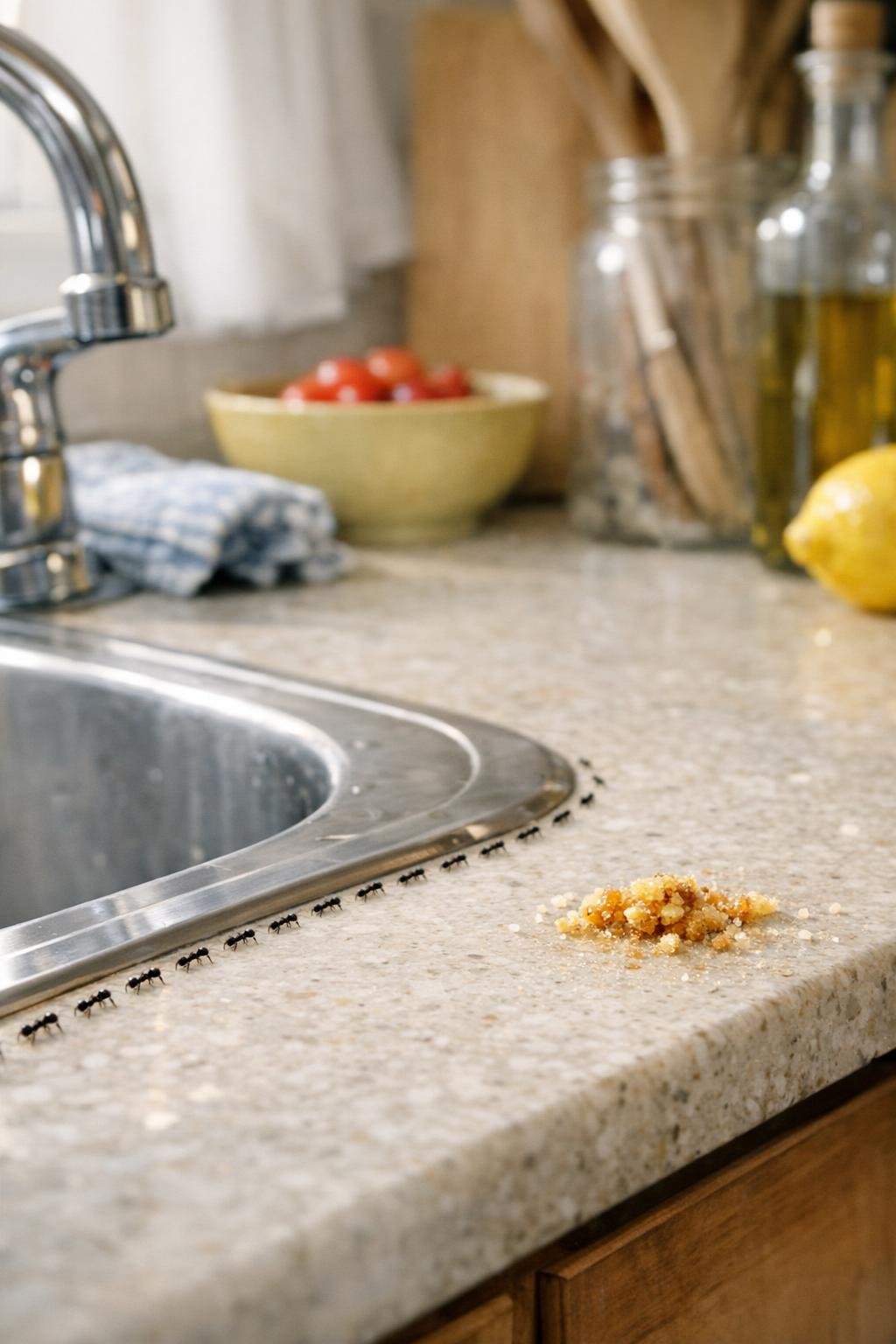
2. Mix the bait so the ants actually want it
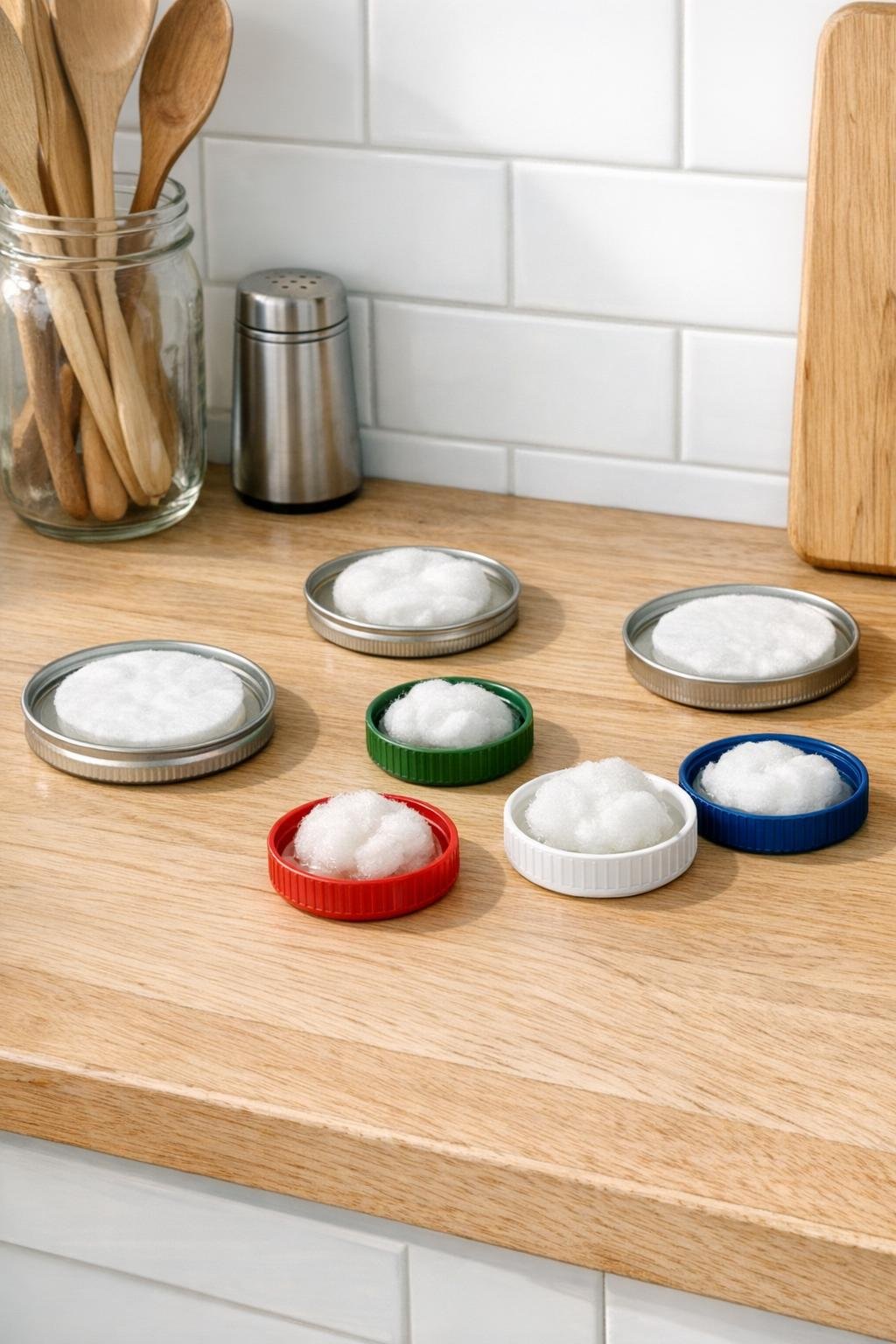
Nana’s basic version was simple: mix 1 cup warm water, 1/2 cup sugar, and 1 1/2 tablespoons borax until dissolved. For sugar-loving ants, I use it as a thin liquid and pour 1 to 2 teaspoons into a shallow jar lid or bottle cap. If I want something easier to tuck out of the way, I make a thicker syrup by reducing the water to about 1/2 cup, then soak a cotton round until damp, not dripping.
The idea is to keep the borax level low enough that ants don’t die before they carry it back. You are not trying to make a harsh instant killer. You want a bait they feed on for a day or two. If the mixture crystallizes, add 1 teaspoon warm water and stir again. If it’s too runny for a cotton round, add another teaspoon of sugar and let it thicken for 5 minutes.
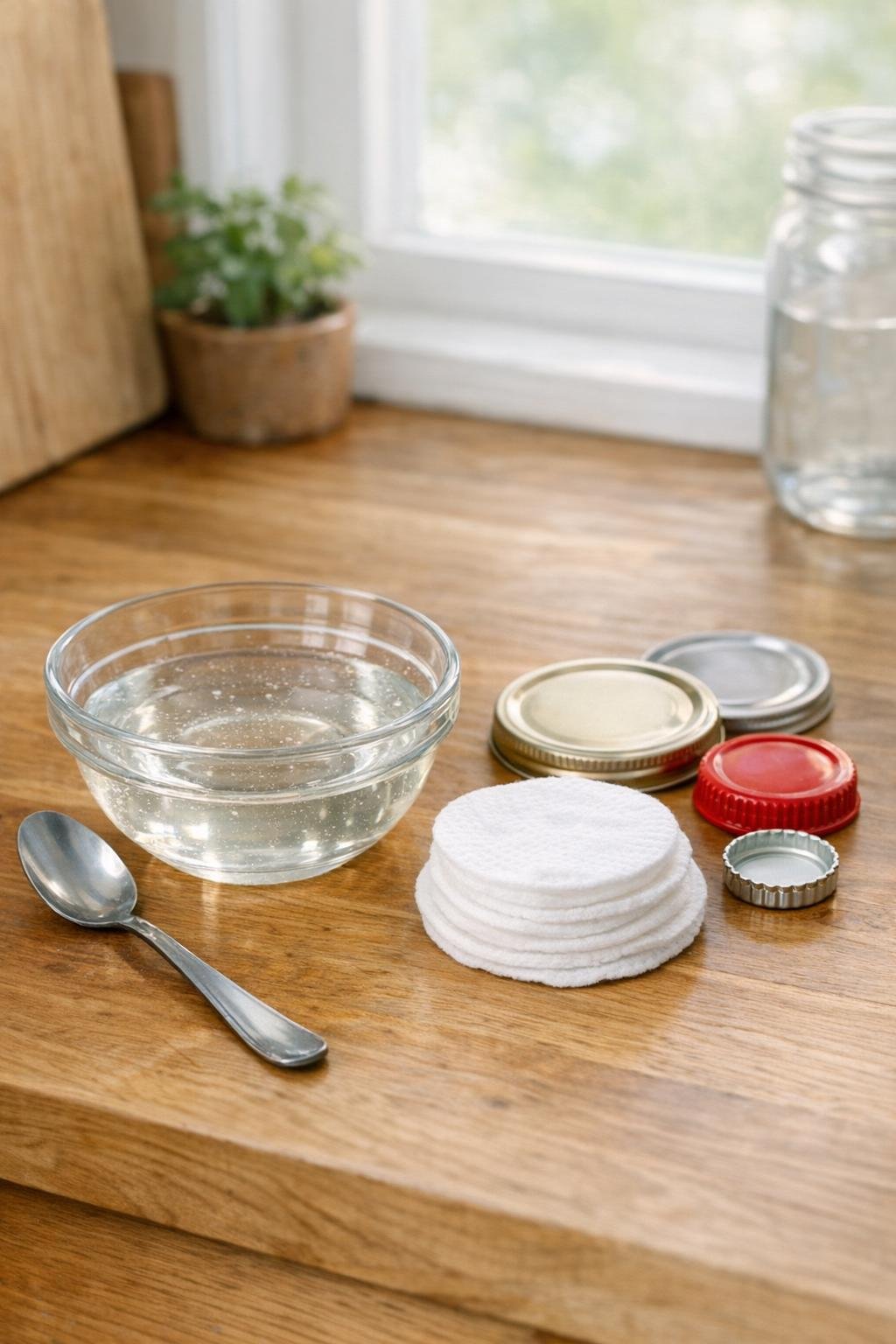
3. Put the bait where ants already travel, not where you wish they’d go
This is where most folks go wrong. Place the bait within 6 to 12 inches of an active ant trail, near baseboards, beside the refrigerator, under the sink, behind the trash can, or along a windowsill where you’ve actually seen movement. If the ants are climbing up one back corner of the pantry, put the station right there instead of on the opposite side of the room.
I like to use 2 to 4 small bait placements rather than one large puddle. A teaspoon in each spot is plenty. Keep it flat and stable so ants can feed easily. If you put the bait too far from the trail, they may never find it, and then people decide the method “doesn’t work” when really the placement did the failing.
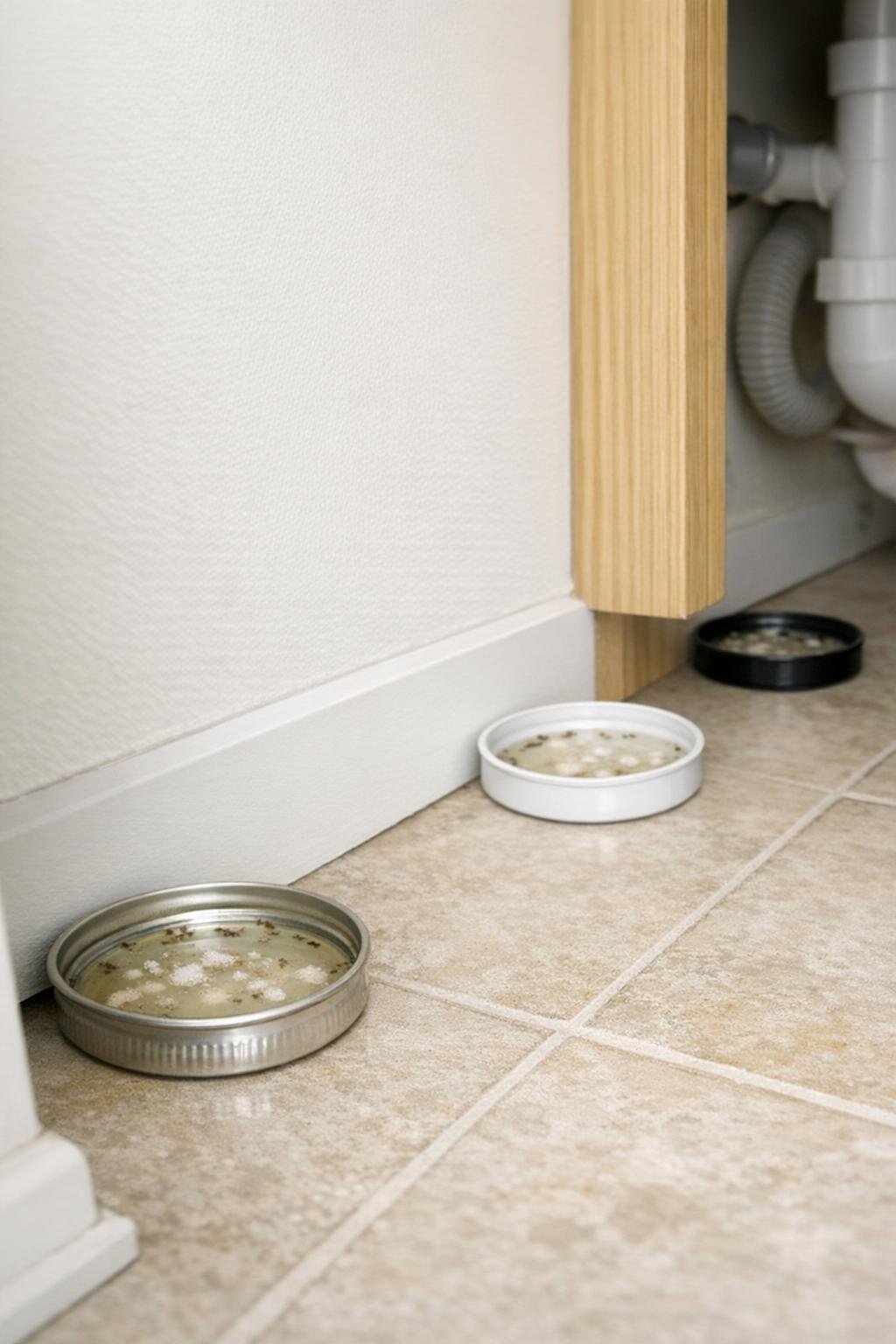
4. Leave the trail alone while the bait is doing its job
I know it goes against every tidy instinct, but don’t spray the trail with cleaner, vinegar, bleach, or bug spray right away. And don’t stomp or wipe out every ant you see at the bait. The workers need time to feed and carry some of that mixture back to the nest. If you keep interrupting them, you break the delivery system.
What I do instead is clean up every other tempting food source and leave just the bait accessible. Skip strong cleaners directly on the trail for at least 24 to 48 hours if ants are actively taking the bait. Also, don’t set the bait in a completely different room “for safety” and expect results; close placement matters more than people realize.
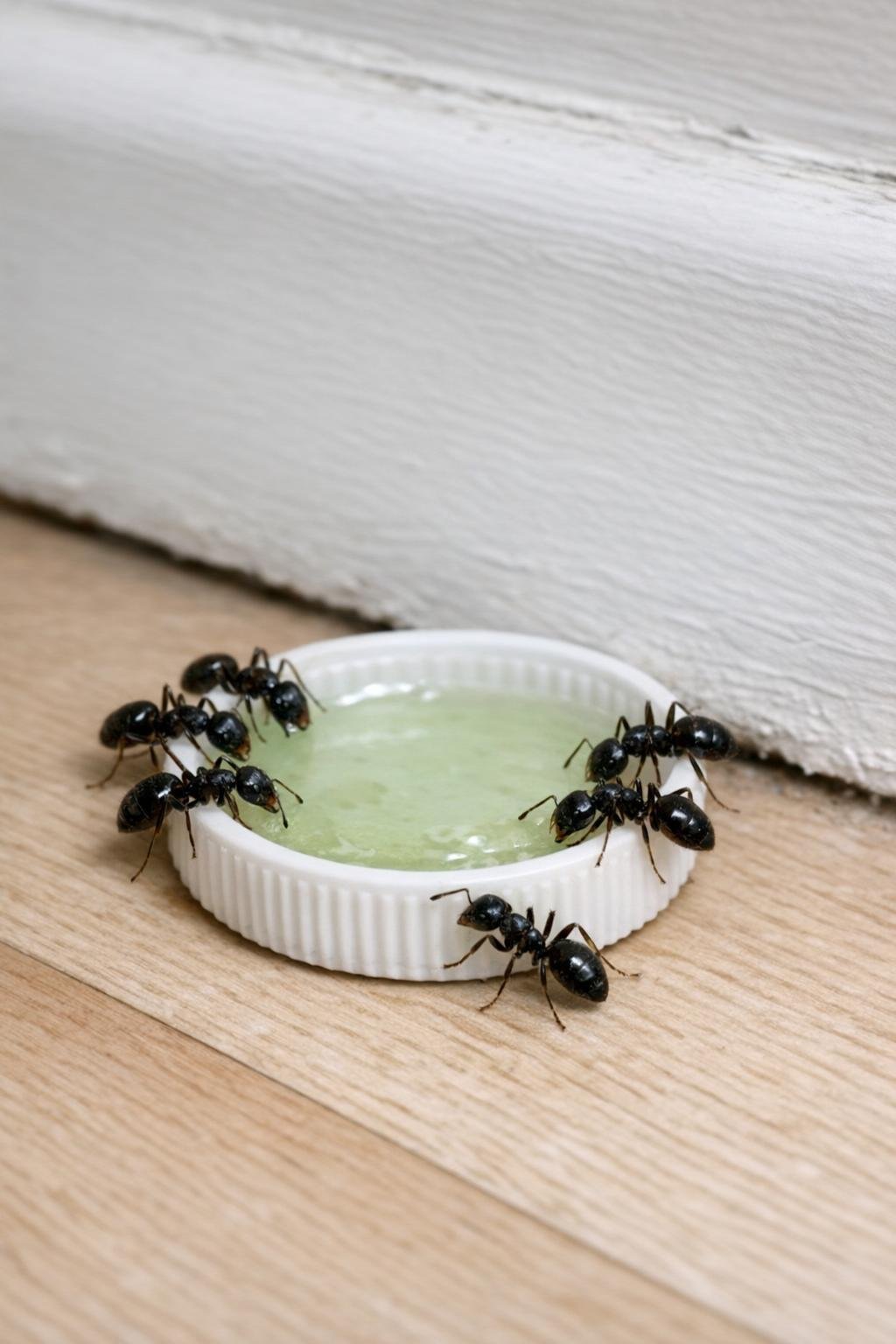
5. Expect a realistic timeline, not instant magic
Usually, I see heavier feeding within the first 12 to 24 hours. That can be unsettling because it may look worse before it looks better. In most ordinary kitchen ant cases, the trail starts thinning noticeably after 2 to 3 days. Many small infestations are dramatically reduced within 5 to 7 days if the bait stays fresh and well placed.
If the bait dries out, replace it. If a cotton round gets dusty or hard, swap it for a fresh one. For stubborn activity, I refresh stations once a day for the first 3 days, then every other day after that. This is steady work, not dramatic work, and that’s often why it succeeds.
6. Use simple safety steps if you have kids or pets
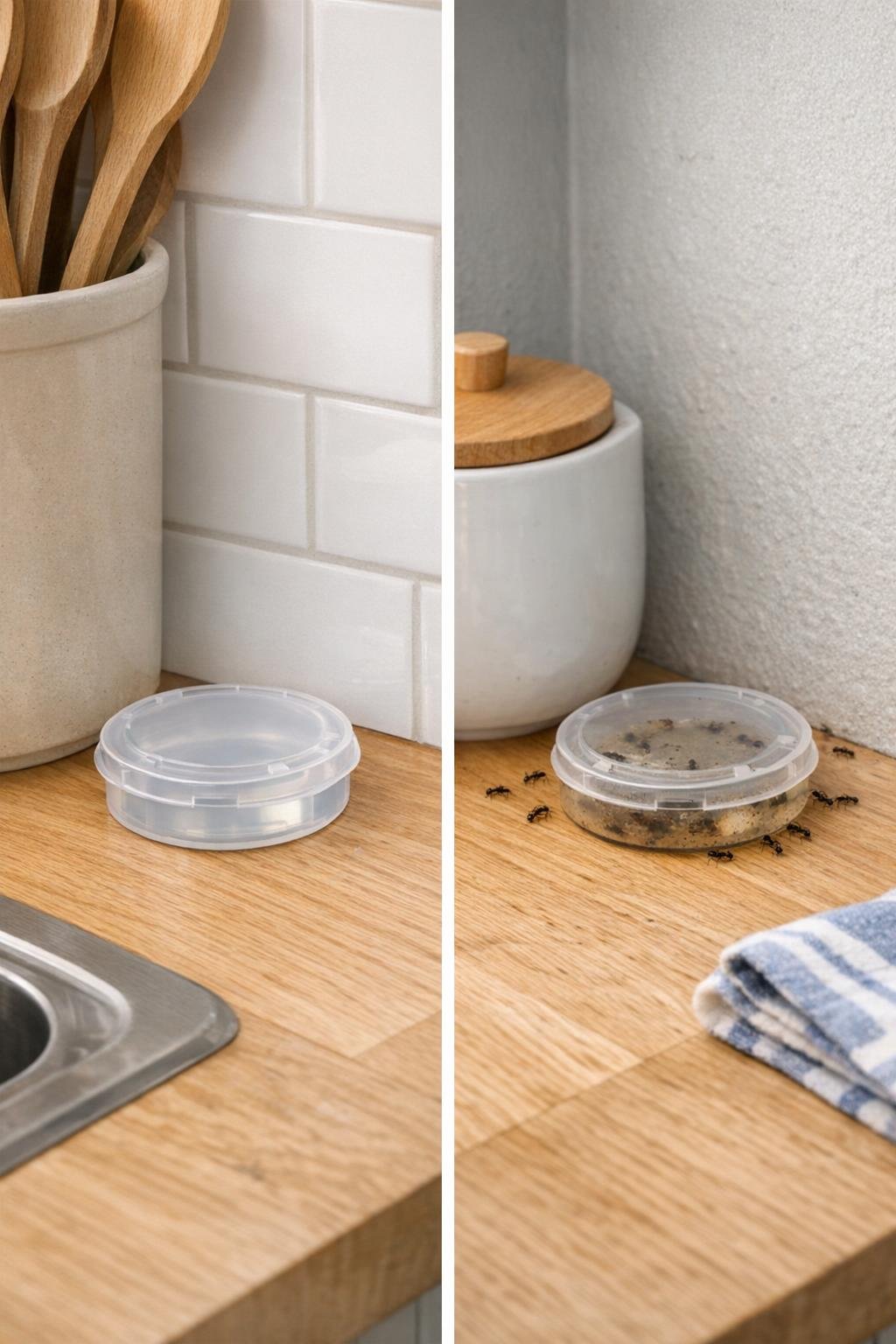
Borax is useful, but it still needs common-sense handling. I keep the mixture in very small amounts, label the mixing jar for household use only, and place bait where little hands and curious noses can’t reach it: behind the refrigerator, deep under the sink, behind a trash can, or high on a utility-room windowsill if that’s where the ants are traveling.
Wear gloves if your skin is sensitive, wash your hands after mixing, and never leave an open dish of bait in the middle of a floor or countertop. If you have a dog or cat that gets into everything, use a cotton round in a jar lid tucked behind an appliance instead of a free-standing liquid cap out in the open. And of course, store the borax itself up high in a closed cabinet.
7. Keep bait stations tidy with simple household items
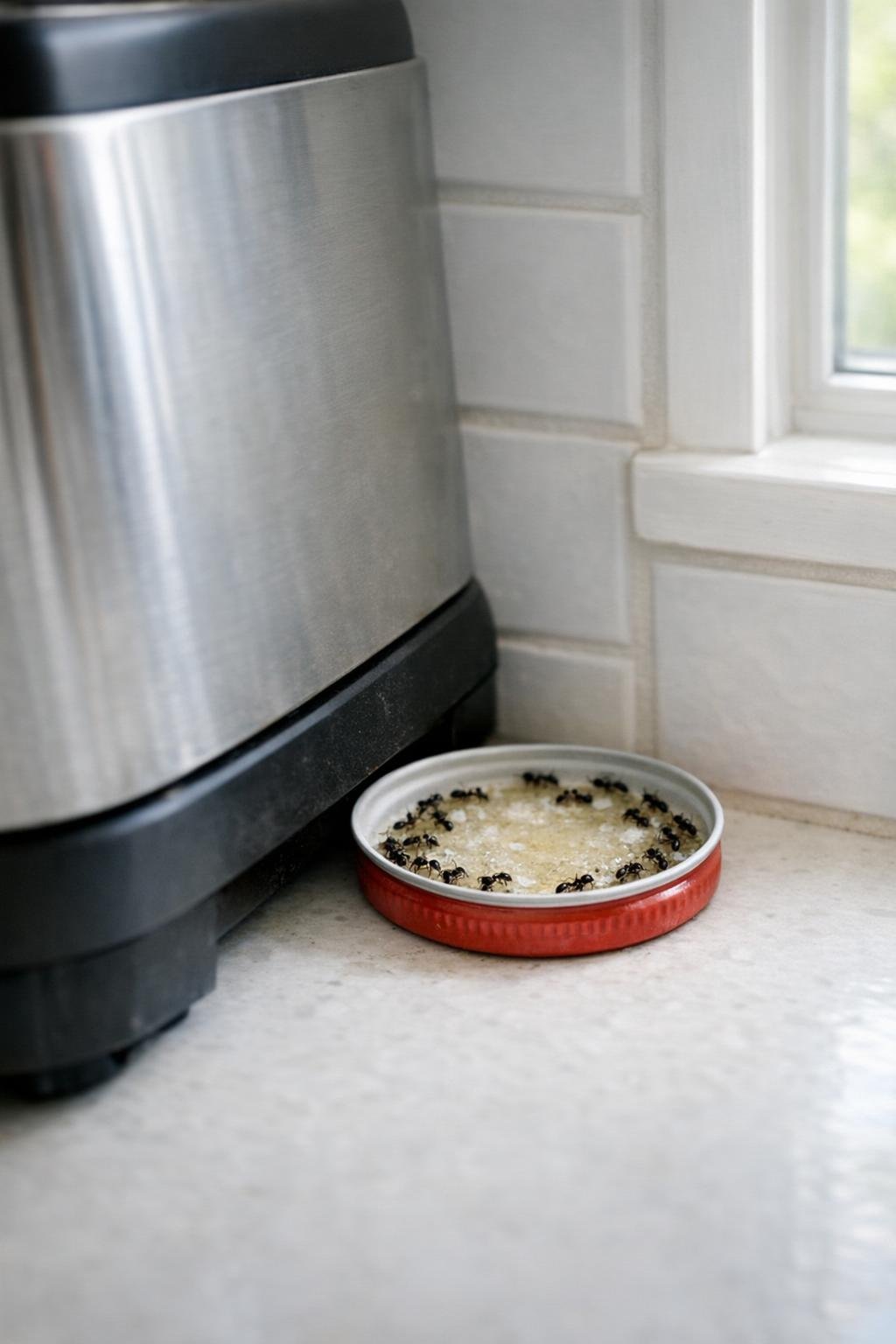
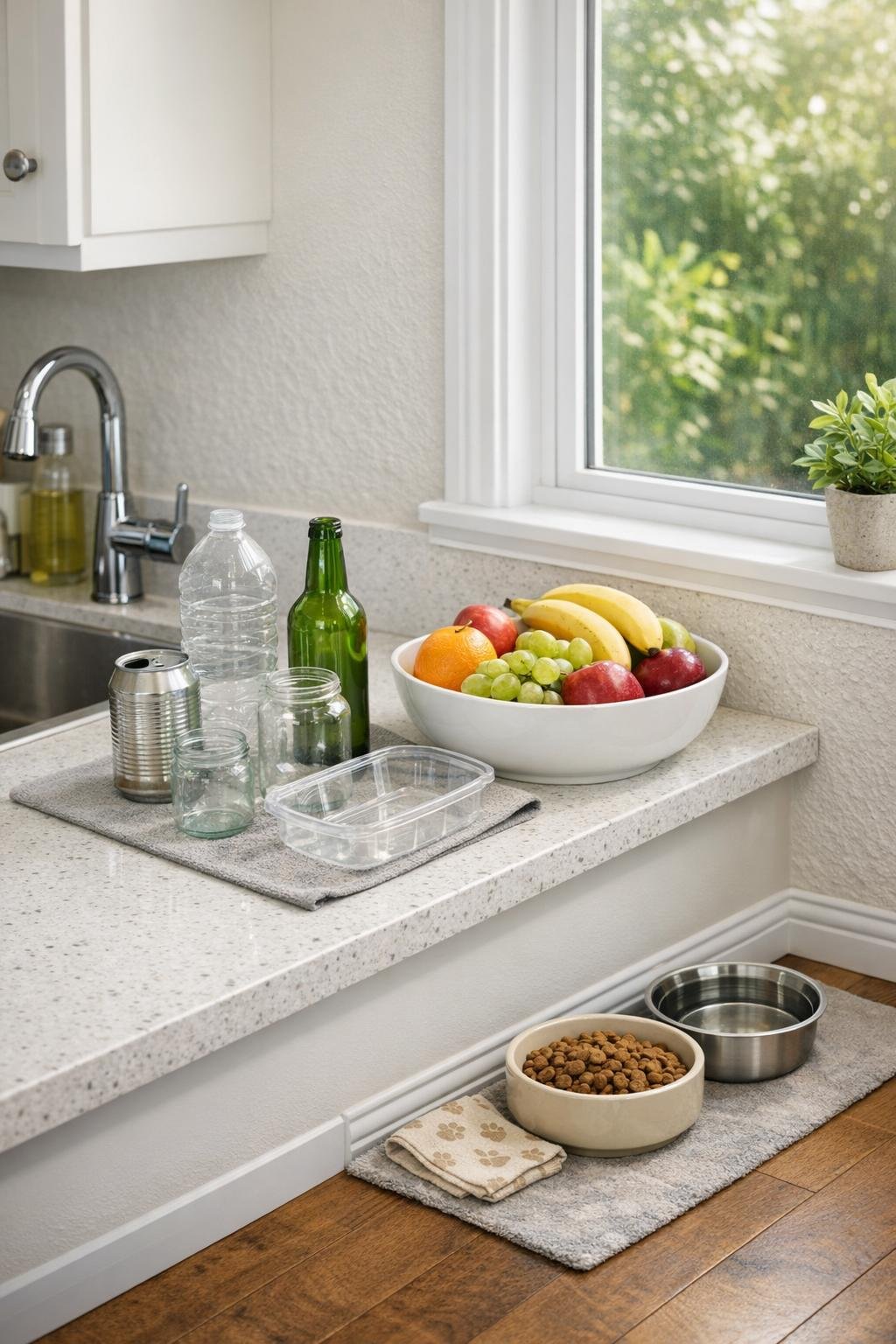
You do not need fancy traps. Jar lids from jam jars, plastic bottle caps, shallow canning lids, or even a teaspoon set on a scrap of wax paper will do the job. For a neater setup, I prefer a cotton round laid inside a lid with 1 teaspoon of thickened bait. That keeps drips down and makes pickup easier when it’s time to refresh.
Tuck stations into corners where ants already move: the back edge of a shelf, the inside corner under the sink, or beside the recycling bin. If you’re using liquid bait, keep the layer shallow, about 1/8 inch deep, so it doesn’t slosh. A neat station gets left alone, and that matters in a busy household.
8. Watch for signs it’s working, and signs you need a different bait
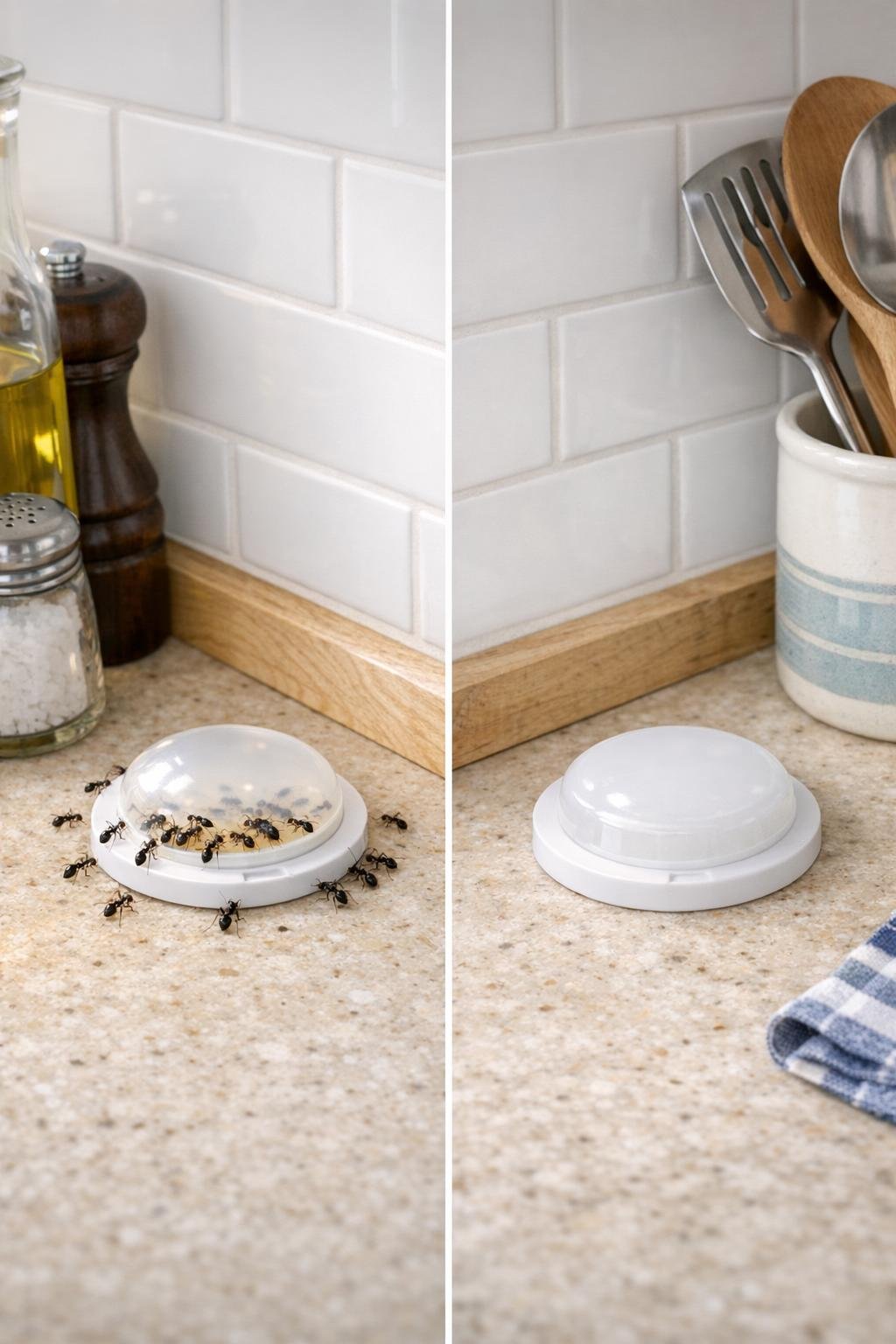
If the method is working, ants will find the bait, gather around it, and then the trail should begin shrinking over the next few days. You may also notice they become less interested in crumbs nearby because the bait is the easiest, richest food source available. That’s what you want.
If they ignore it completely for 24 hours, you may be dealing with ants that prefer grease or protein instead of sweets. In that case, the sugar bait may not be the right match. Another clue something is off: the bait is too strong and kills ants right beside the station, or it’s placed where they aren’t naturally foraging. When that happens, I remake the mixture carefully and move it closer to the trail.
9. Know when to prevent, switch tactics, or call a professional
Homemade bait is best for ordinary small sugar-ant invasions, but it won’t solve every situation. If you keep seeing ants coming from inside wall voids, find large outdoor nests right against the foundation, or suspect carpenter ants because they’re bigger and associated with damp wood, it’s time to change course. Repeated activity in the same wall or window frame after a full week of baiting deserves a closer look.
Once the ants are under control, prevention keeps them from coming right back. Wipe late-summer crumbs daily, rinse recycling before it goes in the bin, empty pet bowls overnight if you can, move overripe fruit to the refrigerator, and fix tiny water sources like sweating pipes or drippy faucet bases. I also like to seal entry points with caulk around window trim and where utility lines enter. Nana’s trick works best when you pair it with a clean kitchen and a house that’s a little less welcoming to scouts.
It’s one of those old-fashioned household tricks that has lasted for a reason: it’s simple, inexpensive, and smart when you use it with a little patience. If you mix it carefully, place it where ants are already working, and tidy up the things that attracted them in the first place, you can often stop a late-summer ant problem with very little fuss.