
Slug and snail damage can undo a week of careful gardening in a single damp night, especially around tender seedlings and leafy greens. One of the simplest barriers I still rely on is a collar made from empty aluminum soup cans, set around young plants to create a firm edge these pests struggle to cross.
I like this project because it uses true odds and ends from the shed or recycling bin, takes only a few minutes per plant, and works well for gardeners who want a low-cost, non-spray option. If you have a vegetable bed, a few hostas, or any young transplants that seem to get nibbled overnight, this is an easy old-school trick worth trying.
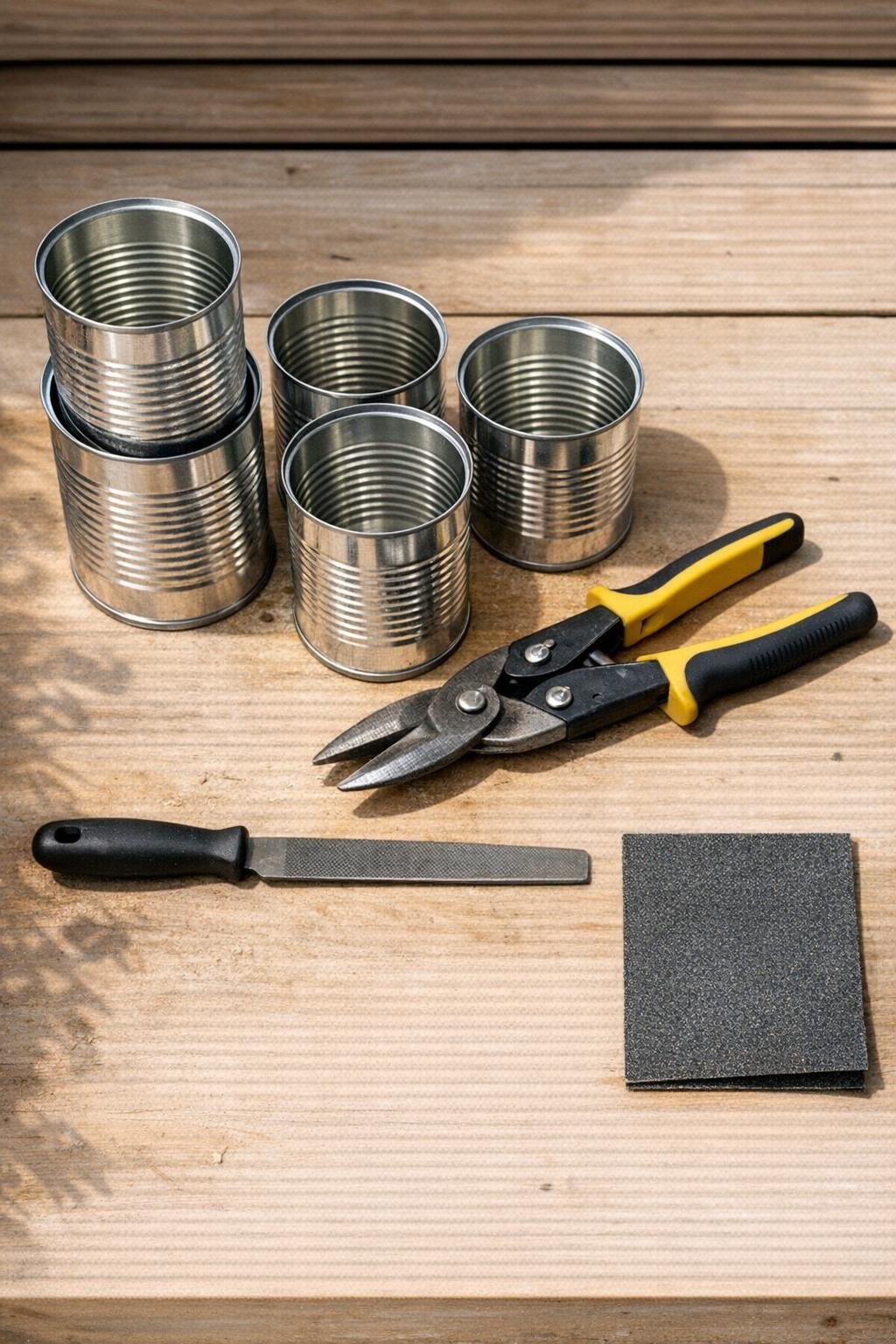
Materials
Instructions
1. Wash the soup cans thoroughly, remove any paper labels and glue, and let them dry completely so they are easy to handle.
2. Use the tin snips to cut out the bottom of each can, then trim away any hanging metal tabs so the opening is as even as possible.
3. Smooth the cut edge with a metal file or sandpaper until it no longer feels razor-sharp; this is the step that makes the collars much safer to place and remove.
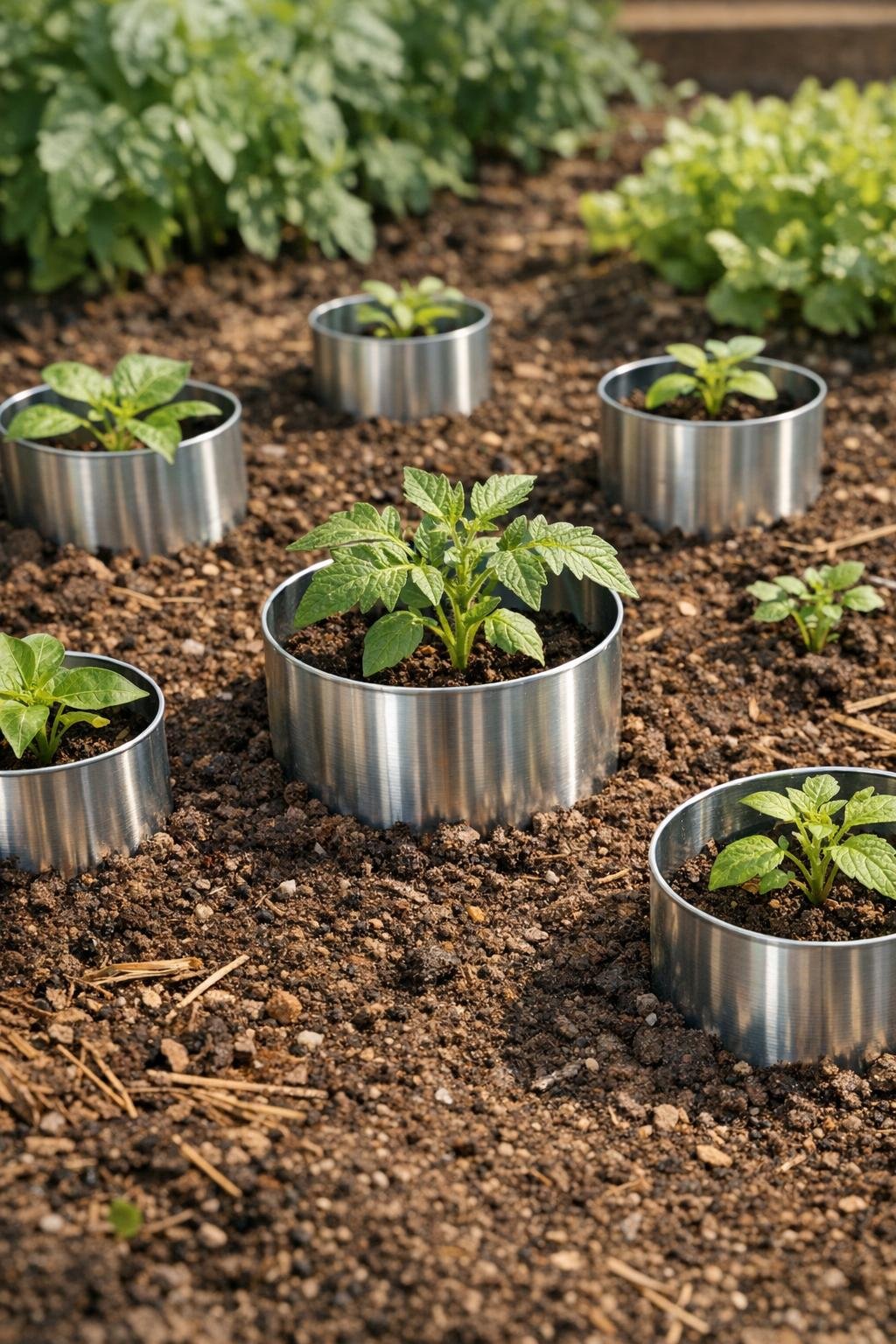
4. Press each can collar 1 to 2 inches into the soil around a seedling or small plant, leaving 2 to 3 inches standing above the soil line.
5. Leave a little space between the collar and the plant stem so the seedling can grow and so moisture does not stay trapped against the plant.
6. Check the collars after rain or watering, and reset any that have shifted so the barrier stays snug against the soil with no gaps at the base.
7. Remove or replace the collars once plants are sturdy and mature enough to tolerate a little nibbling, or when stems begin to crowd the ring.
Variations & Tips
For larger transplants: If a soup can is too narrow, overlap two cut can bodies slightly to make a wider ring, then press that larger collar into the soil around the plant.
For extra slug pressure: I sometimes pair collars with morning hand-picking or reduced evening watering, because damp nighttime conditions are when slugs and snails are most active.
For plant safety: Always run your finger carefully along the cut edge after filing; if it still catches, file again before using it near tender stems or your hands.
For best placement: This works especially well for lettuce, basil, marigolds, hostas, and newly transplanted brassicas, all of which tend to be irresistible to slugs in my garden.
For long-term use: Aluminum collars may eventually bend or corrode, but they usually last long enough to protect seedlings through their most vulnerable stage, which is when the barrier matters most.