
Side yards are often the most overlooked spaces around a house. In my experience, they can easily turn into narrow pass-throughs that collect hoses, pots, and good intentions. This vertical succulent wall is one of my favorite ways to make that kind of awkward spot feel intentional, polished, and genuinely beautiful without giving up precious floor space.
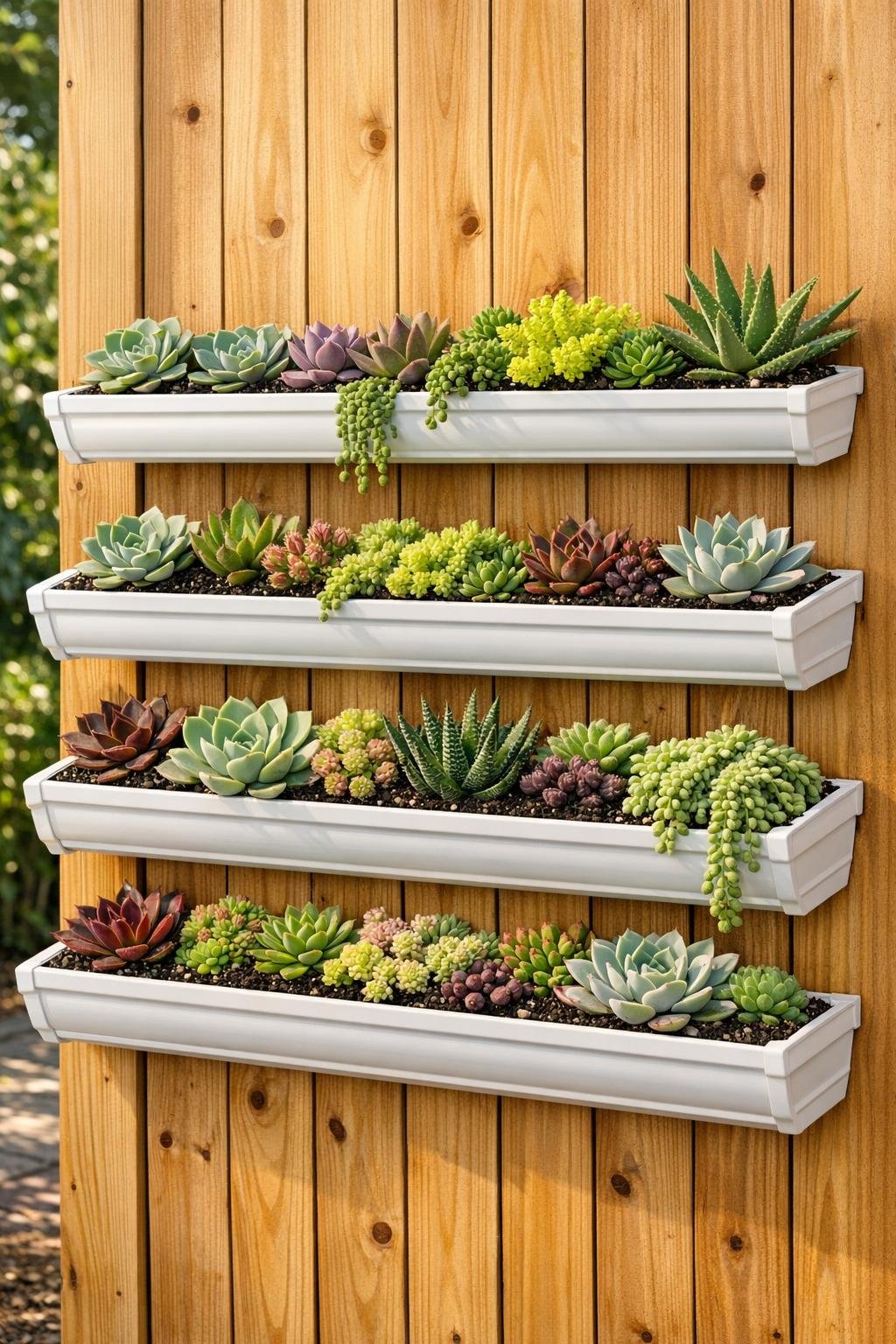
The project is simple at heart: white vinyl rain gutters mounted in neat rows on a cedar fence panel, then filled with a fast-draining soil mix and easy-care succulents. If you want a clean, modern garden feature that looks high-end but is very doable in a weekend, this is a terrific project for beginners and seasoned DIYers alike.
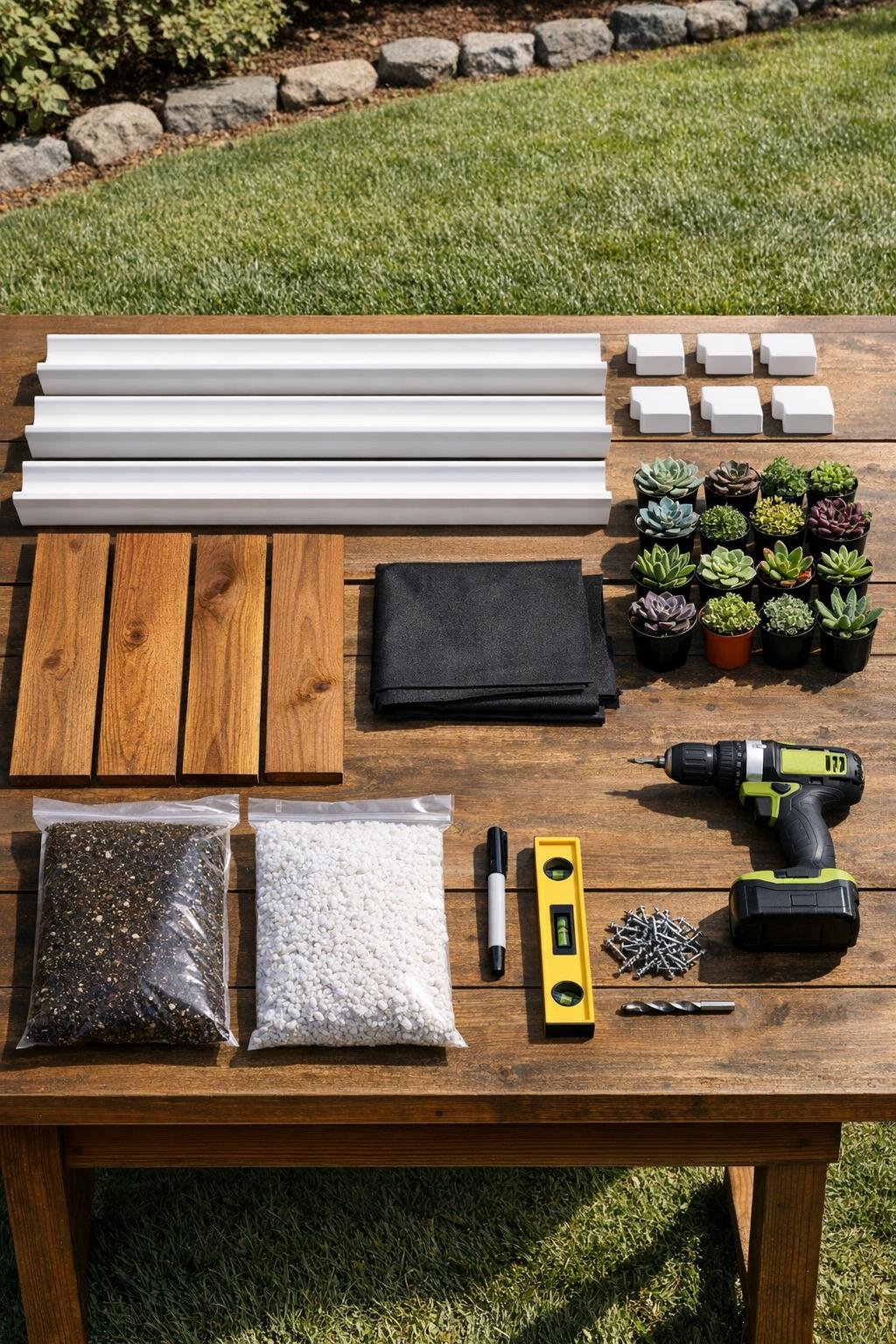
Materials
Instructions
1. Set the cedar fence panel in place and confirm it is secure, level, and firmly attached to posts or a stable frame. This project gets surprisingly heavy once filled, so the support structure matters.
2. Measure the usable height of the panel and mark five evenly spaced horizontal lines for the gutters. Leave about 10 to 12 inches between rows so the succulents have room to grow and cascade slightly.
3. Cut the white gutters to a matching 48-inch length if they are not already sized, then snap or glue the end caps onto both ends of each gutter. Check that every gutter sits flat before mounting.
4. Drill 6 to 8 drainage holes along the bottom of each gutter, spacing them about 6 inches apart. Add two small pilot holes along the back face of each gutter where the mounting screws will go.
5. Cut strips of landscape fabric to fit inside each gutter, allowing a little extra to curl up the ends. This lining helps keep soil from washing out while still allowing water to drain.
6. Hold the first gutter against the lowest marked line and use a level to keep it straight. Drive exterior screws with washers through the pilot holes and into the cedar panel, using at least four screws per gutter.
7. Repeat the mounting process for the remaining rows, checking level each time before tightening the screws fully. Stand back after the third row to make sure the spacing looks even to the eye, not just on the tape measure.
8. Mix the cactus soil and perlite in a large container or wheelbarrow at about a 3:1 ratio. Add a thin layer of gravel to the bottom of each gutter, then fill each one about three-quarters full with the soil mix.
9. Remove the succulents from their nursery pots and loosen the roots gently with your fingers. Arrange them first before planting so you can balance colors, rosette sizes, and trailing varieties across the wall.
10. Plant the succulents into the gutters, setting the root balls shallow and firming soil around each plant. Keep the crowns above the soil line and leave a little breathing room between plants because they will spread.
11. Top off the gutters with a little extra soil where needed and brush away loose mix from the gutter edges and fence. Water lightly just until the soil settles, being careful not to flood the fresh planting.
12. Place the finished wall where it gets bright light and protect it from heavy soaking rain for the first week if possible. After that, water only when the soil has dried out well, since succulents prefer restraint more than generosity.
Variations & Tips
For deeper planting space: Use oversized vinyl gutters or add one fewer row with more vertical spacing if you want room for larger rosette succulents.
For better drainage: If your climate is rainy, drill a few extra holes and tilt each gutter ever so slightly toward one end so water does not linger.
Best plant choices: I like mixing echeveria, sedum, hens-and-chicks, string of pearls, and burro’s tail for a combination of upright shapes and soft trailing edges.
Fence protection: If your cedar panel is unfinished, a clear outdoor sealant applied before mounting can help it hold up longer against regular watering.
Sun exposure: Most succulents want bright light, but afternoon sun in a tight side yard can be intense. If leaves start bleaching, switch in tougher sedums or give the wall a bit of filtered shade.
Weight awareness: Wet soil adds a lot of weight, so do not mount gutters to a weak decorative screen alone. Fasten into solid fence rails, posts, or added wood bracing behind the panel.
Maintenance habit: Every few weeks, pinch off dead leaves and rotate in fresh cuttings where gaps appear. Succulent walls actually look better with this little bit of editing, much like tending a good container garden.