
When summer heat settles in and the top inch of soil dries out before lunch, I start thinking less like a cook and more like a problem-solver. This simple deep-root watering spike made from a plastic milk jug, a length of PVC pipe, and a garden stake is one of those low-cost fixes that looks almost too plain to matter—until you see how much better your tomatoes, peppers, and thirsty annuals respond to water delivered below the surface.
I like this project because it uses common shed leftovers, takes very little time, and helps direct water right where roots can use it instead of letting it evaporate. If you grow vegetables, shrubs, or container plants that dry out quickly, this is an easy afternoon project that can stretch your watering routine and make every gallon count.
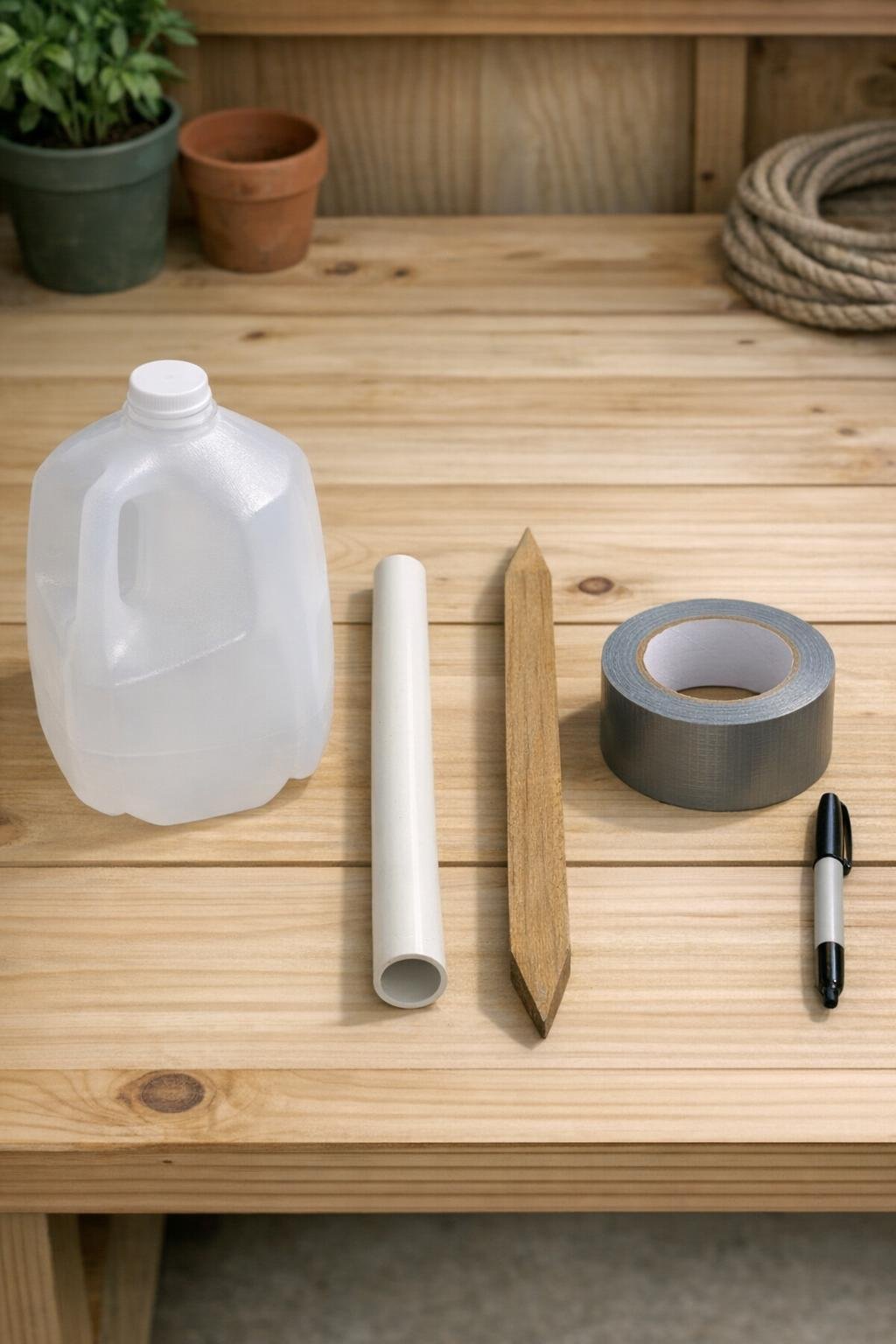
Materials
Instructions
1. Wash the milk jug thoroughly and let it dry so no dairy residue is left inside. Keep the cap, because it helps control how quickly water drains.
2. Use the marker to mark a vertical line on one side of the jug from near the shoulder down toward the base where the PVC pipe will sit. Mark three to five evenly spaced hole points along the lower half of that line.
3. Punch the marked holes in the milk jug, making each opening about 1/8 inch wide. Keep the holes low on the jug so water feeds into the root zone instead of spilling near the soil surface.
4. Punch six to eight small holes around the bottom 6 inches of the PVC pipe. Space them on different sides so water can seep out in multiple directions underground.
5. Push the wooden garden stake firmly against the outside of the PVC pipe and tape them together from top to bottom. This gives the pipe enough rigidity to slide into firm garden soil without bending or shifting.
6. Tape the side of the milk jug to the top portion of the PVC pipe so the jug’s punched holes line up against the pipe. Press the tape tightly so the jug sits securely and does not wobble when lifted or set into place.
7. Fill the jug with 1 cup of water and watch how it moves through the jug holes into the pipe. If the flow seems too fast, tighten the cap fully; if it seems too slow, loosen the cap slightly to allow better airflow.
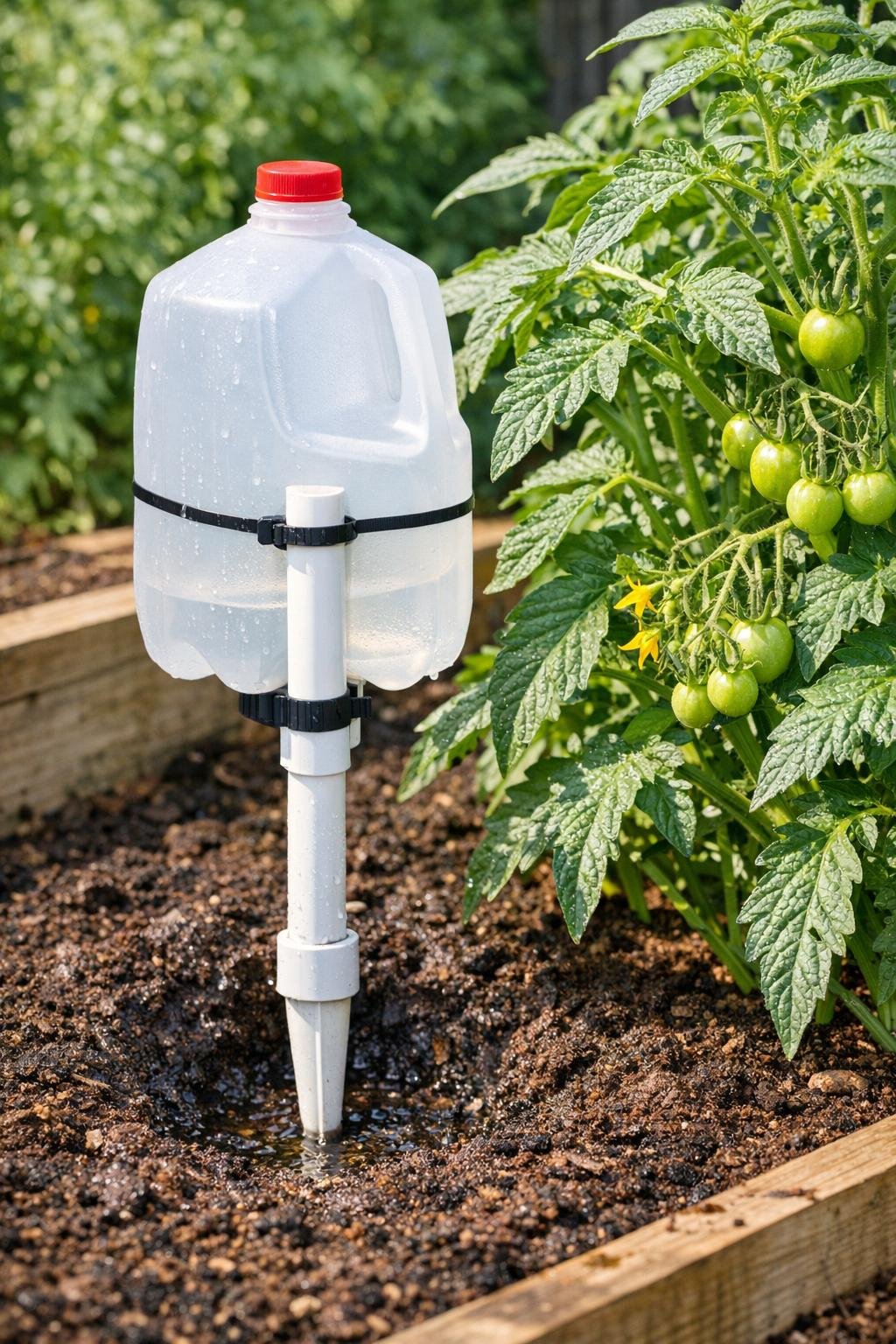
8. Choose a spot 4 to 6 inches away from the base of your plant and push the stake-and-pipe end 6 to 8 inches into the soil. Set the jug upright with the punched side facing the pipe so gravity feeds water downward.
9. Fill the jug with water when your plant needs a slow, deeper soak. Let it drain gradually, then refill as needed based on the plant size, temperature, and how quickly your soil dries.
Variations & Tips
For tomatoes and peppers: Place the spike a few inches farther from the stem as plants mature, since larger root systems spread outward and benefit from wider watering coverage.
For containers: Shorten the PVC pipe to 6 to 8 inches so it fits deep pots without bottoming out. This works especially well for large patio tomatoes and dwarf fruit shrubs.
Cap control: The milk jug cap acts like a simple airflow regulator. In my experience, that tiny adjustment makes a big difference, much like venting a stockpot lid when you want to slow a simmer instead of stop it outright.
Hole size matters: Start with smaller holes than you think you need. You can always widen them, but if they are too large from the start, the jug will empty too quickly and defeat the purpose of deep watering.
Best soil timing: Install the spike after a regular watering or rain, when the soil is easier to penetrate. Dry, compacted ground is much harder on both the stake and the PVC pipe.
Fertilizer option: You can use diluted liquid fertilizer in the jug during feeding weeks, but flush with plain water afterward so residue does not build up inside the holes.
Make a few at once: If you have a row of tomatoes or cucumbers, batch-making several spikes saves time. I treat it the same way I treat mise en place in the kitchen: a little setup at the start makes the whole job smoother later.