
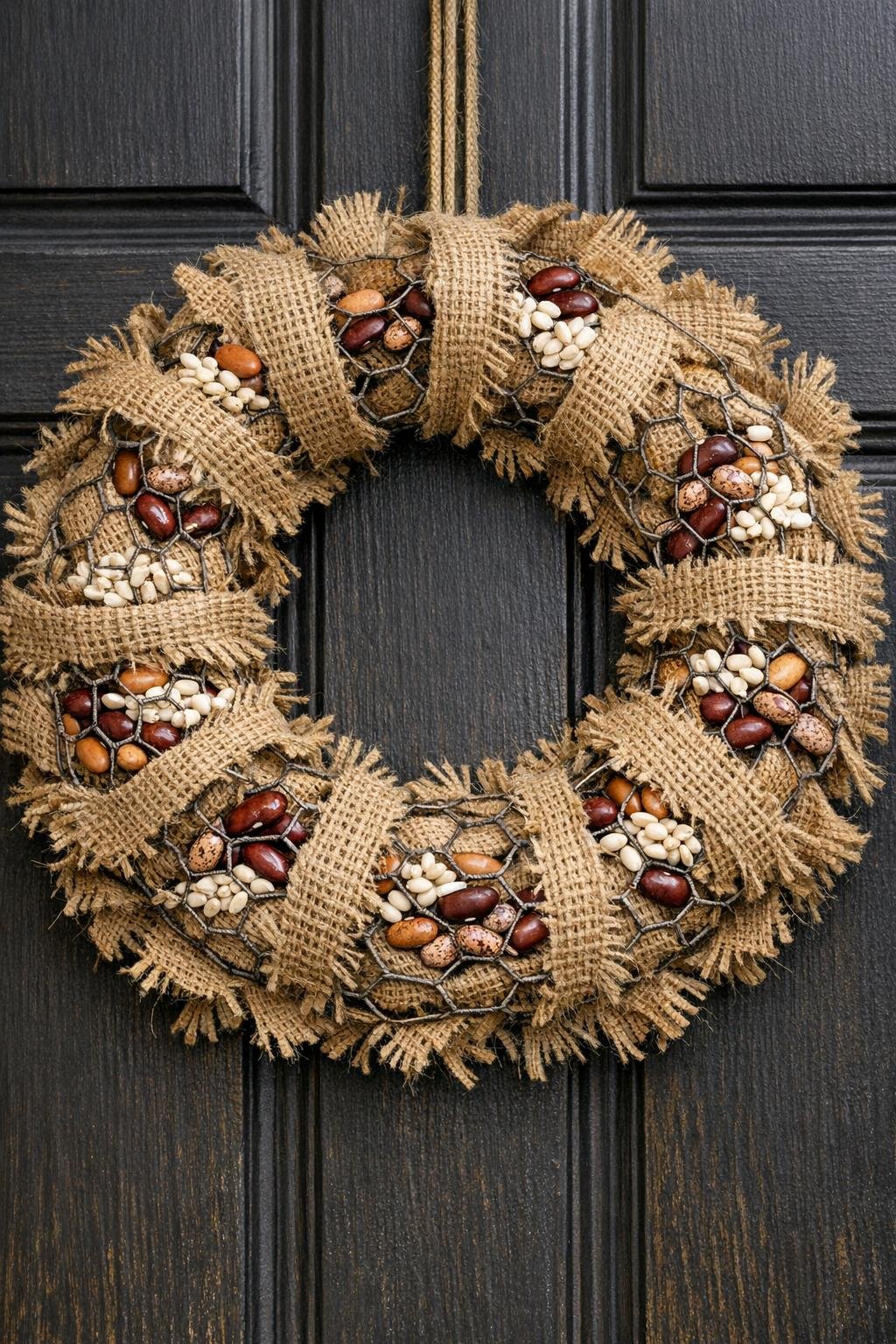
This rustic fall wreath is one of those deceptively simple projects that looks far more expensive than it is. I’m using just three main items here—chicken wire, torn burlap strips, and two pantry staples—to create a textured wreath with that cozy, harvest-season look that works from early September straight through Thanksgiving.
I like projects like this because they rely on texture more than precision, so they’re approachable even if you don’t consider yourself especially crafty. If you can tear fabric, twist wire, and tuck a few accents into place, you can make this. It’s also a satisfying way to get a custom front-door piece without the boutique price tag.
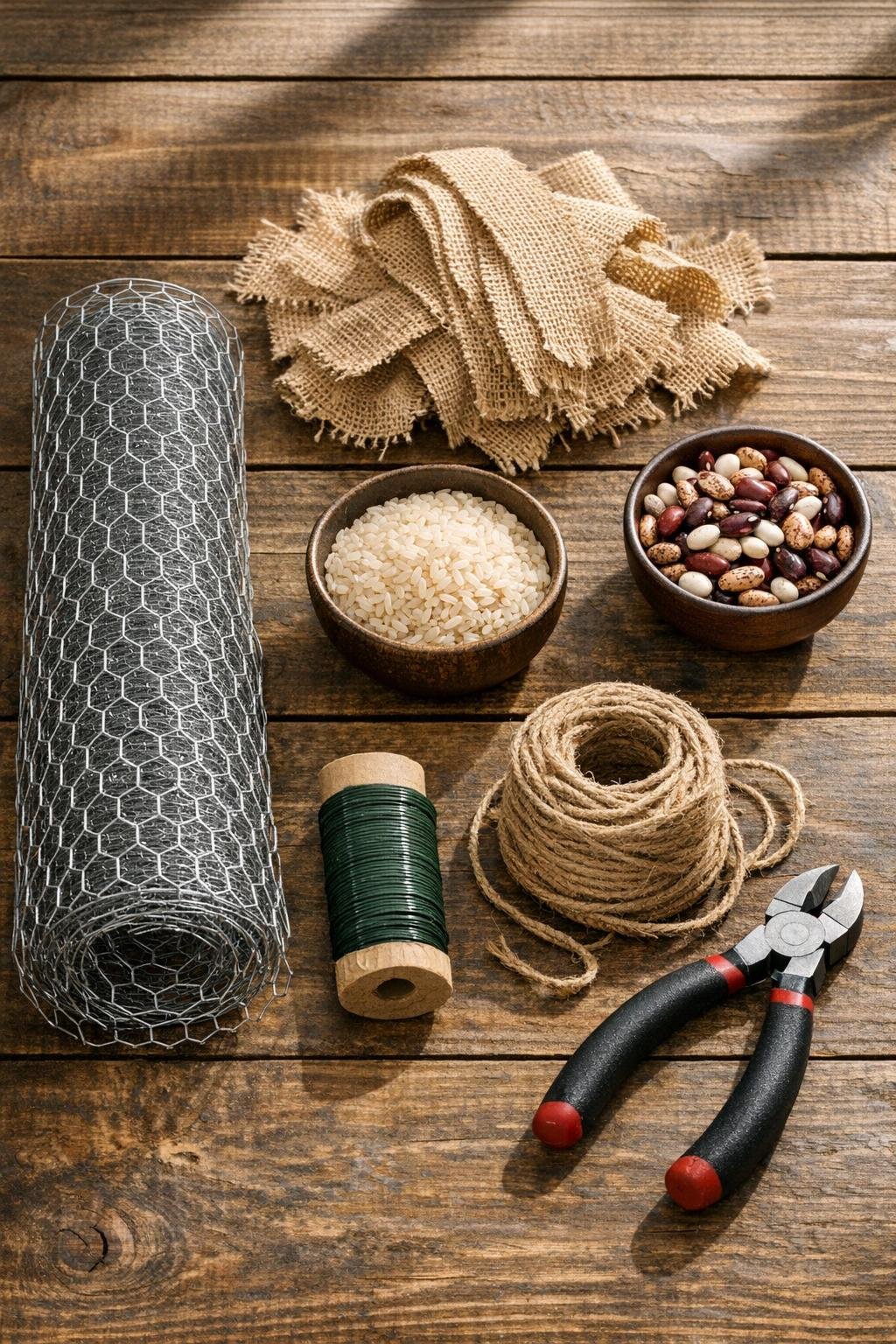
Materials
Instructions
1. Cut a piece of chicken wire to about 24 by 8 inches, then fold in any sharp cut ends with pliers or your fingers in gloves so the edges are safer to handle.
2. Bring the short ends of the chicken wire together to form a ring about 10 to 12 inches across, overlapping the ends by 1 to 2 inches.
3. Twist short pieces of floral wire through the overlapped chicken wire in three or four spots to hold the ring firmly together.
4. Tear your burlap into strips if you haven’t already, keeping the widths roughly 2 inches so they weave easily but still fill the wire openings.
5. Start weaving one burlap strip in and out through the chicken wire, pulling up loose loops as you go so the burlap puffs and gathers rather than lying flat.
6. Continue adding burlap strips, overlapping the ends by 2 to 3 inches and tucking those overlaps into the wire so the transitions disappear into the texture.
7. Fill the entire ring with woven burlap until the chicken wire looks mostly covered, leaving just enough of the wire visible to keep that rustic, handmade look.
8. Pour the dried beans and rice into the center channel and small pockets of the woven burlap, using them as subtle natural filler to add visual interest and a harvest feel.
9. Secure any loose areas by threading short pieces of floral wire around the back of the wreath and catching nearby burlap loops so they stay full and evenly spaced.
10. Tie a 2-foot length of jute twine through the top back section of the wreath to create a hanging loop, then wrap the knot with a small extra strip of burlap if you want a cleaner finish.
11. Fluff the loops all around the ring, rotate the wreath as you work, and make small adjustments until the shape looks balanced and full from the front.
Variations & Tips
Add warm color: If you want a richer fall palette, weave in a few strips of rust, mustard, or deep orange burlap alongside the natural tan. I’d still keep at least half the wreath neutral so it stays rustic rather than looking too busy.
Use pantry staples sparingly: Beans and rice work best as tucked accents, not heavy filler. Too much weight can distort the wire ring, especially if the wreath will hang outdoors.
Make it fuller: For a puffier, boutique-style wreath, cut an extra 1/2 yard of burlap and add more gathered loops around the outer edge. This is the easiest way to make the finished piece look lush.
Protect outdoor use: If your front door is exposed to rain, hang the wreath in a covered area. Burlap and pantry items both hold moisture, and I’ve learned the hard way that sheltered placement keeps a wreath looking good much longer.
Tidy the back: If the back looks scratchy or uneven, weave one or two extra burlap strips across exposed wire sections. It won’t show from the front, but it helps the wreath hang more neatly against the door.
Swap the shape: This same technique also works as a small oval or even a long centerpiece ring for a table. The method is flexible, which is one reason I come back to it every fall.