
I love a project that borrows from the kitchen and makes perfect sense somewhere else, and this hand towel holder does exactly that. By attaching leather straps behind a rustic wooden cutting board, you get a bathroom piece that feels warm, practical, and just a little unexpected. It has that collected, handcrafted look people always assume came from a boutique home shop.
This is a beginner-friendly build, and it’s especially good if you like simple home décor projects with a useful payoff. As someone who spends plenty of time thinking about materials and how they age—much like a good wooden spoon or a well-used cutting board—I appreciate that this one gets better-looking with wear.
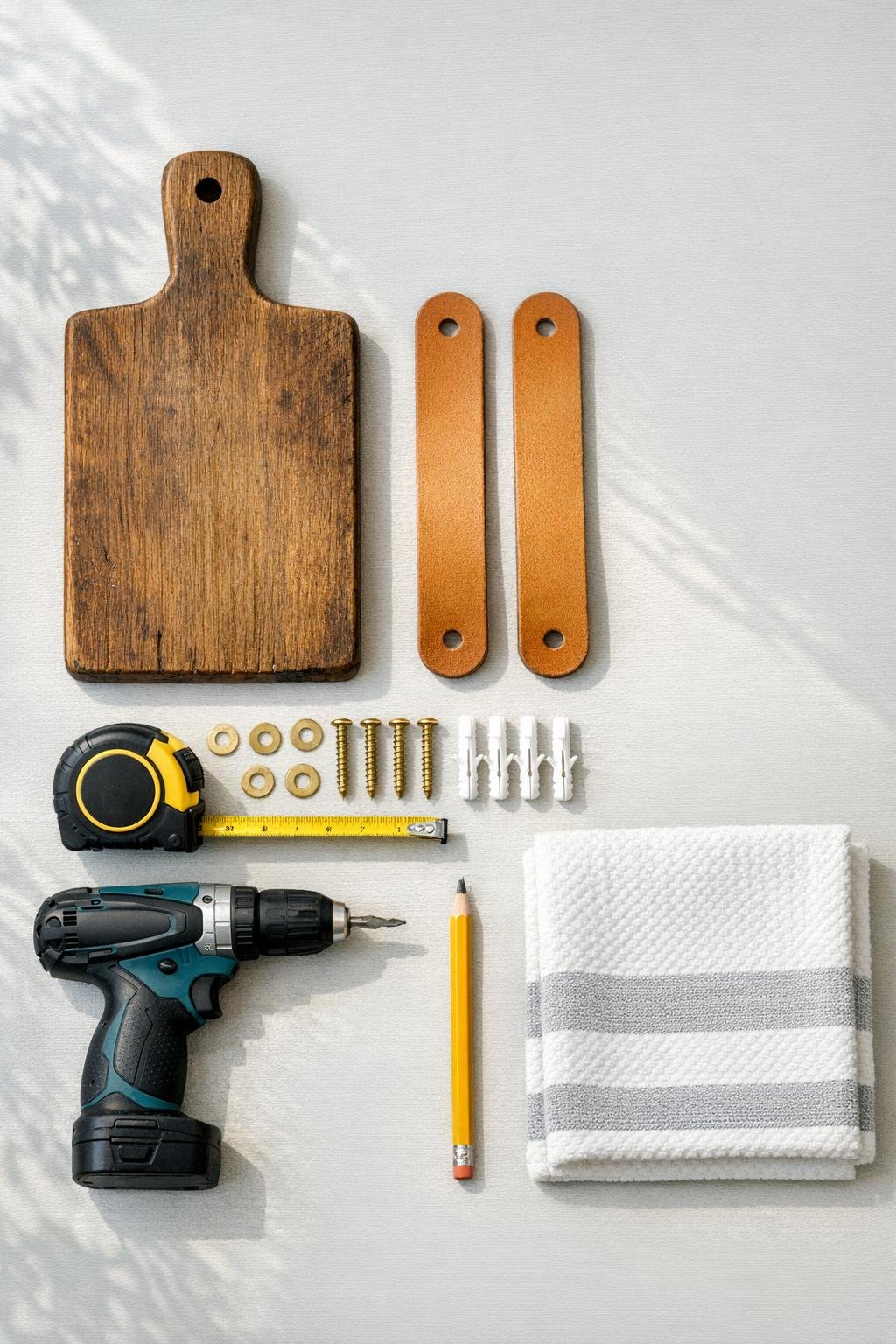
Materials
Instructions
1. Wipe down the cutting board and check that the back is smooth enough for the leather straps to sit flat. If it feels splintery, give the back a quick light sanding.
2. Cut two leather straps to 8 inches long if they are not already sized. I like this length because it gives enough room for a hand towel to slide through without sagging too much.
3. Turn the cutting board face down and mark two vertical strap positions on the back, spacing them evenly about 3 to 4 inches apart. Keep them centered so the towel will hang balanced from the front.
4. Mark the screw holes near the top and bottom of each leather strap, about 1/2 inch from each end. Punch or drill those holes before attaching the straps so the leather stays neat and doesn’t twist.
5. Place the straps back on your marked lines and transfer the hole positions onto the cutting board. Drill shallow pilot holes into the wood to make assembly easier and help prevent splitting.
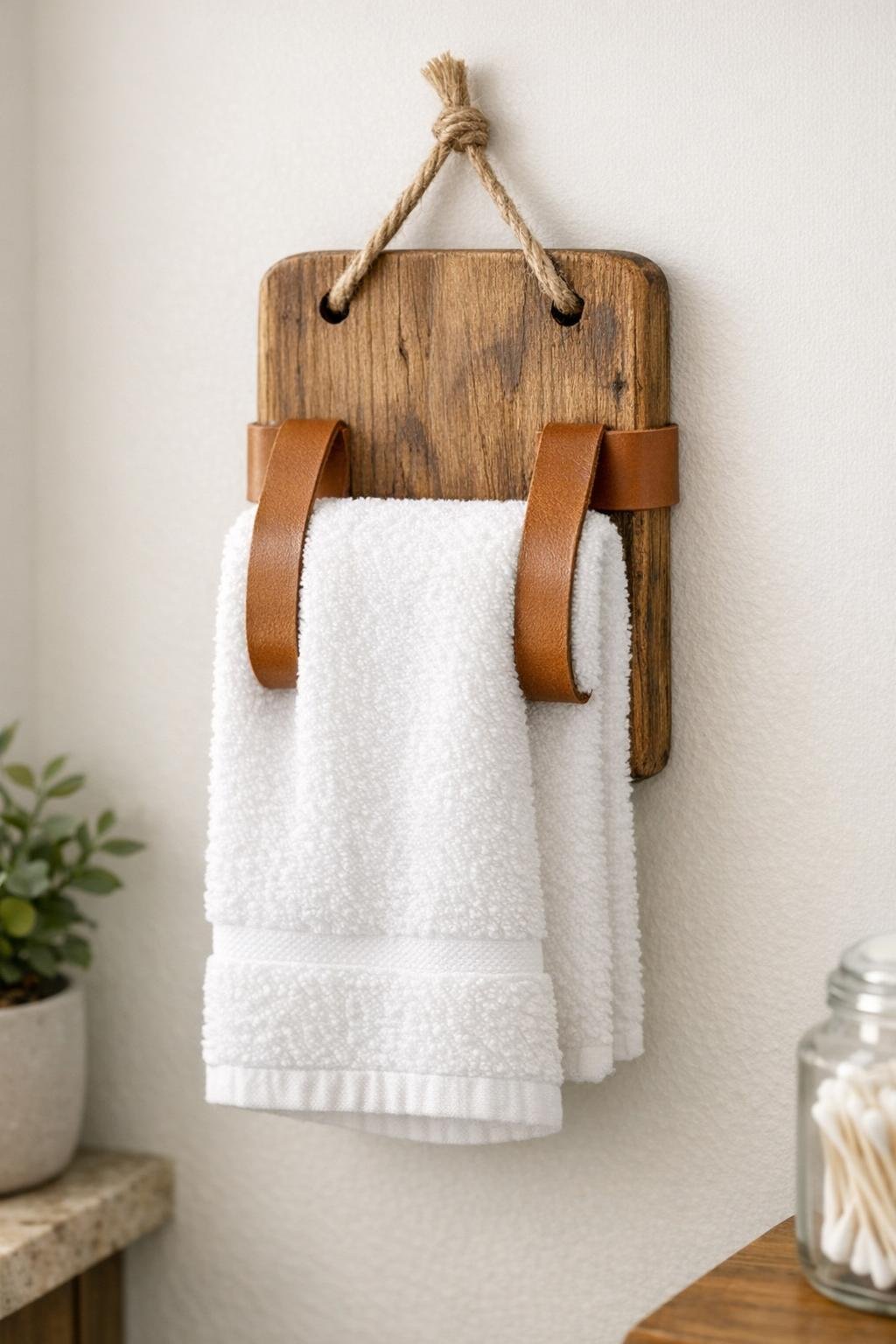
6. Attach each leather strap to the back of the board using two brass screws and finish washers per strap. The straps should form loops that extend just beyond the lower edge of the board so a towel can slip through from the front.
7. Test the towel opening by sliding your folded hand towel through the loops from the front side. If needed, loosen and reposition the straps slightly before tightening everything fully.
8. Decide whether you want to hang the board from its handle hole or mount it with screws through the upper back. If your board already has a handle opening, hanging it on a wall screw is the simplest and keeps the front clean.
9. Hold the board against the bathroom wall, use a level, and mark the mounting point or points. Install drywall anchors if needed, then drive in the wall screw or screws securely.
10. Hang the cutting board, thread in the hand towel, and adjust the folds so it hangs evenly. Give the holder a gentle tug to make sure everything feels stable before regular use.
Variations & Tips
Use a different board shape: A paddle-style cutting board with a rounded handle works beautifully, but a rectangular bread board also gives you a nice farmhouse look.
Try another leather finish: Tan leather looks warm and classic, but dark brown or black leather can make the piece feel more modern. Much like choosing a serving board for a cheese plate, the tone changes the whole mood.
Seal the wood carefully: If the board is raw wood, add a light coat of matte sealer to protect it from bathroom humidity. I’d avoid anything too glossy, since the rustic character is really part of the charm.
Swap the hardware style: Brass screws and washers add warmth, while black hardware gives a more industrial look. Just keep the screw length short enough that it won’t poke through the front of the board.
Make towel changes easier: Leave just enough slack in the leather loops for the towel to slide through smoothly. Too tight, and it becomes fussy; too loose, and the towel droops.
Check weight and wall type: This holder is best for hand towels, not heavy bath towels. If you’re mounting into tile or plaster, use the right anchors and drill bit for that surface.