
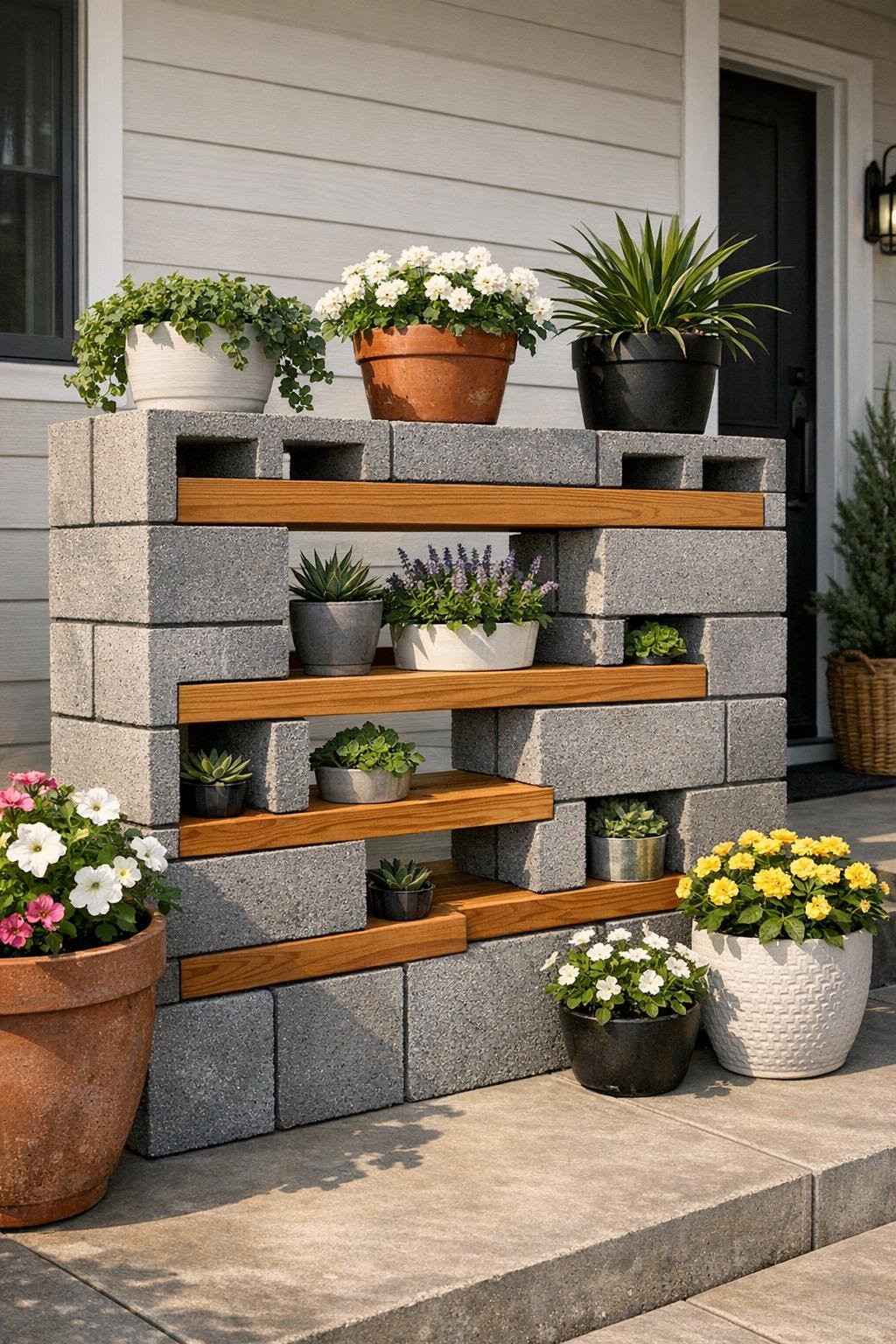
There’s something especially satisfying about a front porch project that looks tidy and polished, but doesn’t require a full workshop or a weekend of hard carpentry. This outdoor planter wall is made by stacking grey cinder blocks and sliding smooth cedar slats through the openings, creating a simple structure with plenty of charm and room for potted plants. It gives you that clean, modern look, but the cedar keeps it warm and welcoming.
I’ve always believed a porch ought to feel like an invitation. Around here in the Midwest, we notice the front steps, the flower pots, and whether a home looks cared for before we ever knock on the door. This project is a wonderful fit for anyone who wants a handsome privacy screen, a backdrop for planters, or just a clever way to dress up a plain porch wall without making things too complicated.
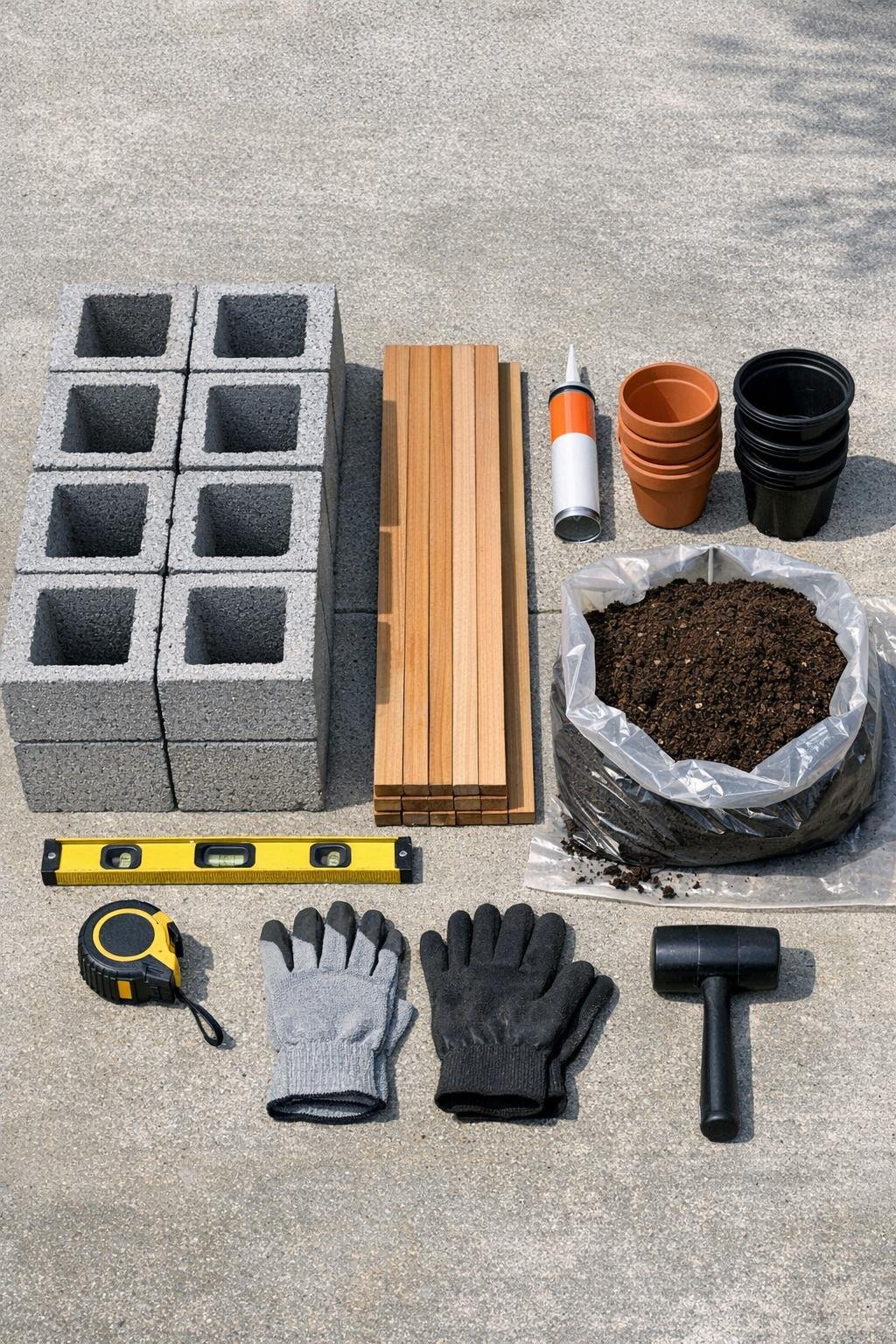
Materials
Instructions
1. Measure the porch area where you want the planter wall to sit, and make sure you have at least 50 inches of width and 18 inches of depth for a stable layout. Pick a spot that gets the right amount of sun for the plants you plan to use.
2. Sweep the area clean and check that the surface is level. If the porch is uneven, spread a thin layer of pea gravel under the footprint or adjust placement until the blocks sit flat without wobbling.
3. If you want to protect the porch surface, place furniture pads under the corners of the bottom cinder blocks or set down a layer of landscape fabric first. This is especially helpful on painted concrete or a sealed porch floor.
4. Lightly sand any rough spots on the cedar slats, then brush on exterior wood sealer if you want extra weather protection. Let the slats dry fully before assembly.
5. Arrange the first row of 4 cinder blocks on the porch with the openings running side to side, spacing them tightly together in a straight line. Check with a level across the tops and make small adjustments until the row is even.
6. Run a bead of exterior adhesive on top of the first row wherever the next row of blocks will touch. Stack a second row of 4 cinder blocks directly above the first, keeping the openings aligned so the cedar slats can pass through cleanly.
7. Add more adhesive and stack the third row of 4 cinder blocks on top, creating a three-block-high wall. Tap blocks gently with a rubber mallet if needed so the faces line up nicely.
8. Slide the cedar slats through the aligned openings in the cinder blocks, spacing them evenly from top to bottom. Use two slats per horizontal run if that best fills your block openings and gives the look you want.
9. Step back and check the spacing and overhang of each cedar slat, then center them so both ends look balanced. Add a small amount of adhesive inside selected block openings if you want the slats held more firmly in place.
10. Set your pots along the base, on top of some block openings, or clustered beside the wall, depending on your porch space and plant sizes. Fill each pot with potting mix, loosen the nursery roots gently, and plant them at the same depth they were growing before.
11. Water the plants well and wipe any soil or adhesive smudges off the blocks and cedar. Once everything is clean, let the adhesive cure according to the package directions before moving or leaning on the wall.
Variations & Tips
For a taller screen: If you want more privacy, make the wall one row taller, but only if you can secure it safely to a solid surface or side support. For a freestanding porch piece, stability matters more than height.
For a softer cottage look: Use trailing plants like ivy, sweet potato vine, or calibrachoa so the greenery spills around the blocks and cedar. It takes the edge off the concrete in a lovely way.
For a cleaner modern style: Keep the planting simple with matching black pots and just one or two plant varieties. Repetition makes the whole thing look very polished.
Cedar care: Left unfinished, cedar will weather to a silvery color over time. I happen to like that aged look, but if you prefer the fresh honey tone, reapply a clear outdoor sealer every season or two.
Best plant choices: On a sunny porch, petunias, geraniums, and herbs do well; on a shaded porch, ferns, coleus, and ivy are easier choices. Match your plants to the light first, and you’ll save yourself disappointment later.
Stability tip: Always test the wall with a gentle push before adding pots. If there’s any rocking or shifting, re-level the base and use adhesive between courses before calling it done.
Seasonal swap: One of my favorite things about this project is how easy it is to refresh. In spring I’d use bright annuals, in summer maybe herbs, and by autumn I’d tuck in mums or small pumpkins nearby for a porch that feels right at home in the season.