
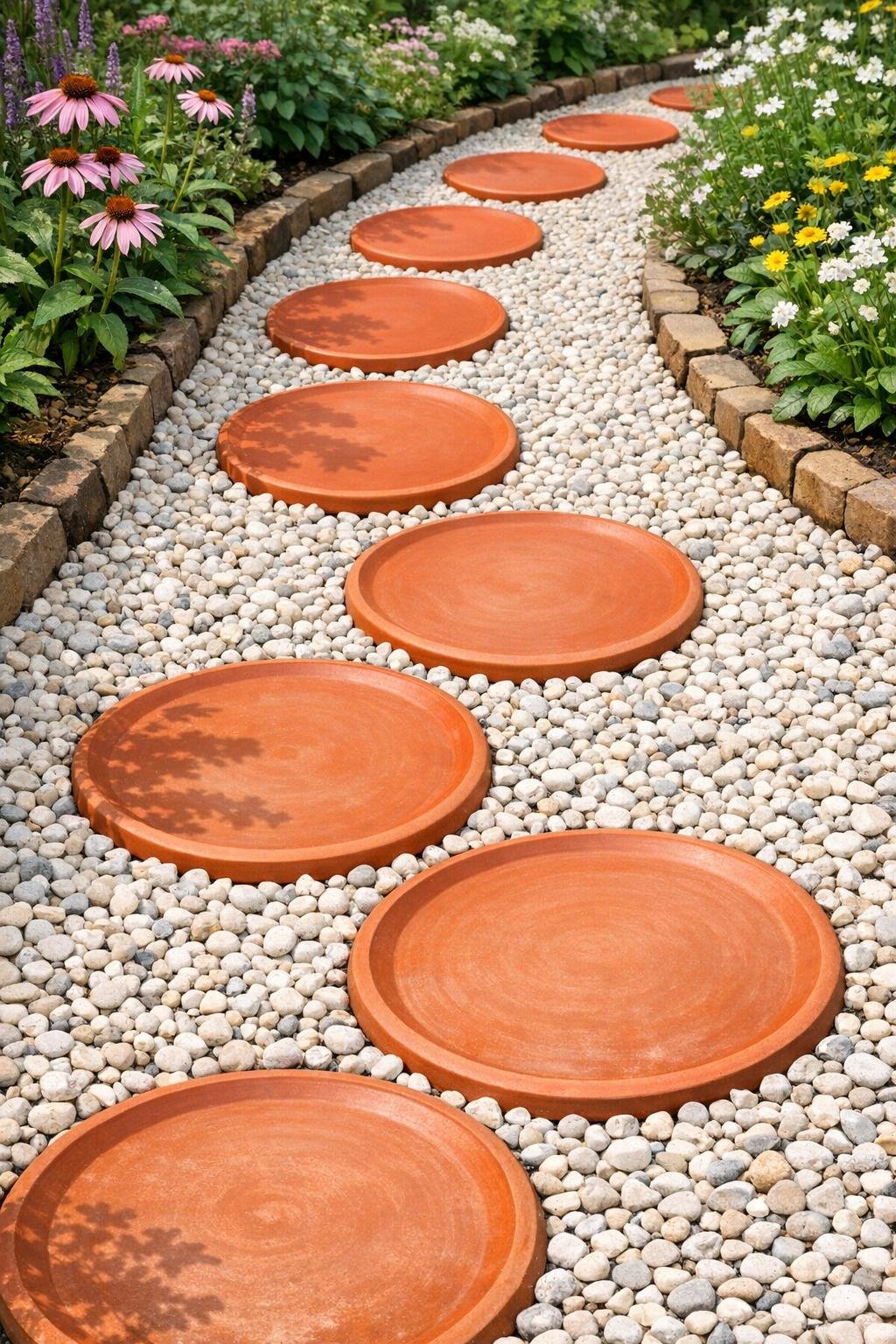
There’s something about a garden path that makes a yard feel loved. This walkway, made by setting wide terracotta plant saucers into a bed of pale pea gravel, has that old-fashioned cottage charm I’ve always admired—simple materials, soft colors, and a look that seems to settle right into the landscape as if it has belonged there for years.
I especially like this project for folks who want a path that’s pretty without being fussy. You don’t need to pour concrete or wrestle with heavy stone, and the finished walkway is gentle on the eyes and easy to maintain. It reminds me of the kinds of practical, beautiful garden touches people used to improvise with whatever they had on hand, and I think that spirit still makes for the sweetest outdoor spaces.
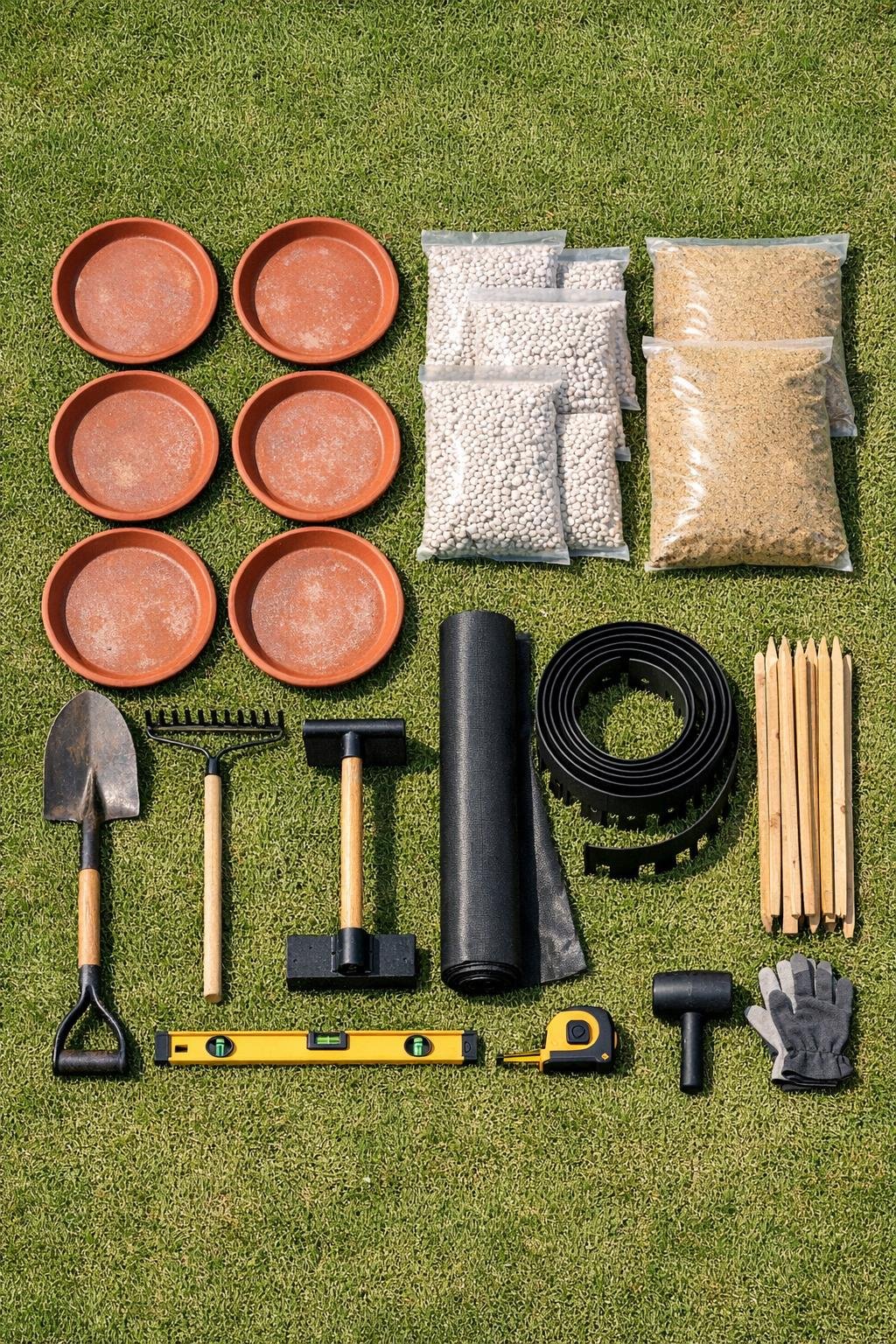
Materials
Instructions
1. Mark the shape of your walkway with marking paint or flour, allowing at least 24 to 30 inches of width so the path feels comfortable to walk on. Lay the terracotta saucers on top of the outline first to decide on spacing before you dig.
2. Set the saucers about 3 to 5 inches apart in a gentle line or curve, adjusting until the rhythm feels natural underfoot. I like to walk the pattern a time or two here, because it’s easier to change now than later.
3. Dig out the entire path area to a depth of about 3 inches, removing grass, roots, and loose soil. Keep the base as even as you can so the saucers won’t rock later.
4. Install the landscape edging along both sides of the path and secure it with stakes. This little bit of structure keeps the gravel tidy and gives the whole walkway a more finished look.
5. Roll out landscape fabric across the dug-out path and pin it down with garden staples. Trim around the inside of the edging so the fabric lies flat without bunching.
6. Spread 1 inch of coarse sand over the fabric and rake it smooth. Tamp it down lightly to make a firm, level bedding layer for both the gravel and the saucers.
7. Add a thin layer of pea gravel, just enough to begin setting the base, then place the terracotta saucers back in position. Press each saucer into the sand and gravel so the top sits level with or just slightly above the surrounding gravel.
8. Check every saucer with a level and adjust by adding or removing sand underneath as needed. Tap gently with a rubber mallet to seat them firmly, but don’t strike hard enough to crack the clay.
9. Pour pea gravel around and between the saucers until the path is filled, then rake it into all the gaps. Leave about 1/2 inch of each saucer showing above the gravel so the stepping surface stays easy to see and sweep clean.
10. Tamp the gravel lightly and walk the path to test for movement. Add more gravel where it settles, brushing excess off the saucers so the pattern of red clay against white stone stays crisp and pretty.
Variations & Tips
Use a softer curve: This style looks especially charming with a gentle bend instead of a straight line. A curved path feels more relaxed and welcoming, the way old garden walks often do.
Choose the right saucers: Pick heavy terracotta saucers with a broad flat base rather than thin, lightweight ones. The sturdier they are, the better they’ll hold up through weather and foot traffic.
Add more gravel than you think: Pea gravel always seems to settle a bit after a few rains and a few walks back and forth. I usually keep an extra bag tucked aside for topping off low spots later.
Mind drainage: If your yard stays soggy, dig an extra inch deeper and add a compacted base layer of crushed stone before the sand. That little extra effort helps keep the walkway from shifting.
Try a planted edge: Creeping thyme, low sedum, or sweet alyssum along the sides can soften the look beautifully. The contrast of the warm clay, white gravel, and green edging is downright lovely in summer.
Winter care: In cold climates, avoid chopping at ice directly on the saucers with a metal tool. A gentle broom or a sprinkle of sand is kinder to the terracotta and helps prevent cracks.
Easy maintenance: Every so often, rake the gravel back into place and lift out any weeds that sneak through. It’s one of those pleasant little garden chores that keeps the whole yard looking tended and cheerful.