
Leaf mold is one of those old-school garden projects I come back to because it asks so little and gives back so much. If you’ve got a pile of fall leaves, a roll of wire hardware cloth, and a couple of basic shed staples, you can make a simple composting bin that turns all that yard cleanup into dark, crumbly goodness for beds, borders, and containers.
I love this project because it’s affordable, fast, and very forgiving, which is exactly my kind of weekend DIY when work has been hectic. If you’re a beginner gardener, short on space, or just tired of bagging leaves for curb pickup, this easy leaf-mold bin is a practical way to let nature do the hard part.
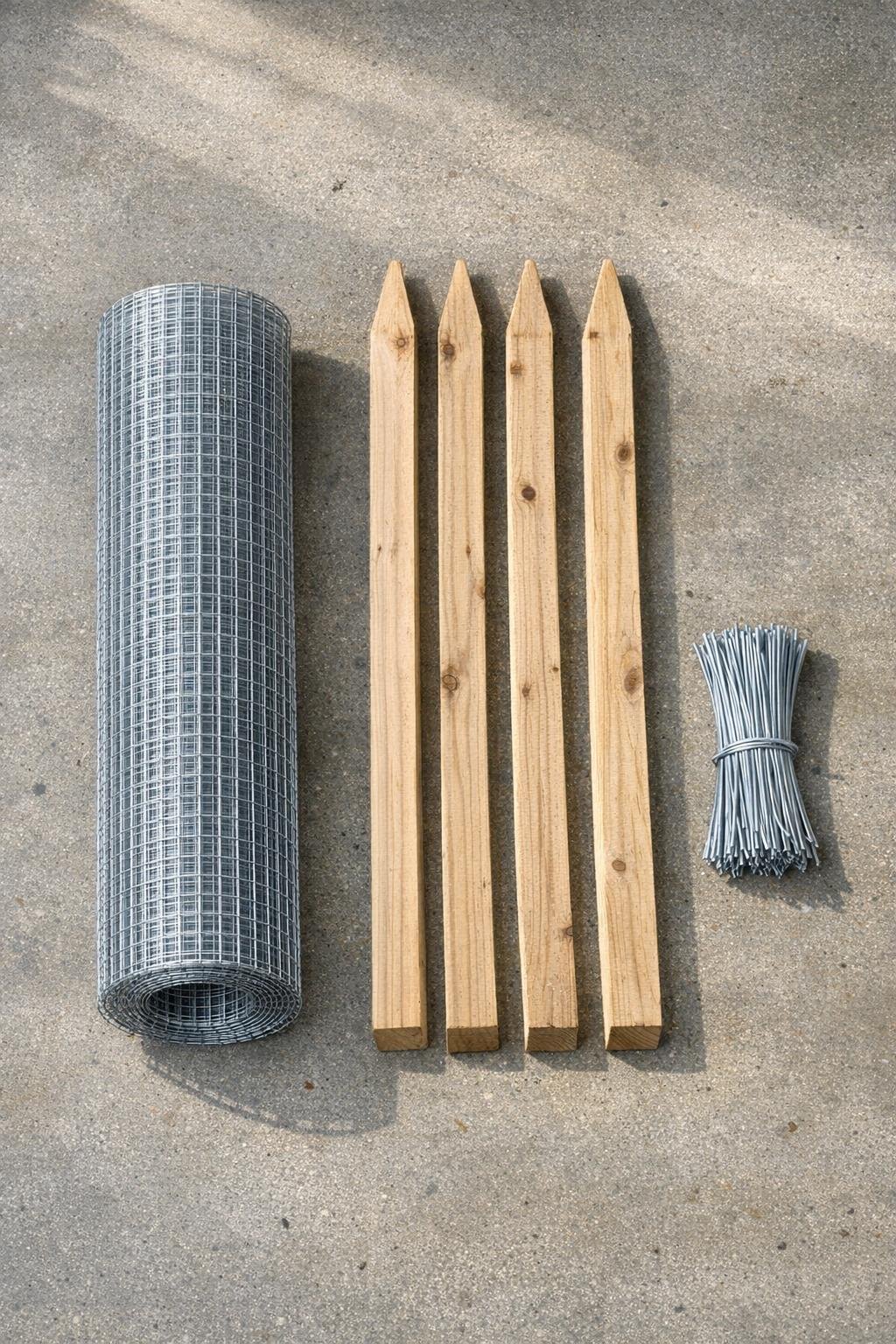
Materials
Instructions
1. Choose a level, well-drained spot in the yard that’s easy to reach with a wheelbarrow or rake, and clear an area about 4 feet across.
2. Unroll the hardware cloth and cut a 12-foot length, which makes a bin roughly 3 1/2 to 4 feet in diameter and big enough to hold a useful volume of leaves.
3. Stand the cut piece on edge and roll it into a cylinder, overlapping the ends by 4 to 6 inches so the shape holds firmly.
4. Thread 4 twist ties through the overlapping seam from top to bottom, then twist them tight so the cylinder stays securely closed.
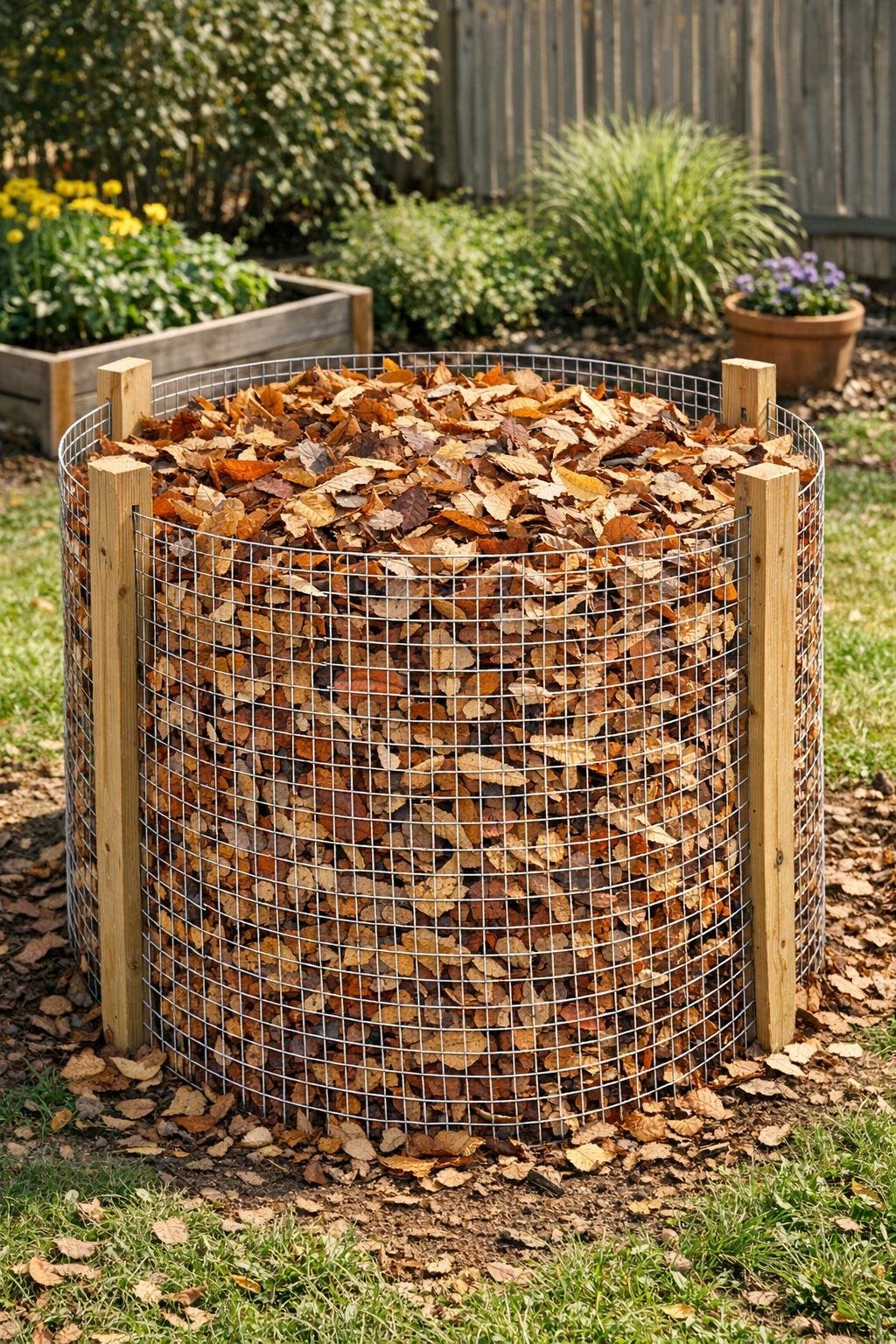
5. Set the cylinder in place and push one wooden stake just inside the bin at each quarter point, leaving about 30 inches above ground to support the sides.
6. Add 2 more twist ties to fasten the mesh to each stake at about mid-height and near the top, using 8 ties total for the supports.
7. Fill the bin loosely with shredded or whole fallen leaves, and lightly moisten them if they’re very dry so decomposition gets started.
8. Top off the bin as the leaves settle over the next few weeks, then leave them to break down for 6 to 12 months, checking occasionally to keep the pile slightly damp but not soggy.
Variations & Tips
For faster breakdown: Shred the leaves with a mower before filling the bin. I do this when I know I’ll want finished leaf mold by spring or early summer, and it really cuts down the wait.
If you want an easier opening: Use fewer ties on one side of the seam so you can untwist that section like a little door when it’s time to turn or remove composted material.
Best leaves to use: Maple, birch, and other softer leaves break down faster than thick oak leaves. If your yard is mostly oak like one of my previous houses, just expect the process to take longer.
Keep it moist: The pile should feel like a wrung-out sponge, not dripping wet. In dry Midwest falls, I usually give the bin a quick spray with the hose after filling it.
Make it sturdier: In windy areas, use 5 or 6 stakes instead of 4, or make the bin slightly smaller in diameter so the mesh has less flex.
Use the finished leaf mold well: When the leaves turn dark and crumbly, spread 1 to 2 inches over garden beds, mix it into container soil, or use it as a mulch around shrubs and perennials.