
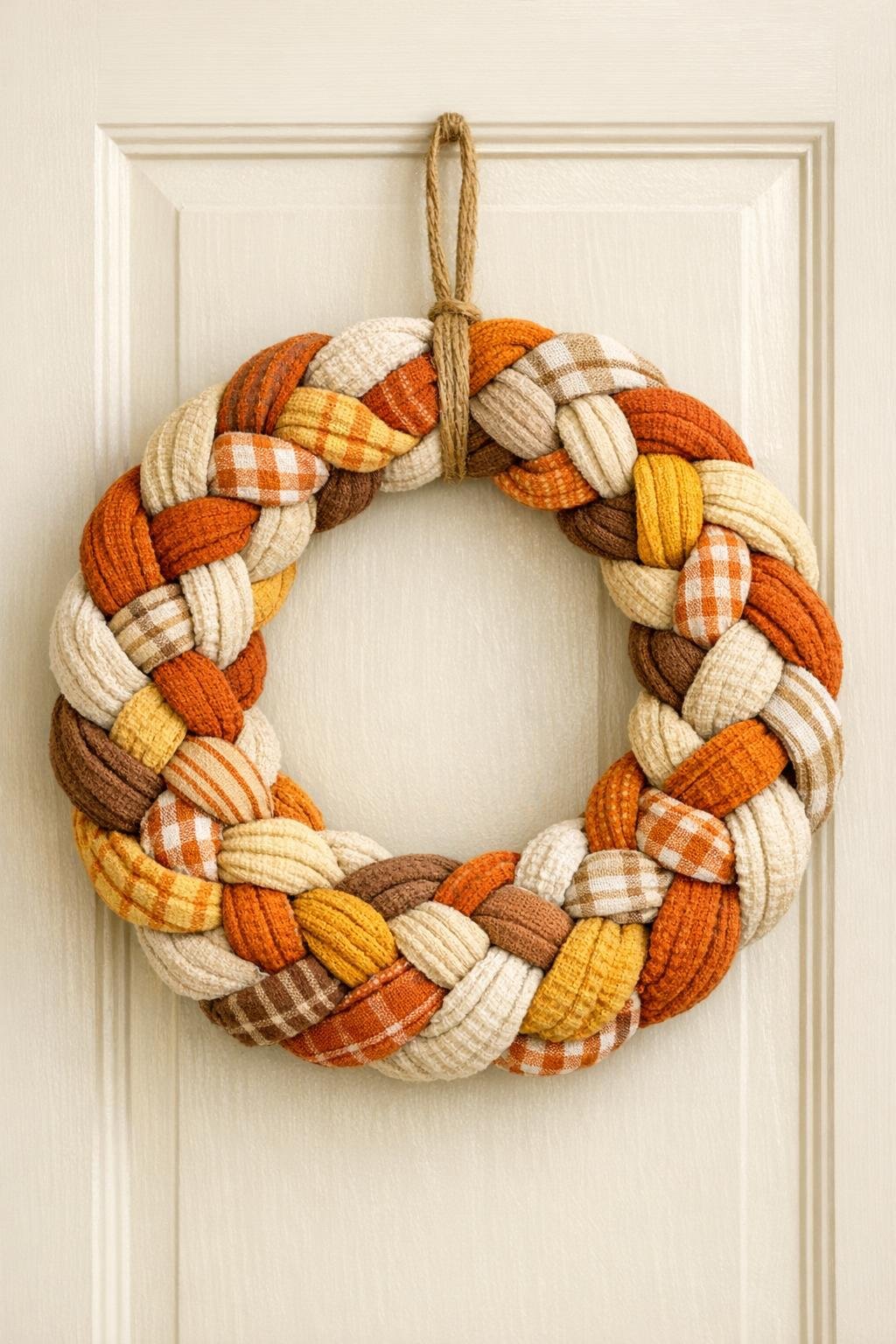
I’m a sucker for any project that turns a tired household basic into something you’d actually want to display, and this braided harvest wreath is exactly that kind of win. If you have a few old cotton dish towels tucked in a drawer that are too worn for kitchen duty but still have decent fabric, you can turn them into a soft, chunky wreath that looks cozy on a front door, pantry door, or even above a coffee bar for fall.
What I love most about this project is that it only uses four main items, it doesn’t require sewing, and it’s very forgiving if you’re squeezing in a little crafting time after work. I’ve made versions of this on busy weeknights while dinner was in the oven, and it’s the kind of low-stress DIY that still gives you a finished piece that looks thoughtful and seasonal.
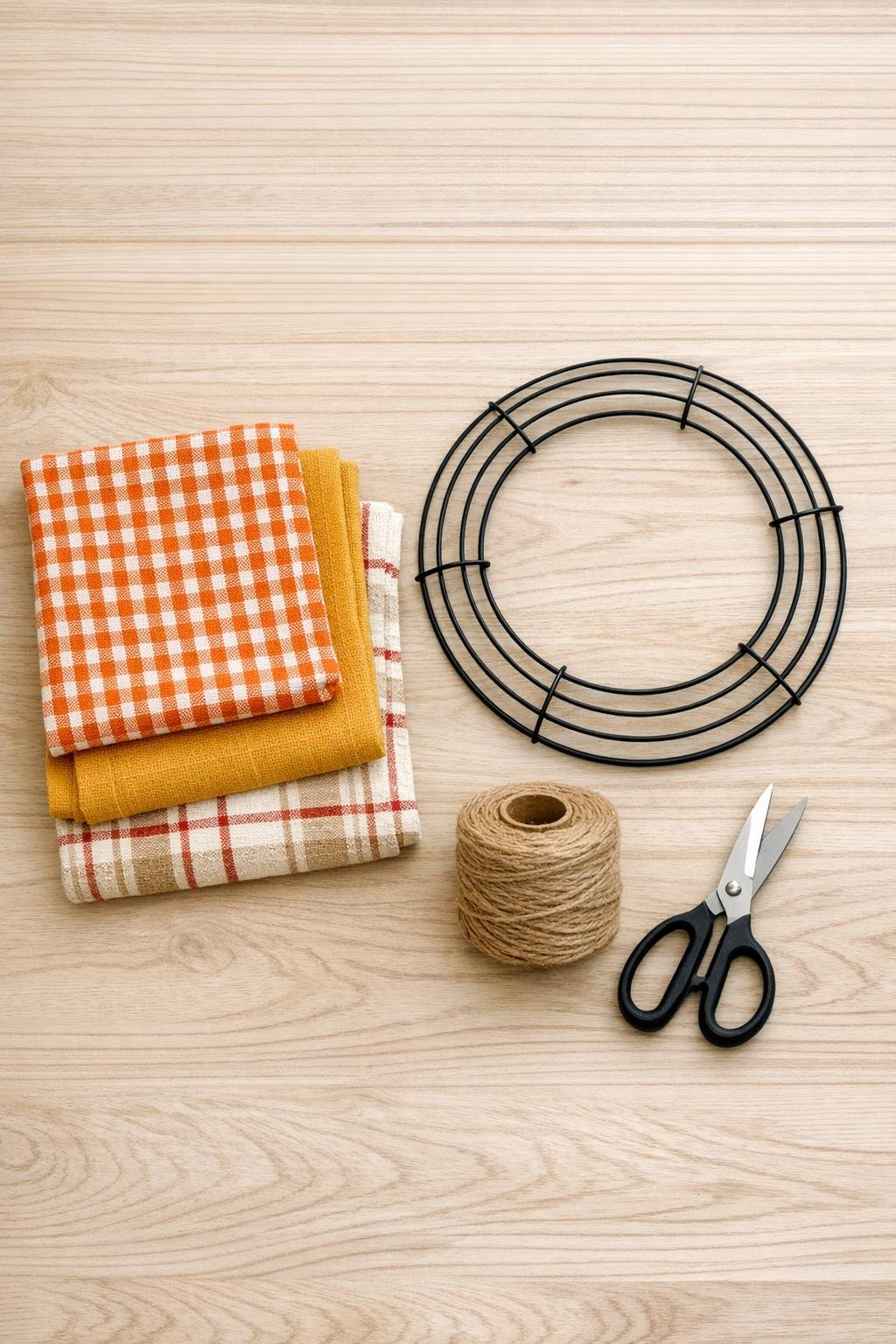
Materials
3 old cotton dish towels, 16 x 26 inches each, in coordinating harvest or neutral colors
Instructions
1. Wash and dry the dish towels, then trim away any loose threads or heavily worn edges so you’re starting with clean, sturdy fabric.
2. Lay each towel flat and cut it lengthwise into 3 strips about 5 inches wide, giving you 9 fabric strips total.
3. Gather the strips into 3 groups of 3, then tie one end of each group together with a short piece of jute twine, keeping the knot tight.
4. Braid each group into a long, chunky braid, pulling snugly but not so tight that the fabric twists awkwardly, then tie off the ends with more twine.
5. Wrap the first braid around one section of the wire wreath form and tie it in place at both ends with twine, overlapping the ends slightly.
6. Add the second and third braids around the remaining sections of the wreath form until the wire is fully covered and the wreath looks evenly filled out.
7. Tuck any raw ends under the braids and secure them with extra twine so the front of the wreath looks neat and full.
8. Cut a 20-inch piece of jute twine, loop it through the top of the wreath, and knot it to create a hanging loop.
9. Fluff and adjust the braids with your hands so the wreath looks balanced, then trim any visible threads before hanging it up.
Variations & Tips
Use what you have: If your towels are smaller or thinner, use 4 towels instead of 3 to get a fuller wreath. I’ve done this with a random stack of mismatched kitchen towels, and once they’re braided, they look surprisingly intentional.
Choose the right colors: For a harvest look, I like mixing cream, mustard, rust, sage, or muted orange. Stripes also work well because they add texture without any extra effort.
Make it fuller: If your braids look skinny, gently stretch and scrunch the fabric before attaching it to the frame. Cotton towels usually puff up nicely once you handle them a bit.
Hide worn spots: Place faded areas or stains toward the inside of the braid so they don’t show on the front. This is especially helpful when you’re truly using up older towels that have seen better days.
Add simple extras: You can tuck in a small sprig of faux eucalyptus, wheat stems, or a burlap bow after the wreath is finished. I’d keep it minimal so the braided texture stays the star.
Hang it safely: This wreath is best for a covered door or indoor wall since cotton fabric can fade or hold moisture outdoors. On my own porch, I only use fabric wreaths where they’re protected from rain and direct sun.