
When melons and winter squash start to swell on the vine, I still think of the old garden tricks I learned from folks who never wasted a thing. This simple support cradle is one of those practical little fixes that can save fruit from rotting on damp soil, keep stems from straining, and make a sprawling patch look a touch more orderly. It uses three humble shed items most of us already have on hand, and once you make one, the rest go together in a hurry.
I especially like this project for home gardeners growing cantaloupe, small watermelons, acorn squash, delicata, or other medium-size fruit that need a gentle lift. It is easy enough for a beginner, thrifty enough to please any old-school gardener, and sturdy enough to last through a growing season with just a little adjusting as the fruit grows.
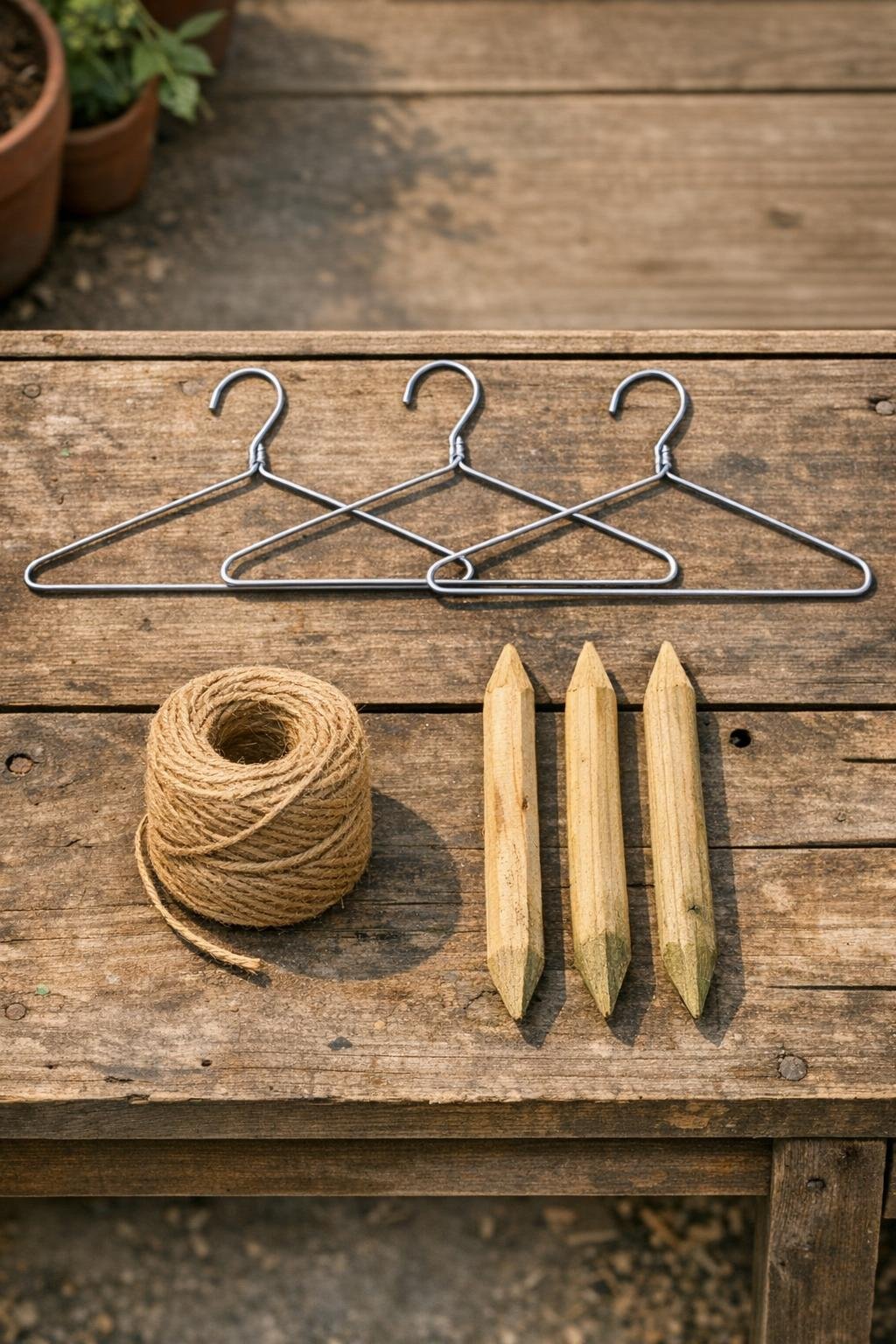
Materials
3 wire coat hangers, standard metal adult size
Instructions
1. Cut or unwind the hook area of each wire coat hanger and straighten the wire as much as you can by hand or with pliers.
2. Bend each straightened hanger into a wide U-shape about 8 inches across, leaving the ends long enough to push into the soil.
3. Push the three wooden stakes into the soil around the melon or squash, spacing them evenly in a triangle about 10 to 12 inches apart and a few inches away from the fruit.
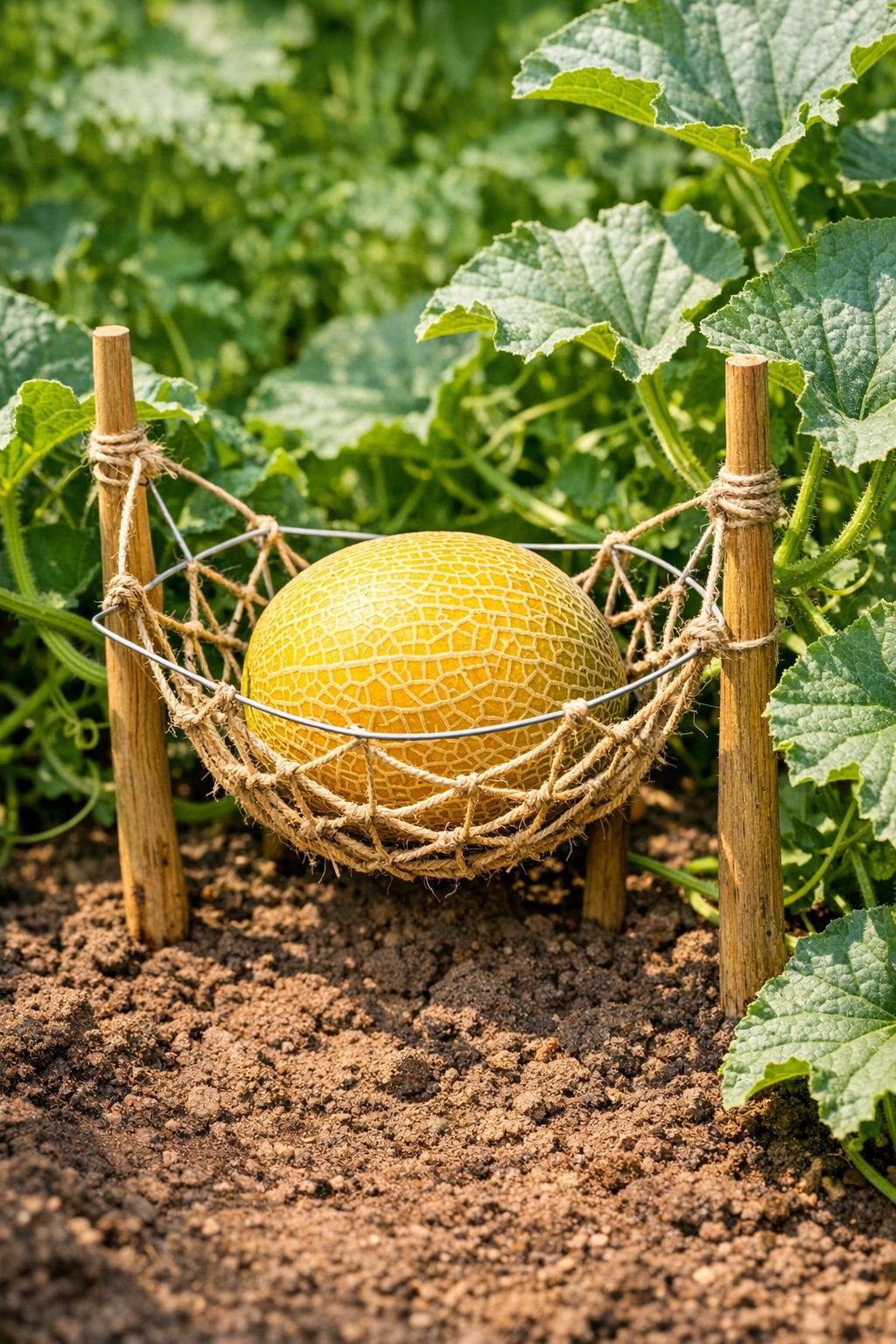
4. Insert one U-shaped wire between each pair of stakes, arching the wires low under the fruit so they begin to form a shallow bowl.
5. Cut three lengths of jute twine, each about 18 inches long, and tie the wire ends to the nearby stakes to keep the cradle from shifting.
6. Weave two more lengths of twine, about 24 inches each, across the wire arches in opposite directions to make a soft hammock that supports the bottom of the fruit.
7. Lift the melon or squash gently and center it on the twine hammock so the fruit sits just above the soil without pinching the stem.
8. Check the cradle every few days and loosen or retie the twine as the fruit grows so it stays supported but not squeezed.
Variations & Tips
For heavier fruit: If you are supporting a larger squash, double the twine strands across the bottom and press the stakes a little deeper into the ground for extra stability.
For soft-skinned melons: Slip a small square of old cotton T-shirt or feed sack fabric over the twine hammock before setting the fruit down. That gives you a gentler surface and helps prevent rubbing.
For wet garden patches: Raise the wire arches a bit higher so there is better airflow under the fruit. In my experience, that little bit of breathing room can make all the difference after a rainy spell.
Wire-shaping tip: If the hanger wire fights you, use pliers to make smoother bends instead of sharp corners. A rounded cradle holds fruit more evenly and is less likely to create pressure spots.
Best timing: Set the cradle in place when the fruit is still fairly small, around softball size for melons. It is much easier then than trying to tuck support under a heavy fruit later on.
Season-end storage: Pull the stakes, unwind the twine, and stack the bent wires in the shed for next year. This is exactly the sort of make-do garden helper that earns its keep season after season.