
I love a project that solves a real gardening problem without turning into a full weekend commitment, and this self-wicking container planter is exactly that. By cutting the bottoms off black plastic nursery pots and pairing them with one common yard item, you can make a planter that looks surprisingly polished, waters more efficiently, and helps keep plants happier through hot stretches.
As someone who juggles work and still wants my patio containers to look put-together, I’m always looking for shortcuts that actually work. This one is especially good for beginner gardeners, busy plant lovers, or anyone with a stack of nursery pots they hate throwing away. Once planted up, it has that neat, store-bought look that makes people assume you picked it up at a garden center.
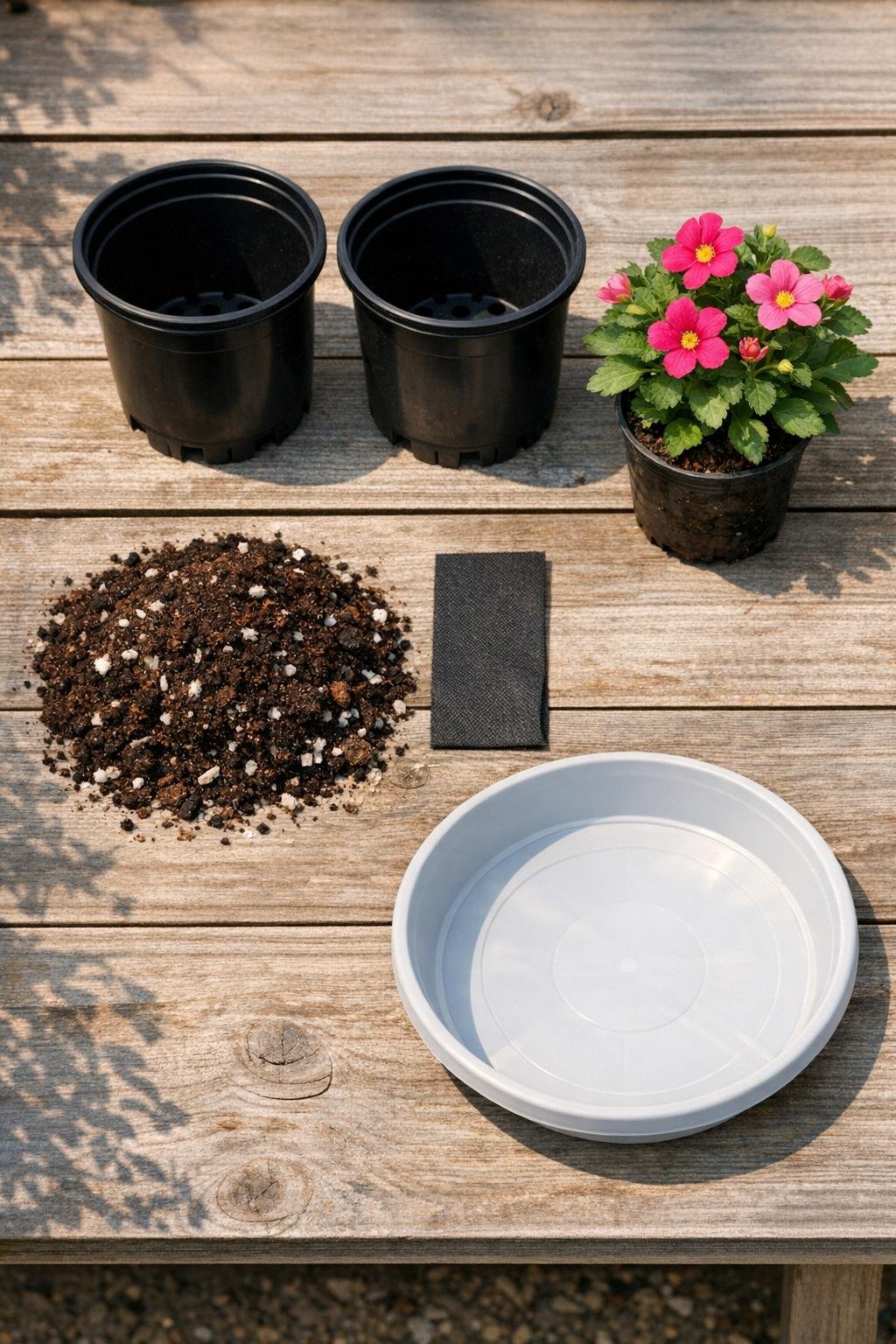
Materials
Instructions
1. Wash the nursery pots and the saucer, then let everything dry so the planter starts clean and drains properly.
2. Use sturdy scissors or pruners to cut the bottom off one nursery pot, leaving the sidewall intact to create the upper planter section.
3. Cut the second nursery pot down to about 3 to 4 inches tall, keeping its bottom attached, to make the wicking reservoir insert.
4. Place the short pot in the center of the plastic saucer, then set the bottomless pot over it so the larger pot rests securely and creates a hidden water space underneath.
5. Lay the landscape fabric over the top of the short insert, then add the gravel or bark on top to keep the fabric from shifting while still letting moisture move upward.
6. Fill the planter halfway with potting mix, pressing some mix down over the fabric so it contacts the reservoir insert and can wick water upward.
7. Remove your plant from its nursery container, loosen the roots lightly if they are circling, and set it at the same depth it was growing before.
8. Add more potting mix around the root ball until the planter is full, leaving about 1 inch of space at the top for watering.
9. Water from the top thoroughly the first time to settle the mix and start the wicking action, then pour water into the saucer reservoir until it is nearly full.
10. Check the reservoir every few days and refill as needed; once the roots settle in, the planter will draw moisture up from below and need less frequent top watering.
Variations & Tips
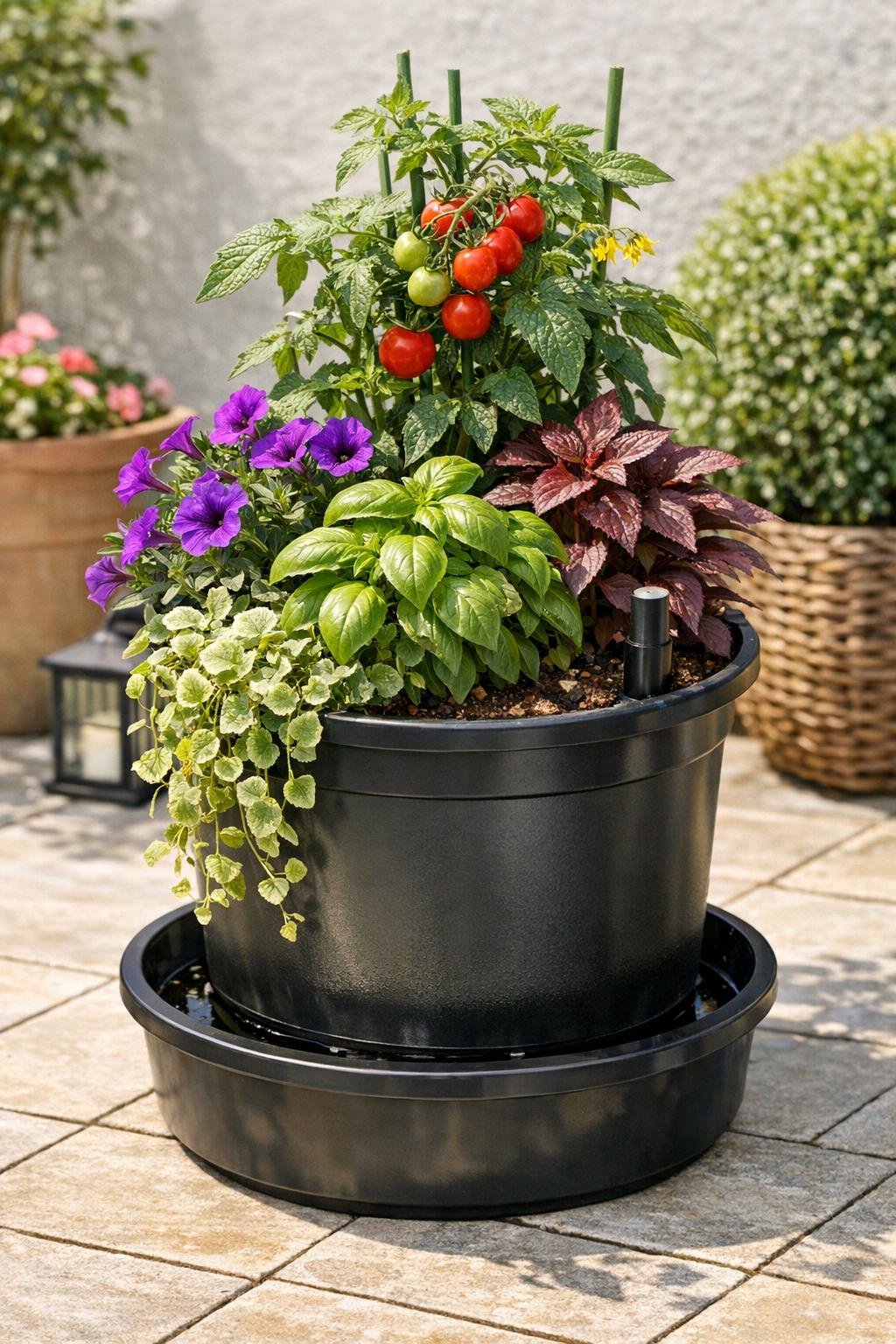
For patio flowers: I like using this setup for petunias, calibrachoa, or geraniums because they dry out so fast in summer pots. The reservoir buys you extra time on hot workdays when watering slips your mind.
For herbs and vegetables: Basil, parsley, lettuce, and even a compact tomato can do well in this style of planter. Just size up the pot and saucer together if you want to grow something larger and thirstier.
If the pot feels wobbly: Trim the short insert a little more evenly or add a thin ring of gravel around it inside the saucer. You want the top pot to sit stable before you add soil.
To improve the look: Use two pots and a saucer in similar shapes and proportions so the finished planter feels intentional. I’ve found that once the plant fills in, the whole thing reads as a sleek modern container instead of a repurposed nursery pot.
For best wicking: Don’t use dense garden soil because it compacts and won’t pull moisture evenly. A light potting mix is what makes this simple system actually work.
For easier maintenance: Give the planter a full top watering about once every couple of weeks to flush salts through the potting mix. That little reset helps keep container plants healthier over the season.