
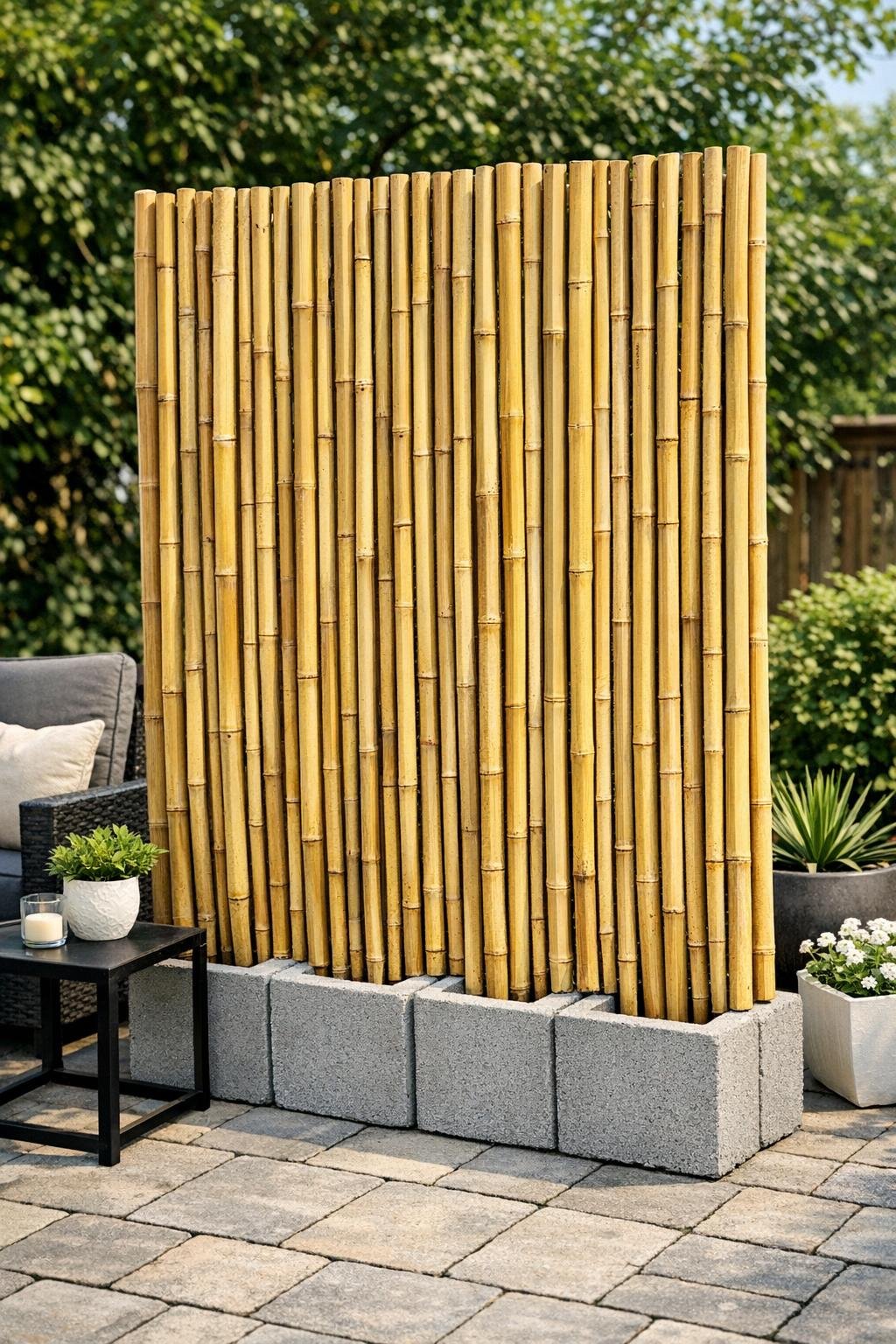
There’s something mighty satisfying about turning a plain patio corner into a space that feels tucked away and peaceful. This privacy screen made from tall bamboo stakes set into grey cinder blocks is one of those simple backyard projects that looks far fancier than the work involved, and I’m always fond of a project like that. It gives you a bit of shade, a bit of shelter from wandering eyes, and a nice natural texture that softens all that hard patio stone and concrete.
Out where I live, we’ve long had a habit of making do with sturdy, humble materials and dressing them up with something from nature. That’s exactly what this project feels like to me. If you want a privacy screen that’s budget-friendly, renter-friendly in some cases, and easy enough for a weekend afternoon, this is a good one to try.
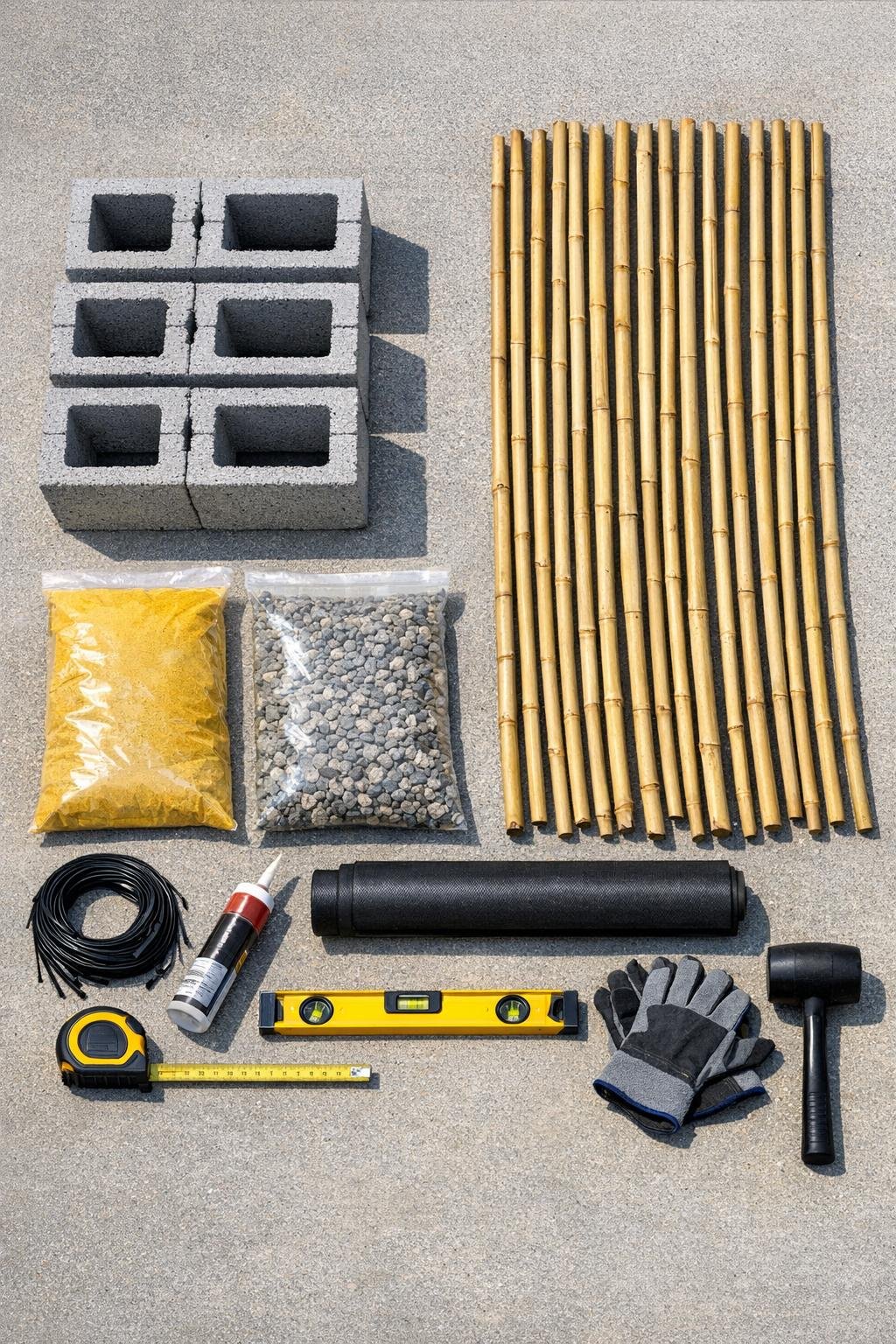
Materials
Instructions
1. Choose a flat patio edge or backyard spot for the screen, then measure out the length so you know how far apart to place the cinder blocks. A screen with 4 blocks and 18 stakes makes a panel roughly 5 to 6 feet wide, depending on spacing.
2. Clear the area of loose dirt and debris, then lay down a piece of landscape fabric beneath the footprint of the screen. This helps keep weeds down and gives the base a tidier look.
3. Set the 4 grey cinder blocks in a straight row with the hollow openings facing up, leaving about 2 to 4 inches between blocks. Check the tops with a level and shim with a little gravel if needed so the row sits evenly.
4. Pour 1 to 2 inches of pea gravel into each block opening to improve drainage and give the bamboo a stable base. Press the gravel down lightly so it settles flat.
5. Insert the bamboo stakes upright into the block openings, spacing them evenly across all the cavities until you like the look. I usually place the thickest stakes at the ends and near the center for a sturdier, balanced screen.
6. Mix the quick-setting concrete according to the package directions, then carefully pour it into the block openings around the bamboo stakes. Fill each opening enough to lock the stakes in place, keeping the bamboo straight as the mix settles.
7. Check the stakes with a level from a few angles and adjust them before the concrete firms up. This step matters, because a screen looks polished when the bamboo rises in a clean, upright line.
8. Let the concrete cure fully, then run a bead of exterior construction adhesive anywhere a loose stake needs extra hold against the inside edge of a block opening. Allow the adhesive to dry as directed.
9. Gather the bamboo into a more unified panel by fastening neighboring stakes together in 2 or 3 places with outdoor zip ties. Hide the zip ties toward the back side of the screen where they won’t show much.
10. Wrap jute twine around a few sections of the bamboo to soften the look and cover any visible ties if you like. Keep the wraps simple and even so the screen still feels clean and unfussy.
11. Brush on an exterior sealer if the screen will live in full weather, especially if your summers are wet or your winters are hard. Let it dry completely before moving patio furniture back around it.
12. Position the finished screen where you want privacy most, and add a planter, chair, or lantern nearby to make the area feel intentional. Sometimes the smallest backyard corner becomes the nicest seat in the whole place.
Variations & Tips
For a fuller screen: Use 20 to 24 bamboo stakes instead of 18 and place them closer together. That gives more privacy and a richer, layered look.
For more stability: If your patio gets strong wind, use heavier blocks or double up the base with an extra row behind the first. Weight matters with a tall project like this.
Add greenery: I love tucking potted grasses or trailing flowers around the base to soften the cinder blocks. It brings the whole thing together and makes it feel more like part of the garden.
Try a darker finish: Bamboo can be left natural, but a weatherproof stain in walnut or driftwood tones gives the screen a more modern look. Test one stake first before doing the whole set.
Mind the surface: This works best on a flat patio, concrete pad, or firm gravel area. If the ground is uneven, take time leveling the blocks at the start so the finished screen doesn’t lean.
Check local rules: If you’re building this along a property line or in a shared space, it’s worth checking any height rules first. That little bit of homework can save trouble later on.