
Old linen napkins have a way of getting tucked into the back of a drawer and forgotten, especially when they’re a little mismatched or showing their age. Around here, I hate throwing away good fabric with life still in it, and this simple harvest table runner is exactly the sort of project that lets those old pieces earn their keep again. By stitching three napkins together, you can make a lovely runner with soft texture and that timeworn charm you just can’t buy new.
I especially love this project for fall tables, everyday farmhouse decorating, or anyone who wants a beginner-friendly sewing project that comes together in an afternoon. It reminds me of the way my mother and aunts used to save every decent scrap of cloth, knowing full well it would become something useful one day. This runner is practical, pretty, and forgiving—my favorite kind of homemade.
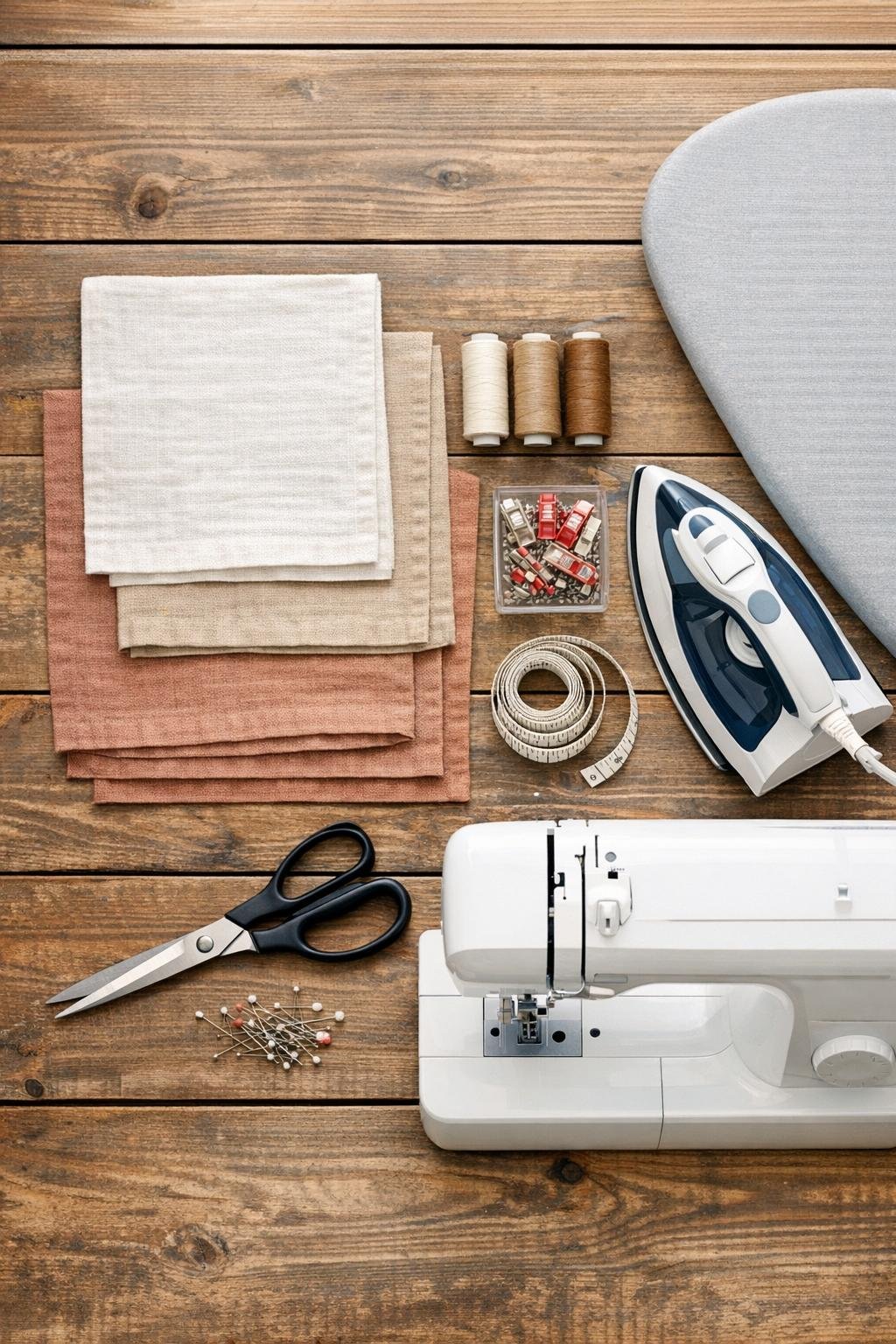
Materials
3 linen napkins, 18 inches x 18 inches each
Instructions
1. Wash, dry, and press the three napkins so they are clean, flat, and pre-shrunk before you begin sewing.
2. Trim any loose threads and check each napkin for thin spots or worn corners, setting the strongest edges where they’ll show on the finished runner.
3. Lay the three napkins in a straight row on your table and decide the order you like best, especially if the linen shades or textures differ slightly.
4. Overlap the first and second napkins by 1/2 inch, matching the edges carefully, and pin across the overlap to hold them in place.
5. Stitch a straight seam down the center of that 1/2-inch overlap from one side of the napkin to the other, backstitching at both ends.
6. Repeat with the second and third napkins, again overlapping them by 1/2 inch and sewing a straight seam across the full width.
7. Press both sewn joins flat, smoothing the seams with steam so the runner lies neatly and the overlaps look crisp.
8. If any outer edges look uneven, trim only the smallest amount needed to square them up while keeping the original hemmed napkin edges intact as much as possible.
9. Sew a topstitch 1/8 inch from each side of both joined seams if you want a flatter, more tailored finish that holds up well to washing.
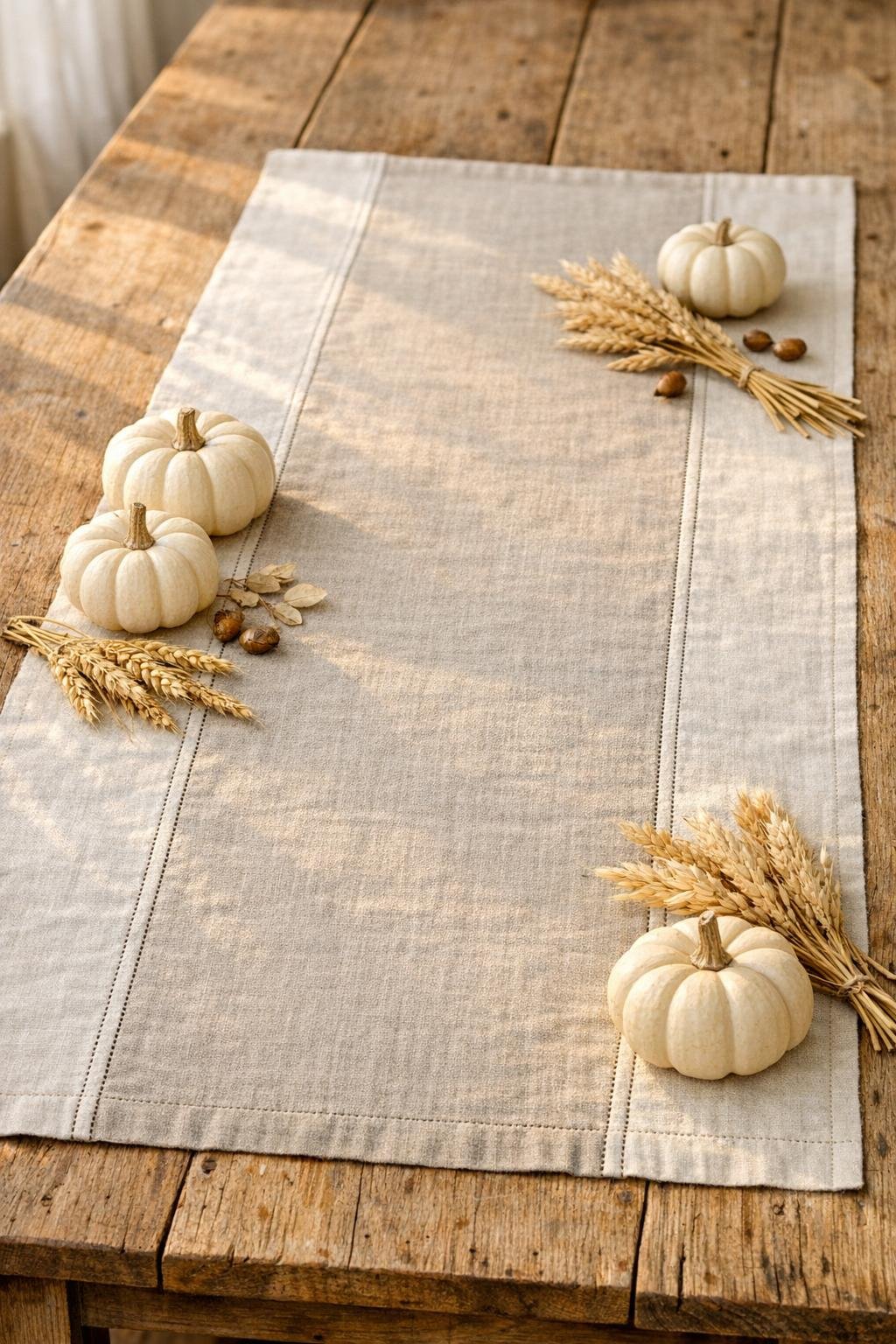
10. Give the whole runner one final press, then center it on your table so the joined panels drape evenly and the seams run straight across.
Variations & Tips
Mix-and-match linens: If your napkins aren’t identical, lean into it. Slightly different ivory, oat, flax, or faded rust tones give the runner a collected-over-time look that feels especially homey in autumn.
Add trim: A 2-yard length of cotton lace, rickrack, or narrow ticking sewn along the long sides gives this little project more personality without much extra work.
Use decorative stitching: If your machine has a simple heirloom or edge stitch, try it over the joins instead of plain topstitching for a prettier finish.
Keep the hems when you can: The original napkin hems are part of the charm. I try to preserve them because they save time and make the finished runner look more polished.
Make it longer: For a bigger farm table, use 4 or 5 napkins instead of 3. Just keep the same 1/2-inch overlap at each join and check the final length before sewing your last seam.
Best fabric choice: Linen and linen-cotton blends work best because they press beautifully and drape nicely. Very slippery or stretchy fabrics are harder to keep straight.
Seasonal styling: I like this runner with a crock of mums, a bowl of apples, or a few small gourds. In winter, the same runner looks just as lovely with evergreens and candlelight, which is one more reason I’m always glad to rescue old household linens.