
I love a project that turns kitchen castoffs into something genuinely useful, and this hanging herb garden does exactly that. With three old spaghetti sauce jars, a little twine, and a simple hanging support, you can make a compact planter that fits beautifully in a sunny kitchen window, on a porch, or even along a small apartment wall.
As someone who cooks constantly, I’m always happiest when fresh basil, parsley, or thyme are within arm’s reach. This project is perfect for beginners because it uses easy-to-find materials, basic hand tools, and just enough structure to feel polished without becoming fussy.
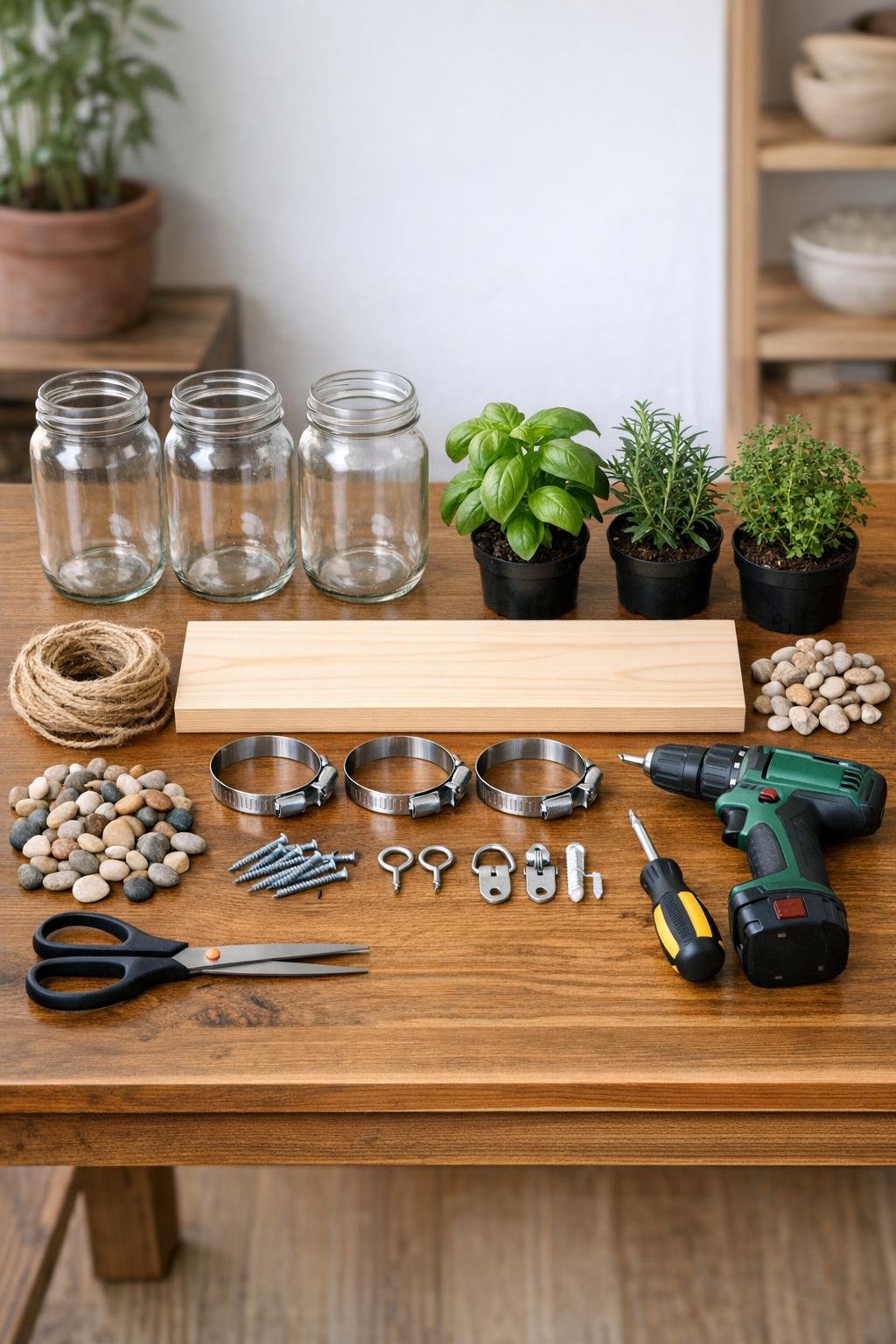
Materials
3 empty glass spaghetti sauce jars, 24 to 26 ounces each, washed and labels removed
Instructions
1. Wash the jars thoroughly, remove any label residue, and wipe them clean with rubbing alcohol or soapy water so the glass is smooth and grease-free.
2. Lightly sand the wooden board to soften the edges and remove splinters, then wipe away the dust with a dry cloth.
3. Measure and mark three evenly spaced jar positions down the length of the board, leaving about 4 inches from the top and bottom and about 6 inches between jar centers.
4. Center one pipe clamp on each mark and fasten each clamp to the board with two wood screws, tightening them so they are secure but still loose enough to open for the jars.
5. Twist the screw-eye hook into the top center of the board, making sure it is fully seated and aligned for hanging straight.
6. Wrap twine around the upper shoulder of each jar 8 to 10 times, knot it tightly, and add a small bow or wrapped band if you want a more decorative finish.
7. Add about 2 tablespoons of pebbles to the bottom of each jar to create a light drainage layer and help keep the roots from sitting in excess moisture.
8. Remove each herb from its nursery pot, loosen the roots gently with your fingers, and place one plant into each jar.
9. Fill around the roots with potting mix, leaving about 1 inch of space below the rim, then press the soil lightly so the plants stand upright.
10. Slide each planted jar into a pipe clamp and tighten the clamp just enough to hold the jar firmly without stressing the glass.
11. Hang the board from the wall hook, check that it sits level, and rotate the jars so the twine knots face the back or side for a cleaner look.
12. Water each herb lightly, just until the soil is evenly moist, and place the finished garden in a spot with at least 6 hours of bright light each day.
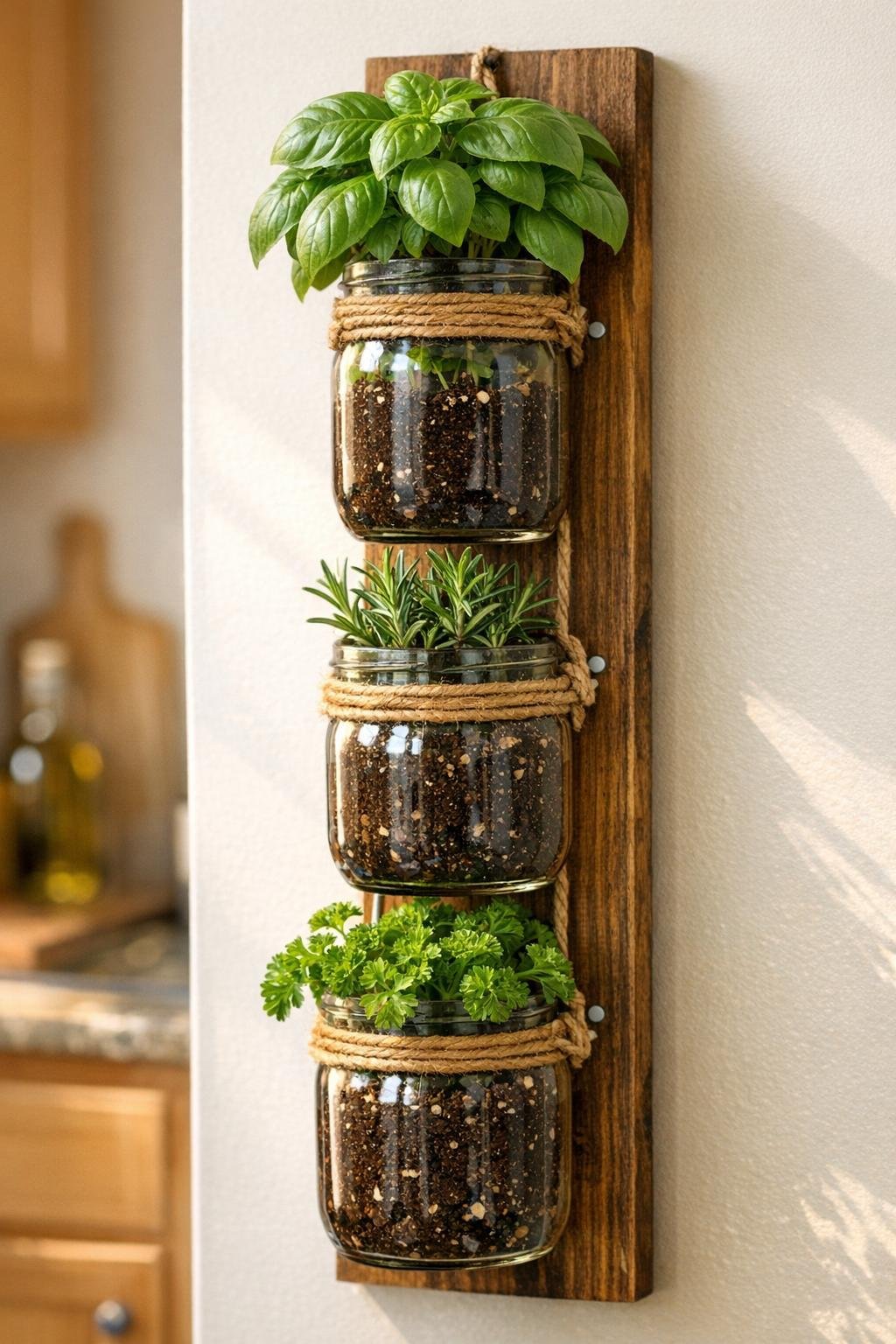
Variations & Tips
Best herbs to use: Basil, parsley, chives, mint, oregano, and thyme all do well in small kitchen planters, but I prefer slower-growing herbs like thyme and oregano if the jars are on the smaller side.
Drainage tip: Because glass jars do not have drainage holes, water sparingly and only when the top inch of soil feels dry. In my kitchen, overwatering is far more common than underwatering with jar planters.
Board-free option: If you don’t want to mount the jars to a board, you can knot heavy twine around each jar and hang them individually from ceiling hooks or an over-window rod.
Style upgrade: Stain or paint the wood before attaching the clamps if you want the finished piece to match your kitchen or patio décor. A dark walnut stain looks especially sharp against bright green herbs.
Planting tip: Keep each jar to one herb variety rather than mixing plants together. Different herbs grow at different speeds and have different water needs, which matters more than people think.
Kitchen-use advice: Snip herbs from the top regularly to encourage fuller growth. I do this constantly with basil, and it keeps the planter looking tidy while rewarding me at dinnertime.