
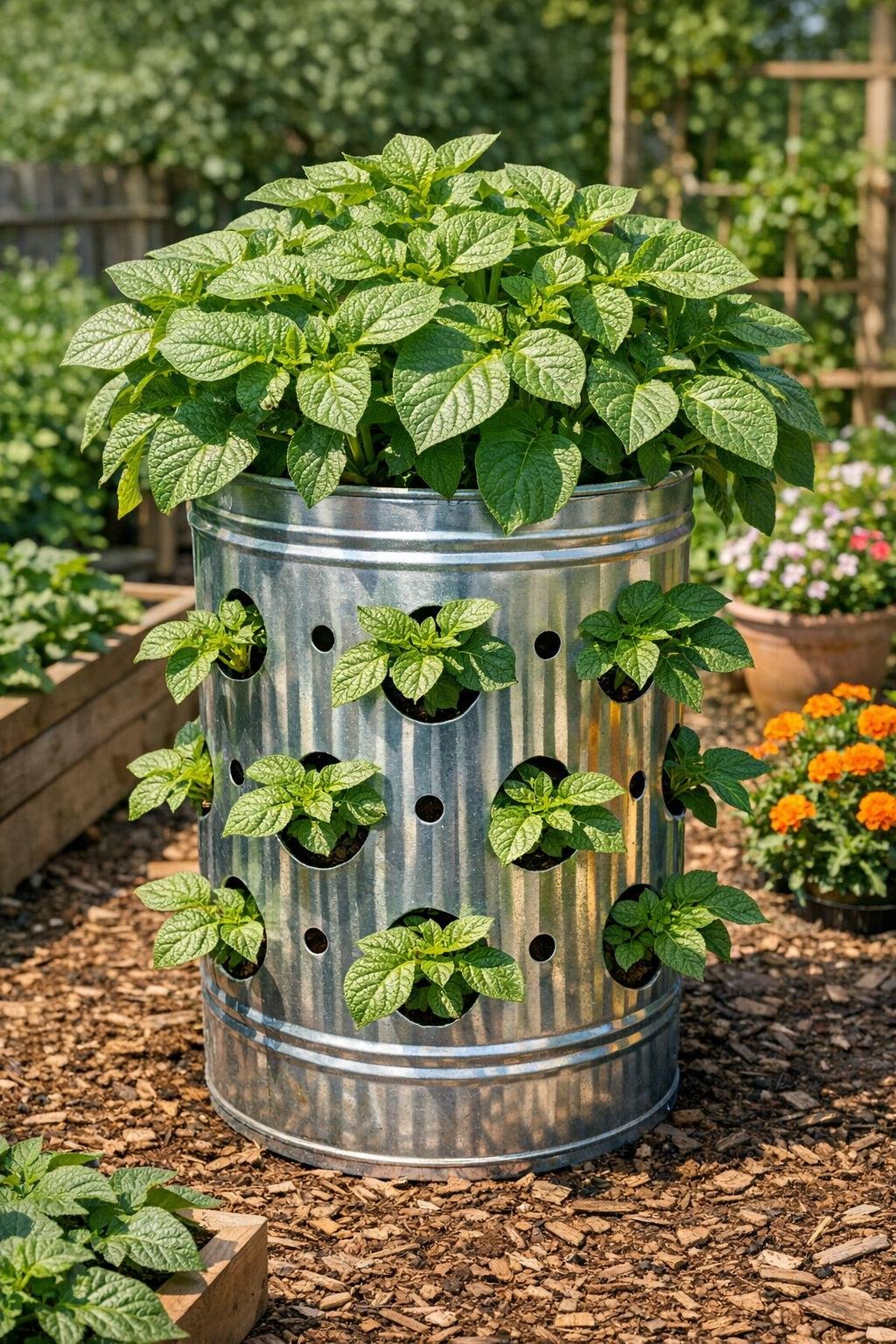
I love a garden project that pulls double duty, and this vertical potato growing tower does exactly that: it gives you a tidy, space-saving place to grow potatoes while also looking like a smart piece of galvanized yard décor. The build is simple and uses just two main items—a galvanized trash can and a common wire garden fence—so it’s approachable even if you don’t spend every weekend making things in the garage.
Because I cook so much, I’m always irrationally pleased by anything that makes homegrown ingredients easier to harvest and keeps them cleaner in the process. If you’ve got a small yard, a sunny patio edge, or just want a more organized way to grow potatoes than a sprawling mound, this is a very practical project that’s easy to customize.
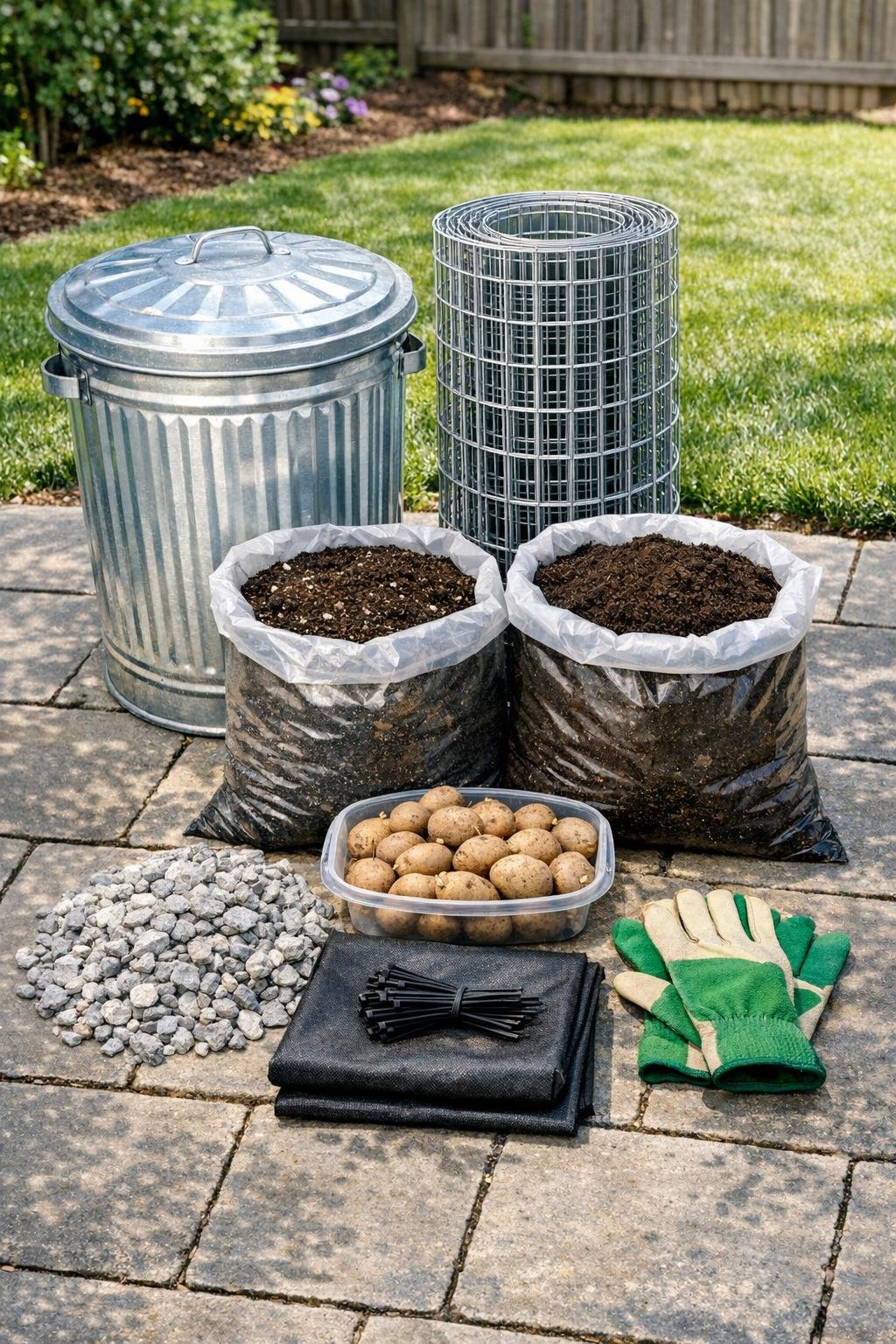
Materials
1 galvanized steel trash can, 20 to 31 gallons, with lid removed
Instructions
1. Choose a sunny spot that gets at least 6 to 8 hours of direct light, then wash out the galvanized trash can so you’re starting with a clean container.
2. Drill 10 to 12 drainage holes in the bottom of the trash can, spacing them evenly and making each hole about 1/2 inch wide.
3. Drill planting and ventilation holes around the sides of the can in staggered rows, making each opening about 2 inches wide and spacing them 6 inches apart horizontally and 8 inches apart vertically, stopping 6 inches below the rim.
4. Cut the wire garden fencing to length if needed, then curve it into a cylinder slightly smaller than the inside of the trash can and secure the seam with 6 zip ties.
5. Line the inside of that wire cylinder with landscape fabric, overlapping the edge by 2 inches, and fasten it to the wire with the remaining zip ties so it creates a tidy inner core.
6. Set the lined wire cylinder in the center of the trash can, then pour 2 quarts of pea gravel into the bottom of the can around it to improve drainage and help hold the core in place.
7. Mix the potting soil, compost, and granular fertilizer in a wheelbarrow or tub until evenly combined.
8. Add 6 inches of the soil mix around the outside of the center core, then tuck 3 or 4 seed potatoes near the can wall with the eyes facing outward toward the side holes.
9. Fill the center core with a loose handful of straw, then add more soil around the potatoes until they are covered by 3 inches of mix.
10. Repeat the layering process with more seed potatoes, straw in the center core, and soil around the outside until you reach about 4 inches below the top rim.
11. Water the entire tower deeply until moisture reaches the bottom, then top the surface with 2 inches of straw to reduce evaporation.
12. As the potato plants grow, keep the soil evenly moist and add a little extra straw or soil at the top if stems begin to green near the surface.
13. Harvest baby potatoes by reaching into the side holes once the plants are mature enough, or wait until the tops yellow and empty the whole can for a full harvest.
Variations & Tips
For easier harvesting: Make a slightly wider center core with the fencing so the tower is lighter and easier to empty at the end of the season.
For better drainage: If your potting mix tends to stay soggy, add an extra 1/2 cubic foot of coarse compost or pine fines to loosen it up.
For hot Midwestern summers: I like to place towers where they get strong morning sun and a bit of afternoon relief, because metal containers can heat up faster than in-ground beds.
For cleaner side pockets: Fold small flaps of landscape fabric behind the larger side holes if you want to reduce soil spill while the plants are establishing.
For best kitchen results: Grow a waxy variety if you love roasting and potato salads, or a fluffier starchy variety if your household leans toward baking and mashing like mine does.
To avoid disappointment: Don’t overpack the tower with too many seed potatoes; crowding gives you lots of foliage but often smaller tubers.