
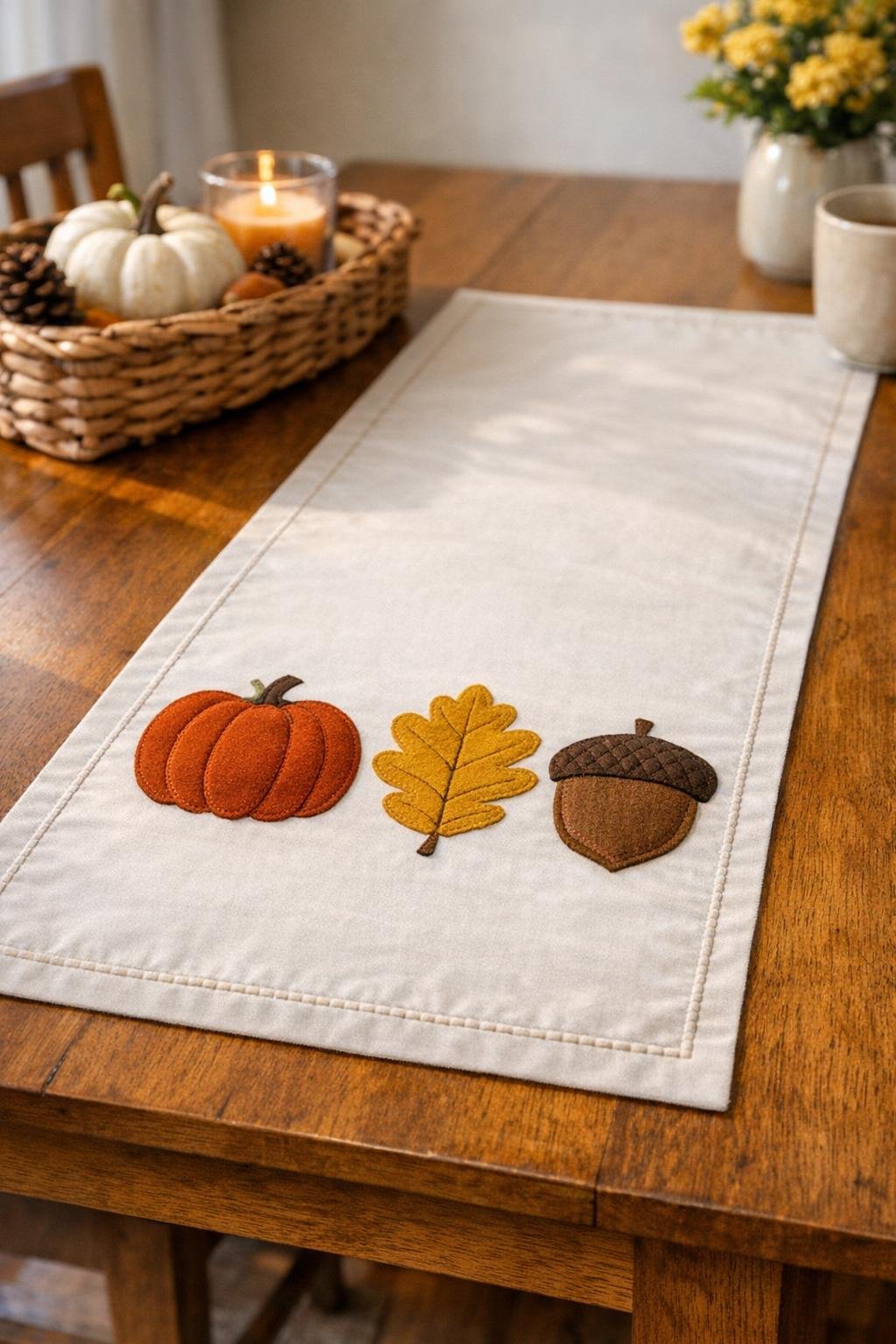
Old cotton curtains are one of those household castoffs I can never quite throw away, and this autumn table runner is exactly why. In this project, I turn a pair of worn curtains into a simple 3-item seasonal runner with three coordinated fabric motifs that feel warm, practical, and quietly festive without looking overdone.
I like this kind of sewing project because it is approachable even if you only have basic stitching skills, and it makes very smart use of fabric you already have on hand. If you enjoy home décor with a handmade story behind it, this is an easy weekend make that adds a soft fall layer to a dining table, console, or sideboard.
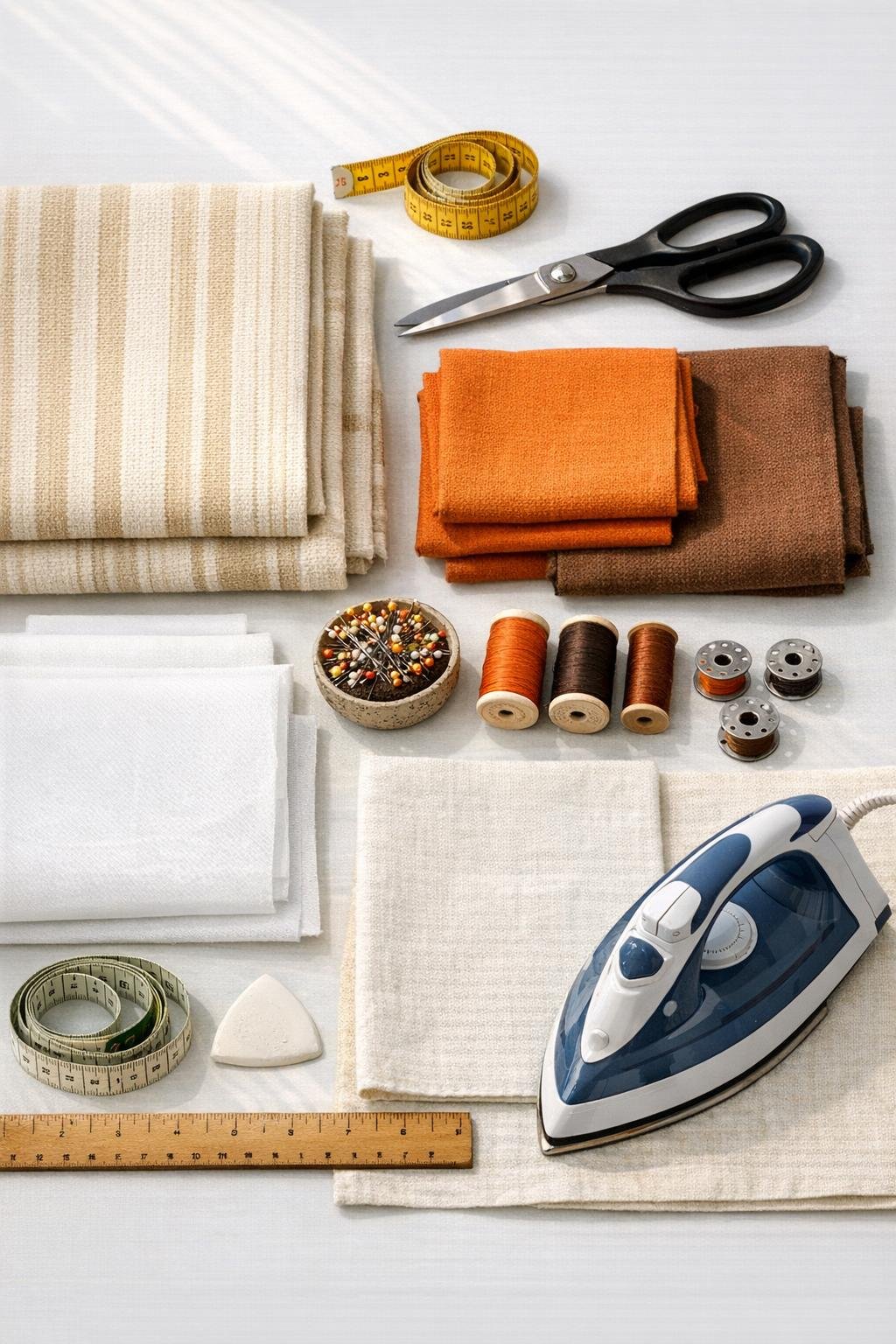
Materials
2 old cotton curtain panels, at least 40 x 84 inches each, washed and pressed
Instructions
1. Wash, dry, and press the old cotton curtains so the fabric is clean, flat, and preshrunk before you cut anything.
2. Cut the least worn sections of curtain fabric into one 16 x 72-inch top piece and two 16 x 38-inch backing pieces, trimming away sun-faded hems or thin spots.
3. Fuse the lightweight interfacing to the wrong side of the 16 x 72-inch top piece to give the runner body and help it lie neatly on the table.
4. Draw three simple autumn shapes on paper templates, such as a pumpkin, an oak leaf, and an acorn, keeping each one about 6 to 7 inches wide so they fit comfortably across the runner.
5. Trace the templates onto the paper side of the fusible web, bond them to the backs of the rust, mustard, and brown fabric pieces, and cut out the shapes cleanly.
6. Arrange the three shapes evenly down the center of the runner top, leaving about 10 inches from each short end and spacing the motifs so the design feels balanced.
7. Fuse the shapes in place with an iron and pressing cloth, then stitch around each motif with a narrow zigzag or straight stitch close to the edge.
8. Place the backing pieces right sides together with the runner top, overlapping the two backing panels by about 4 inches at the center to create an easy envelope-style back, then pin around all outer edges.
9. Sew around the full rectangle with a 1/2-inch seam allowance, making sure the overlapped backing section is caught securely in the side seams.
10. Clip the corners, turn the runner right side out through the overlapped back opening, and use a blunt point to push out the corners neatly.
11. Press the entire runner flat, tucking and smoothing the edges so the rectangle looks crisp and even; a light mist of starch helps if the cotton is especially soft.
12. Topstitch 1/4 inch from the edge all the way around to sharpen the shape and keep the layers from shifting in the wash.
Variations & Tips
Try a patchwork base: If your old curtains do not have one large usable section, piece together several strips first. I have done this with leftover kitchen textiles too, and the extra seams can actually make the runner more interesting.
Use fabric paint instead of appliqué: If you do not want to sew around shapes, stencil the pumpkin, leaf, and acorn directly onto the fabric with textile paint in fall colors.
Make it fit your table: For a standard dining table, I usually aim for a runner that hangs 6 to 10 inches over each end. Measure your table first, then adjust the cut length before sewing.
Choose stable cotton: Old curtain fabric can vary a lot. Tighter woven cotton behaves best here; if the fabric feels limp, do not skip the interfacing.
Add quilted lines: For more texture, sew a few lengthwise quilting lines between the motifs after turning and pressing. It gives the piece a tailored look that reminds me a bit of classic French country linens.
Keep the motifs simple: Bold shapes read better from across the room than fussy details. In cooking and sewing alike, I find restraint usually gives the most elegant result.