
Deep kitchen drawers are wonderful until pot lids start sliding into each other like a noisy stack of cymbals. This simple organizer uses a small wooden dish rack set right inside the drawer to turn that awkward space into tidy, easy-to-reach lid storage. It is one of those low-effort kitchen fixes that makes a drawer feel custom without building anything complicated.
I like projects like this because they solve a real daily annoyance in under an hour, and they do it with an inexpensive item you may already recognize from the dishwashing aisle. If you have a deep cabinet drawer full of lids, baking sheets, or splatter screens that never stay upright, this is an easy upgrade for renters, homeowners, and anyone who wants a calmer kitchen.
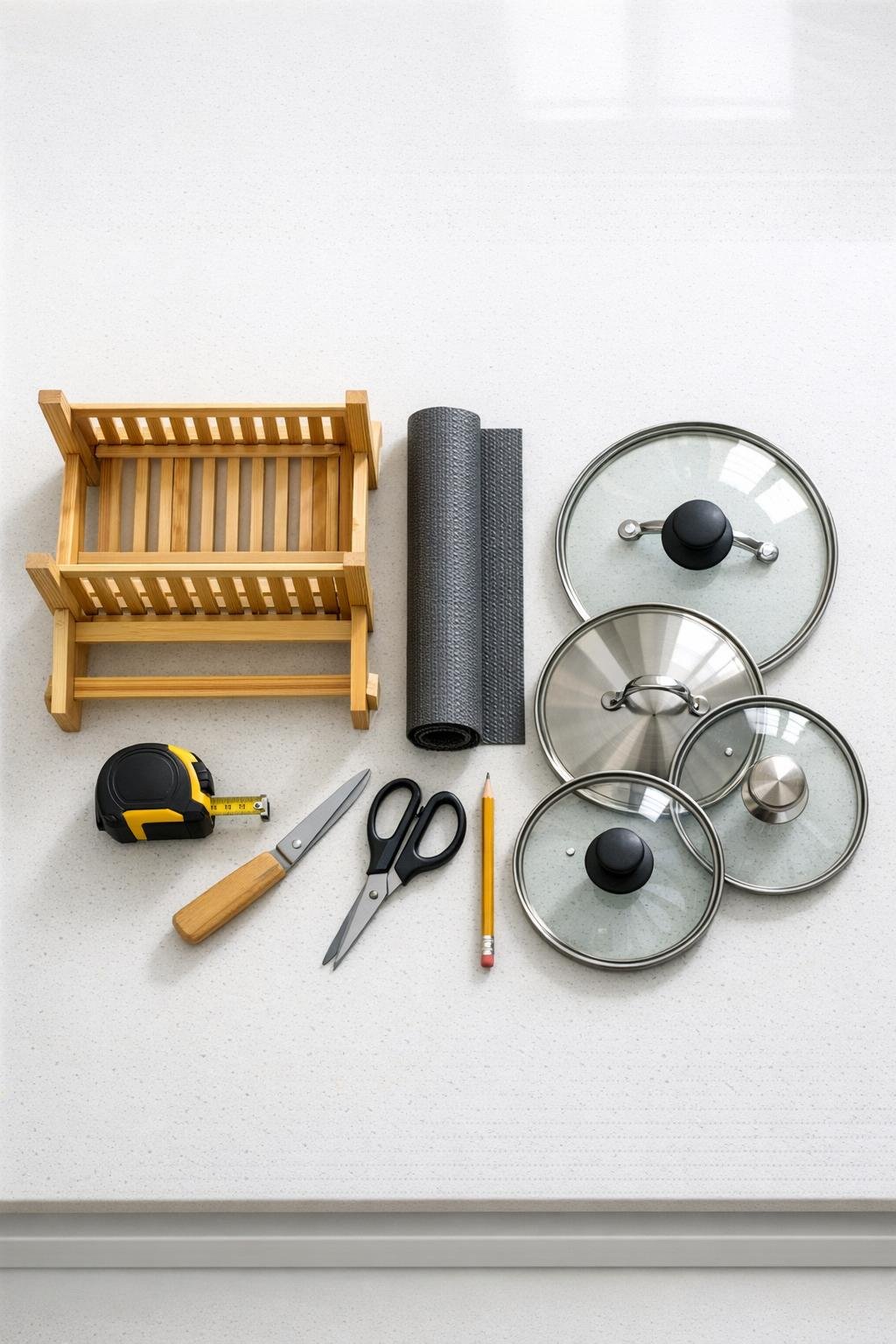
Materials
1 small wooden dish rack, about 12 to 16 inches long and 5 to 8 inches wide
Instructions
1. Empty the deep cabinet drawer completely and wipe it clean so the rack and liner will sit flat without crumbs or grease underneath.
2. Measure the inside width, depth, and height of the drawer, then compare those numbers to the dish rack and your tallest lid to make sure the drawer will close easily.
3. Cut the non-slip drawer liner to fit the drawer bottom, leaving a slight gap of about 1/8 inch around the edges so it lies flat without buckling.
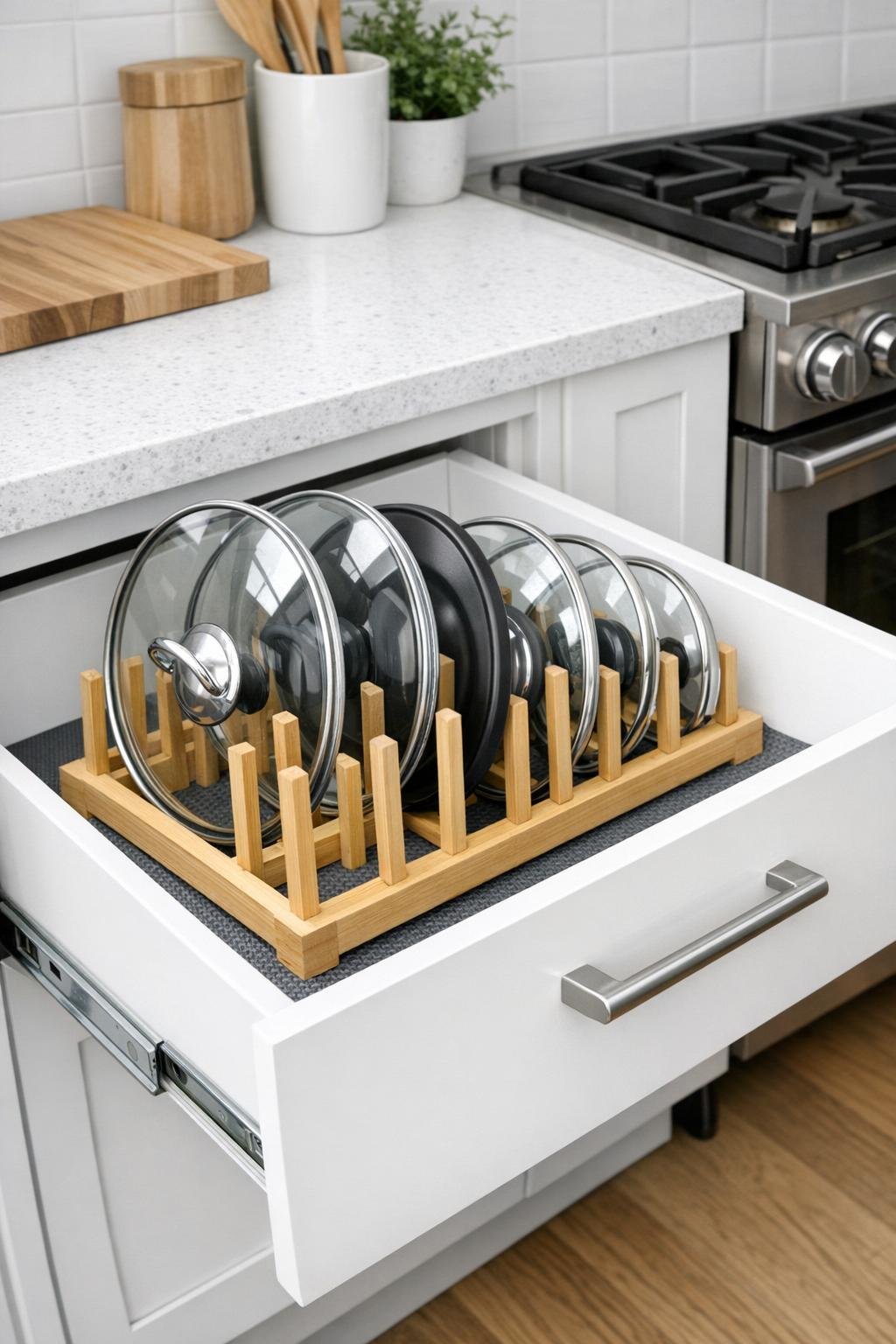
4. Place the liner in the drawer, then set the wooden dish rack on top with the slots running front to back so you can lift lids straight up by their handles.
5. Test the rack position before loading it by sliding it slightly left or right until there is enough room for the lid handles and your hand to move comfortably.
6. Sort your lids by size, placing the largest lids into the widest or most accessible slots first and the smaller lids into the remaining spaces.
7. Alternate handle directions if needed so neighboring lids do not bump into each other, especially if you have a mix of tall knob handles and loop handles.
8. Close the drawer slowly to check for clearance, then adjust the rack placement or lid order if any handle touches the top or sides of the drawer.
9. Once everything fits well, use the organizer daily and fine-tune the order over the next few days so the lids you use most often are in the easiest-to-grab spots.
Variations & Tips
Use a bamboo rack: A bamboo dish rack works especially well in kitchens because it is light, sturdy, and naturally suits the look of wood cabinets and cutting boards.
Add grip if the rack slides: If your drawer opens and closes hard enough to shift the rack, place small pieces of museum putty or adhesive rubber pads under the rack feet.
Store more than lids: This same setup can hold splatter screens, cooling racks, thin cutting boards, or small sheet pans if the drawer is wide enough.
Choose the right slot spacing: Before buying the rack, check that the spacing between slats will hold your lid rims securely; some very narrow slots work better for plates than for heavy glass lids.
Protect delicate finishes: If you have enameled or polished lids, line the contact points on the rack with a thin strip of felt or soft shelf liner to prevent rubbing.
Think like a cook: In my kitchen, I keep the sauté pan lid and stockpot lid closest to the front because those are the ones I reach for constantly. Little placement decisions like that make a drawer feel far more efficient when you are cooking dinner on a busy weeknight.