
I love a garden hack that costs almost nothing and solves a real problem, and these flexible vine training clips do exactly that. By soaking plain wooden clothespins and pairing them with two easy dollar store finds, you can make simple adjustable plant supports that help guide tomatoes, peas, cucumbers, pole beans, and even tender houseplant vines without tying fussy knots every few inches.
What makes this project worth doing is the gentle hold. The softened clothespins create a springy wooden jaw, while the added pieces turn them into reusable clips that can anchor to twine, cages, and thin trellis wires. If you grow climbing plants in containers, raised beds, or a compact city garden like I do, this is one of those little homemade tools that quickly earns a permanent spot in the potting shed.
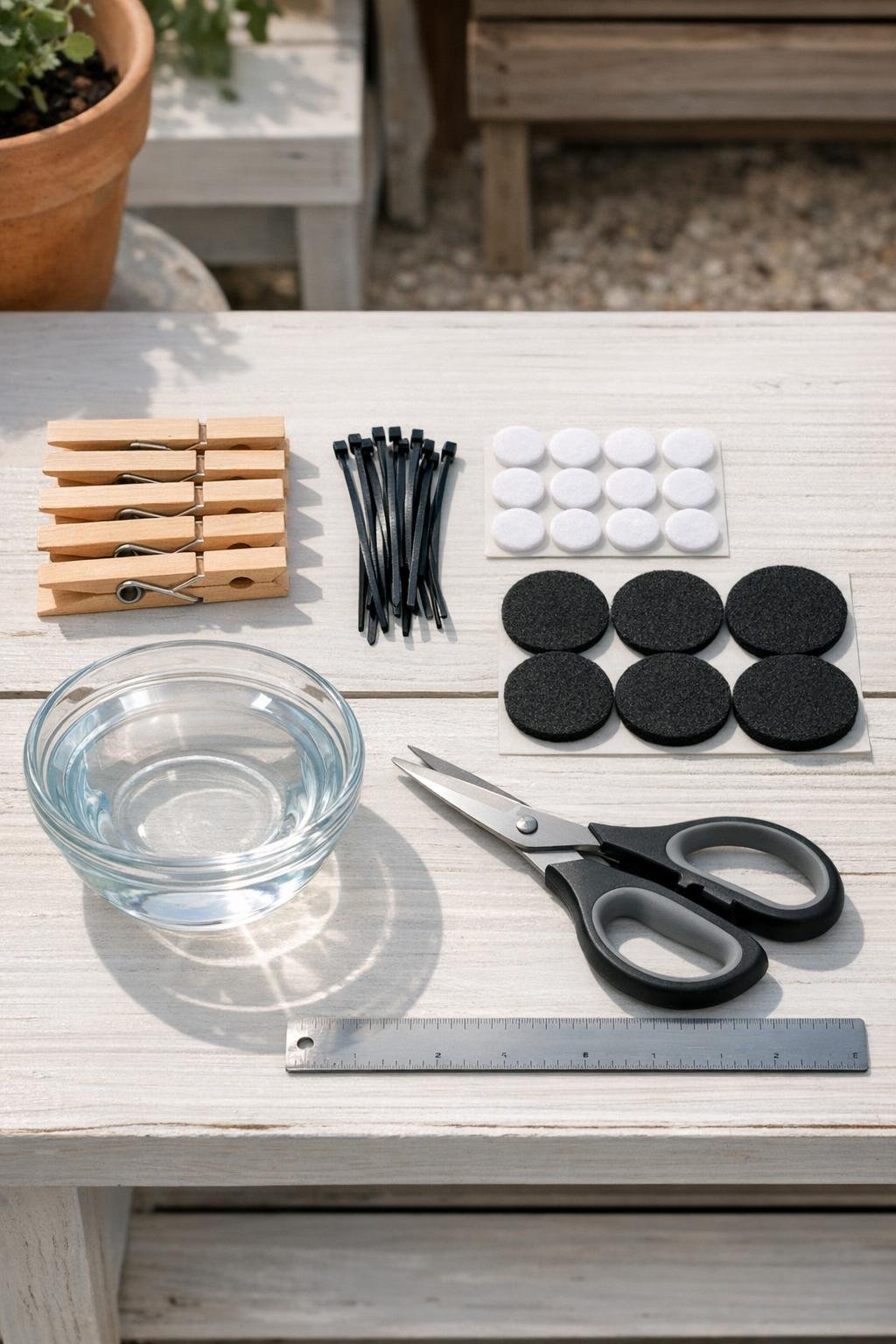
Materials
Instructions
1. Fill the bowl with 2 cups of warm water and soak the 12 wooden clothespins for 20 to 30 minutes to soften the wood slightly.
2. Remove the clothespins from the water, pat them dry with a towel, and make sure the spring action still opens and closes smoothly.
3. Stick one 1/2-inch felt pad onto the inside tip of each clothespin jaw, then add a second felt pad to the opposite jaw so every clip has a cushioned grip.
4. Open one clothespin and wrap a 4-inch zip tie around the back end, positioning it just behind the spring coil so it forms a small adjustable loop.
5. Pull the zip tie snug enough that it stays in place but does not crush the wood; this loop will let you fasten the clip to tomato cages, bamboo stakes, or horizontal garden twine.
6. Trim the tail of the zip tie with scissors, leaving a clean edge that will not snag stems or scratch your hands.
7. Repeat the felt-pad and zip-tie assembly for the remaining 11 clothespins so you end up with a batch of matching vine clips.
8. Let the finished clips air-dry for at least 2 hours before using them outdoors so the wood firms back up and the felt adhesive sets well.
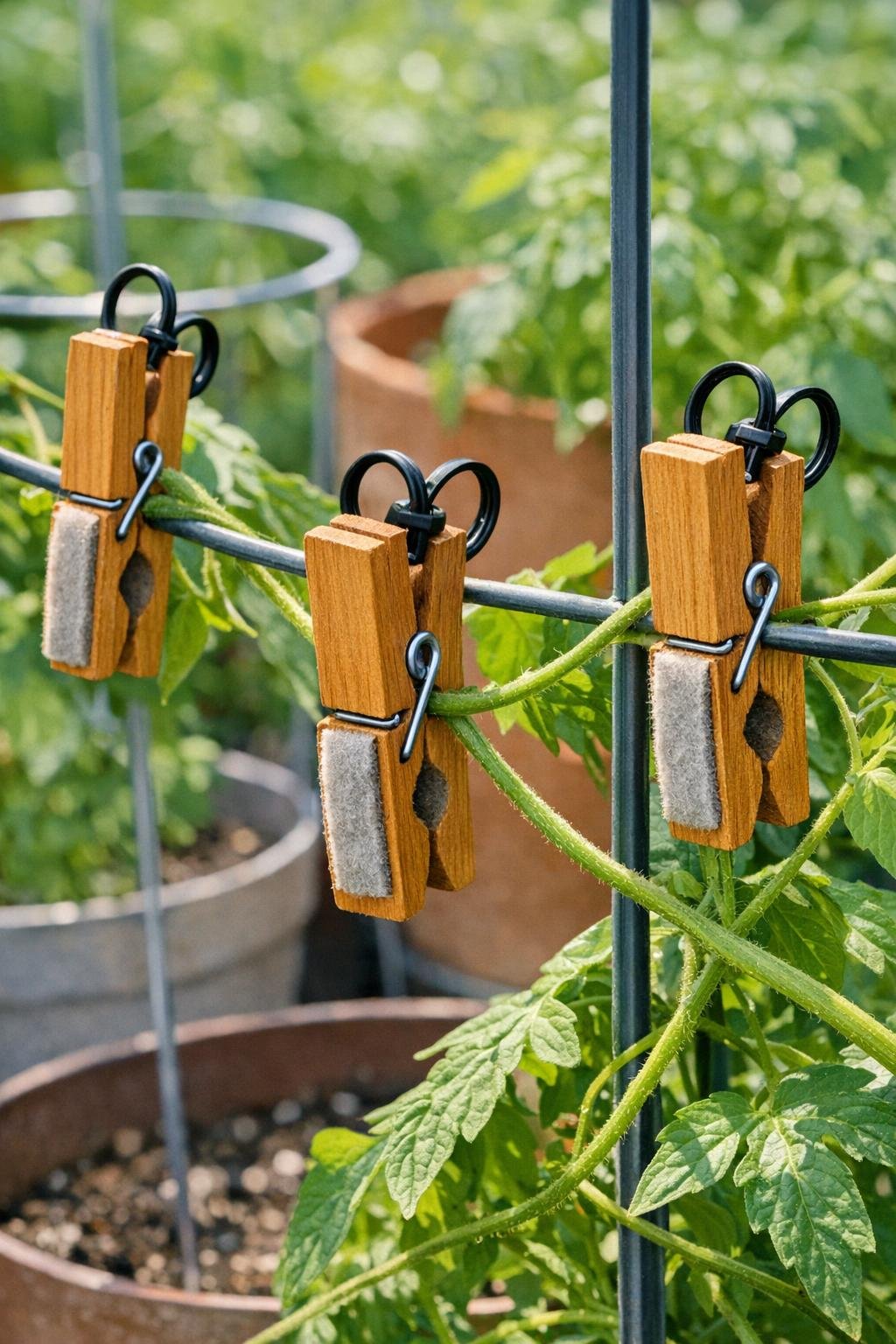
9. To use a clip, fasten the zip-tie loop around a support, then gently pinch a vine or stem inside the felt-lined jaws with a little room for growth.
10. Reposition clips every few days as the plant climbs, always placing them just below a leaf node or tendril rather than squeezing a tender growing tip.
Variations & Tips
For heavier vines: Use jumbo wooden clothespins, about 4 inches long, if you are training thicker cucumber or small melon vines on a sturdy trellis.
For delicate stems: Swap the felt pads for thin craft foam dots if the stem bruises easily; the softer cushion gives you a little more forgiveness.
For vertical twine systems: Make the zip-tie loop slightly larger so the clip can slide up and down garden twine instead of locking tightly in one place.
For wet weather: Bring the clips in at the end of the season and let them dry completely before storing; soaked wood lasts much longer when it is not left outdoors all winter.
Placement tip: I always clip below a node rather than across a bare stretch of stem, because the plant has a natural point of support there and is less likely to slip.
Batch-making tip: Assemble a dozen at once and keep them in a small jar near your seed packets; once the tomatoes take off, having extras ready saves a surprising amount of time.