
Broken terracotta has a second life in my garden, and this little buried marker is one of the most useful ways I know to use it. In this project, I turn terracotta pot shards and a simple wooden skewer into a frost-warning soil moisture tester that also helps me keep an eye on how damp the soil stays around tender plants.
If you grow herbs, annuals, tomatoes, or newly planted perennials, this is a practical weekend project that costs almost nothing and blends right into the bed. Terracotta is naturally porous, so it darkens as it absorbs moisture, and paired with an easy visible marker above the soil line, it gives you a quick at-a-glance clue about dampness and surface conditions on chilly spring and fall mornings.
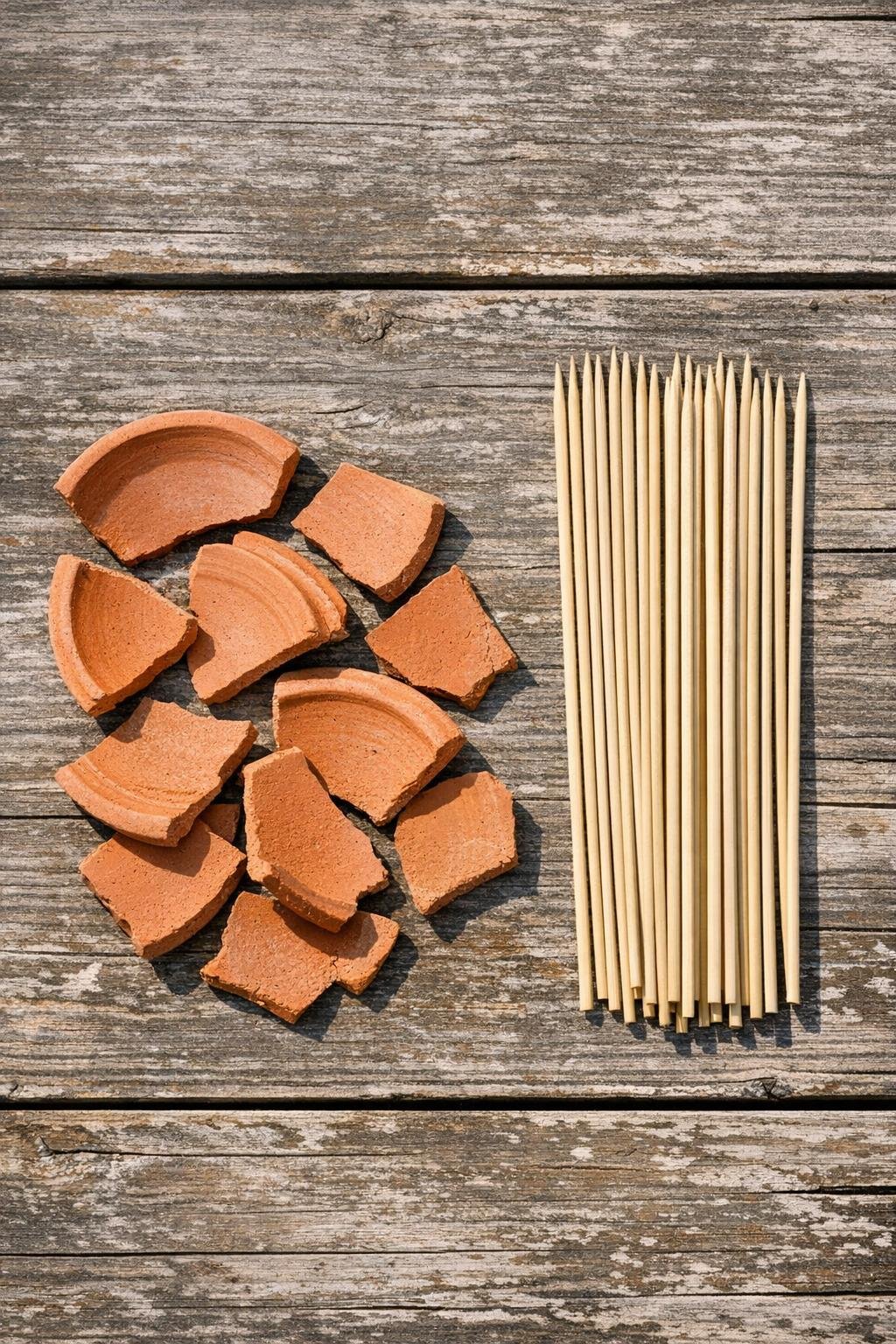
Materials
Instructions
1. Choose one terracotta shard with a broad curved face to act as the moisture indicator, and rinse off any dust so the color change will be easy to see.
2. Pick a second shard with a fairly straight edge and press it vertically into the soil where you want to monitor conditions, leaving about 1 inch visible above the surface.
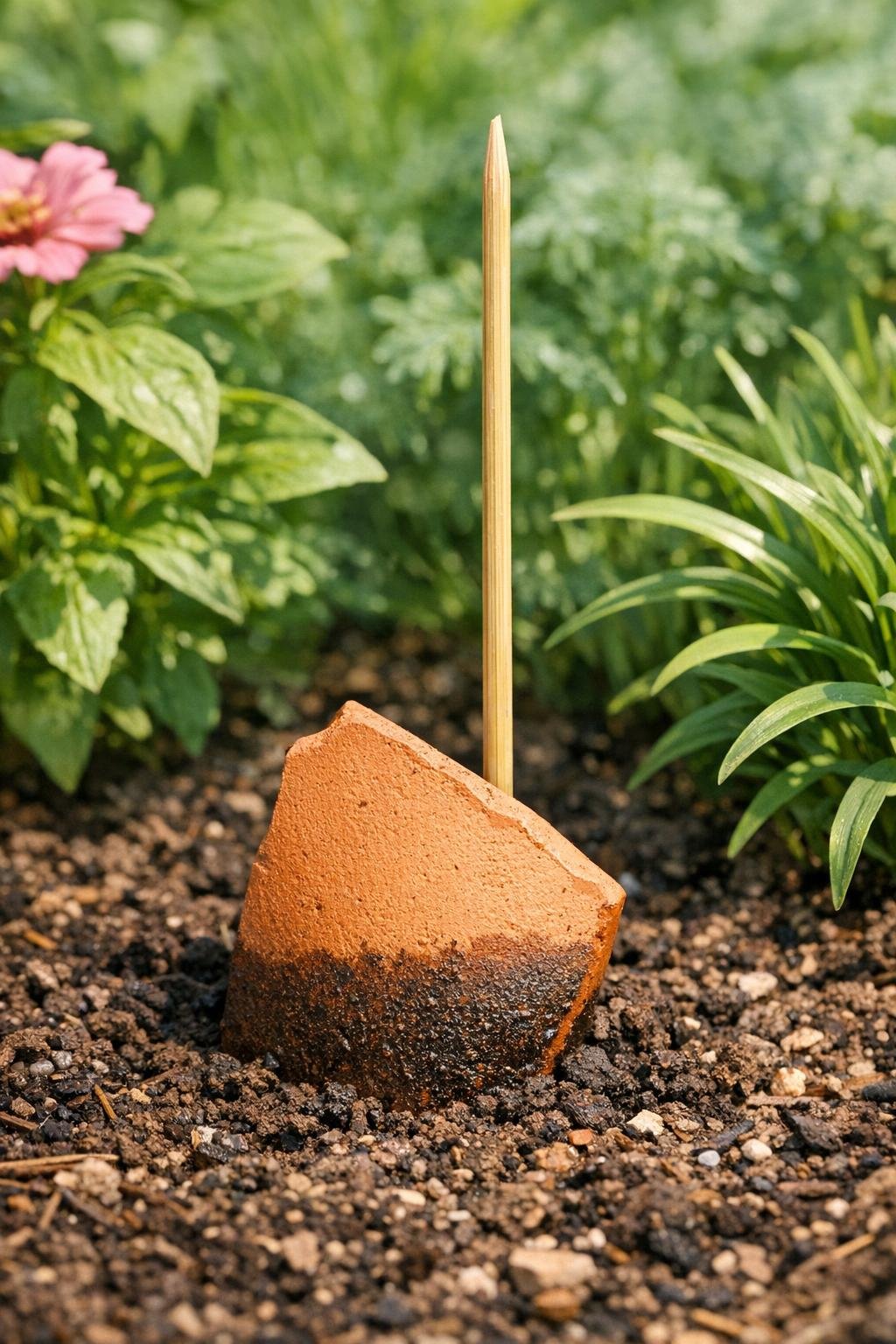
3. Slide the broad indicator shard into the soil at a slight angle beside the first shard, burying about two-thirds of it so moisture from the root zone can wick into the clay.
4. Push the bamboo skewer into the soil directly behind the buried shard, leaving 4 to 5 inches above ground so you can spot the tester easily from a distance on cool mornings.
5. Add two more small shards around the base if needed to brace the indicator shard so it stays in place after rain, watering, or a windy day.
6. Water the bed lightly once, then wait 15 to 20 minutes and note how the buried terracotta darkens; this becomes your “moist” reference look for that spot.
7. Check the tester at sunrise or before watering: a darker shard usually means the soil below is still holding moisture, while a pale dry-looking shard suggests the surface zone is drying out and may cool faster during a frost-prone night.
Variations & Tips
For containers: Use smaller shards, about 2 inches across, so they do not crowd roots in pots or window boxes.
For frost-sensitive plants: Place one tester near basil, tomatoes, or dahlias so you can quickly judge whether the soil is staying cold and damp in shoulder seasons.
Reading the terracotta: Terracotta naturally darkens when wet, but every clay pot is a little different, so I like to observe mine once after watering and once after a dry spell to learn its range.
Best placement: Install the tester near the drip line of the plant rather than tight against the stem, since that is a more useful place to judge real root-zone moisture.
Make it sturdier: If your soil is sandy or very loose, wedge the indicator shard between two support shards so the angle stays consistent and the reading is easier to compare day to day.
Seasonal care: Pull the skewer and shards at the end of the season, brush them clean, and store them dry so they are ready for spring planting.
Know its limits: This is a simple visual garden aid, not a precision meter, but for quick everyday decisions about watering and watching vulnerable beds before a cold snap, it works surprisingly well.