
If you grow tender potted plants the way I do on a Midwestern balcony and tucked around a small patio, you learn quickly that the first cold snap is not always the end of the season—but it can be if roots and stems are left exposed. This simple overwintering insulator uses split foam pool noodles plus two inexpensive dollar store supplies to create a quick protective wrap around pots and lower stems, helping buffer plants from sudden temperature drops, wind, and freeze-thaw swings.
I like this project because it is fast, lightweight, and easy to customize for different container sizes. It is especially useful for gardeners who are trying to stretch the season for tender perennials, protect nursery pots before moving them into shelter, or add a little insurance to borderline-hardy plants outdoors.
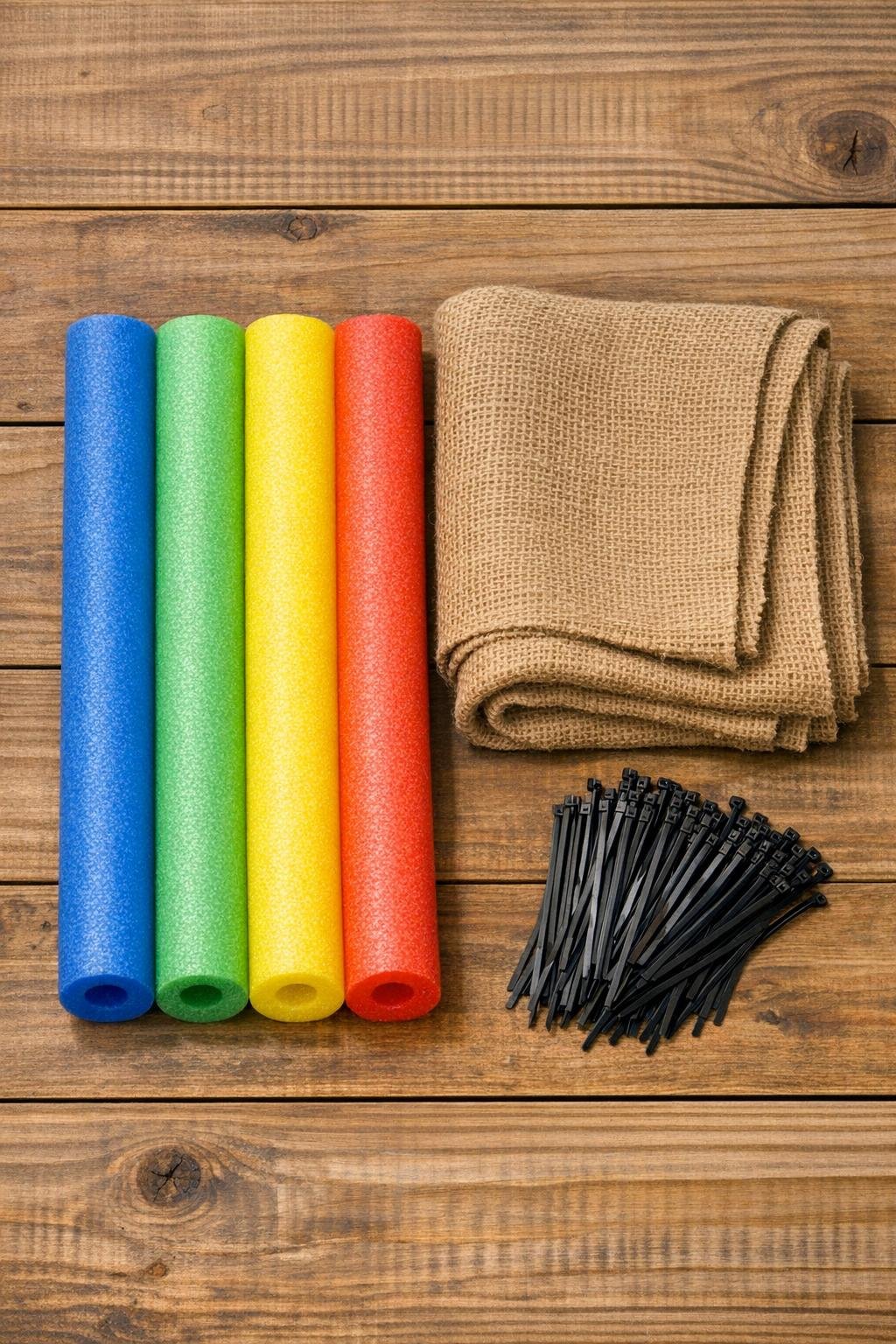
Materials
Instructions
1. Measure the circumference and height of the pot or group of pots you want to protect so you know how many noodle sections and how much burlap you will need.
2. Slice each pool noodle lengthwise along its existing center hole so it opens into a C-shaped sleeve that can slip over a pot rim or around stems without snapping.
3. Cut the opened noodles into lengths that fit around the top rim and, if needed, the outer sides of the pot, keeping joints snug so there are no large gaps.
4. Press one length of split noodle over the pot rim to create a cushioned insulating ring, then add more sections side by side around the outside of the container if the pot is large.
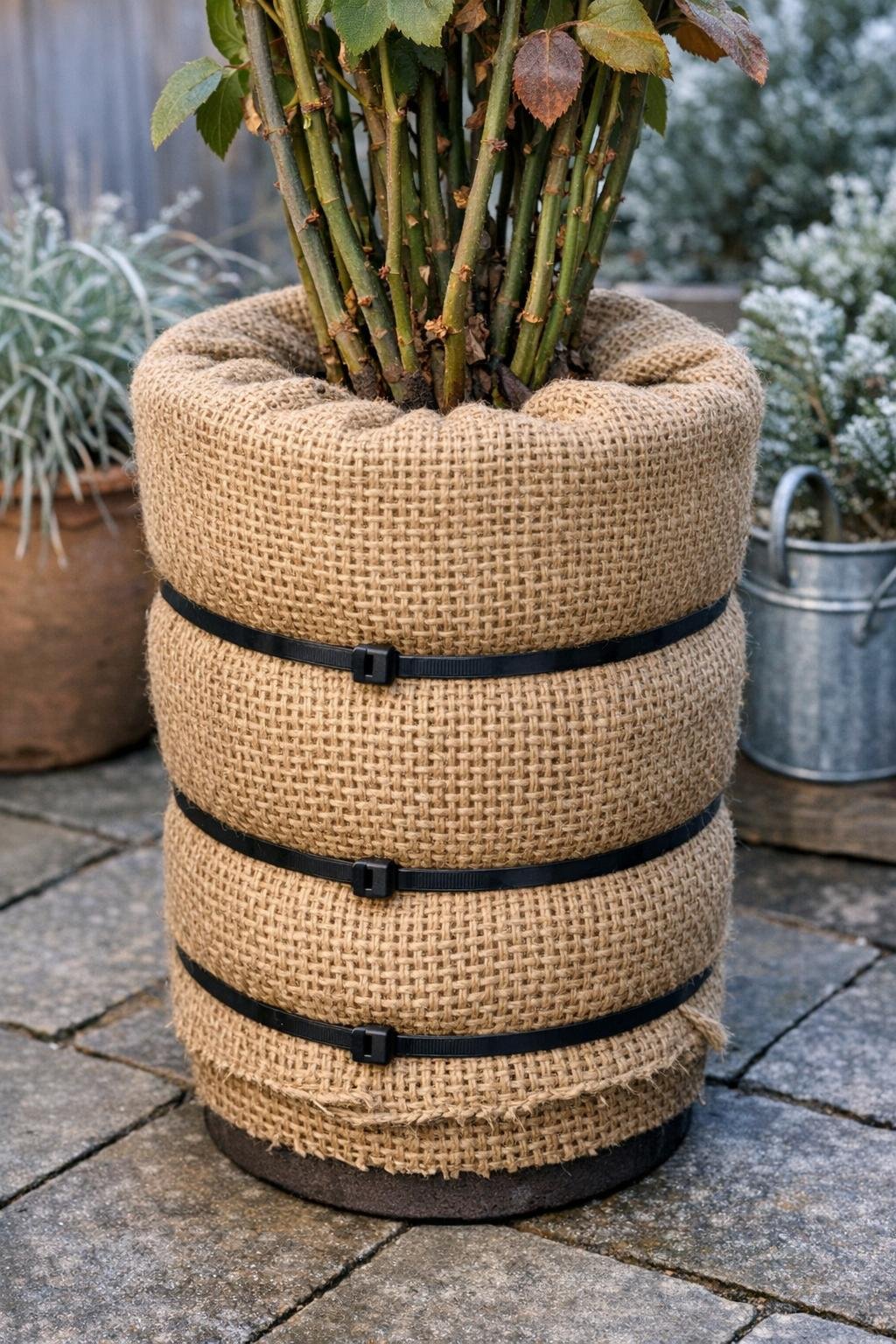
5. Wrap burlap around the noodle-covered pot, overlapping the ends by 2 to 3 inches so the foam stays compressed and protected from wind.
6. Thread zip ties around the burlap at the top, middle, and bottom, then tighten them just enough to hold everything securely without crushing the pot or stems.
7. Gather the burlap loosely around the lower stems if cold nights are expected, leaving enough airflow at the top to prevent trapped moisture from sitting on the plant all day.
8. Move the insulated pot against a wall or into a sheltered corner, and check after rain or snow to make sure the wrap stays snug and the soil is damp, not soggy.
Variations & Tips
For extra cold: Double the burlap layer or add a second ring of noodle sections around the pot wall if you are expecting repeated nights below freezing.
For clustered pots: Group two or three small nursery pots together, wrap them as one bundle, and insulate the shared outer edge rather than treating each pot separately.
For delicate stems: Keep the foam and zip ties around the container, not tight against living growth; I have found that stems handle cold better than abrasion.
Moisture management: Burlap breathes well, which is one reason I prefer it here, but always check that drainage holes stay open so roots do not sit in icy water.
Color choice: Bright noodles are perfectly fine because they are mostly hidden, but darker burlap on the outside gives the whole setup a tidier garden look.
Best use case: This is a short-term or shoulder-season insulator, not a substitute for a heated greenhouse; think of it as a practical buffer for surprise weather and marginal nights.