
When the first hard frost is in the forecast, I like having a simple garden fix I can pull together in just a few minutes. This old-school root protection cover uses broken terracotta pots and a layer of loose leaves to insulate tender root zones overnight, and it is one of those wonderfully practical garden tricks that feels almost too easy to work. If you have a few cracked clay pot pieces tucked behind the shed and a yard full of fall leaves, you are already most of the way there.
I especially love this method for gardeners who want a low-cost, low-fuss way to help herbs, young perennials, or borderline-hardy plants get through an early cold snap. It is not a season-long solution for deep winter, but for pre-frost nights and surprise temperature dips, it can make a real difference without sending you to the store.
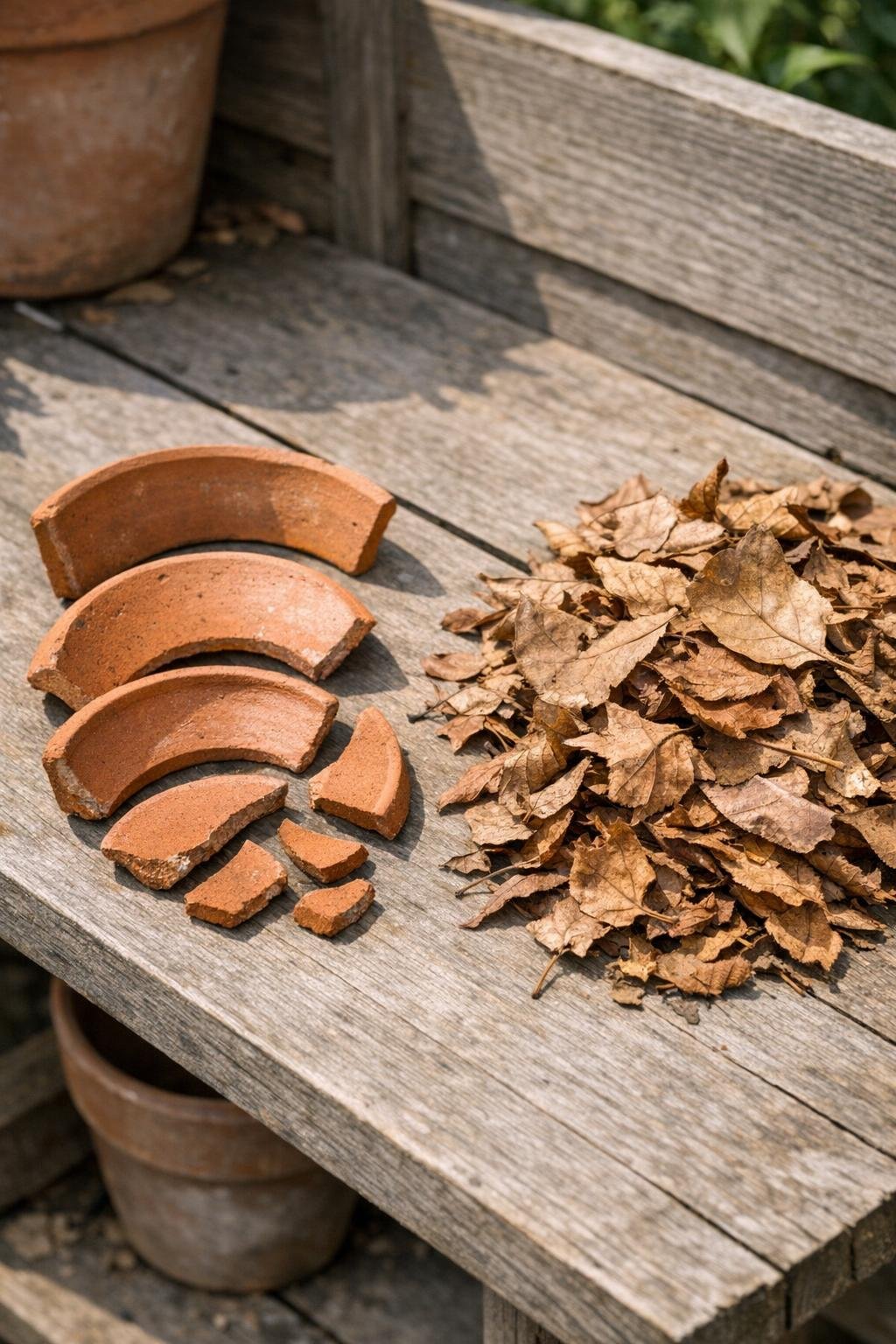
Materials
Instructions
1. Choose a plant that needs short-term protection from an early frost, such as a young perennial, hardy herb, or recently planted division, and wait until the foliage is dry before covering it.
2. Clear away any soggy mulch or rotting plant debris from around the crown so the cover sits on clean soil and does not trap excess moisture against the stem.
3. Mound a loose layer of dry leaves over the root zone, aiming for a 4- to 6-inch blanket that extends 3 to 6 inches beyond the base of the plant.
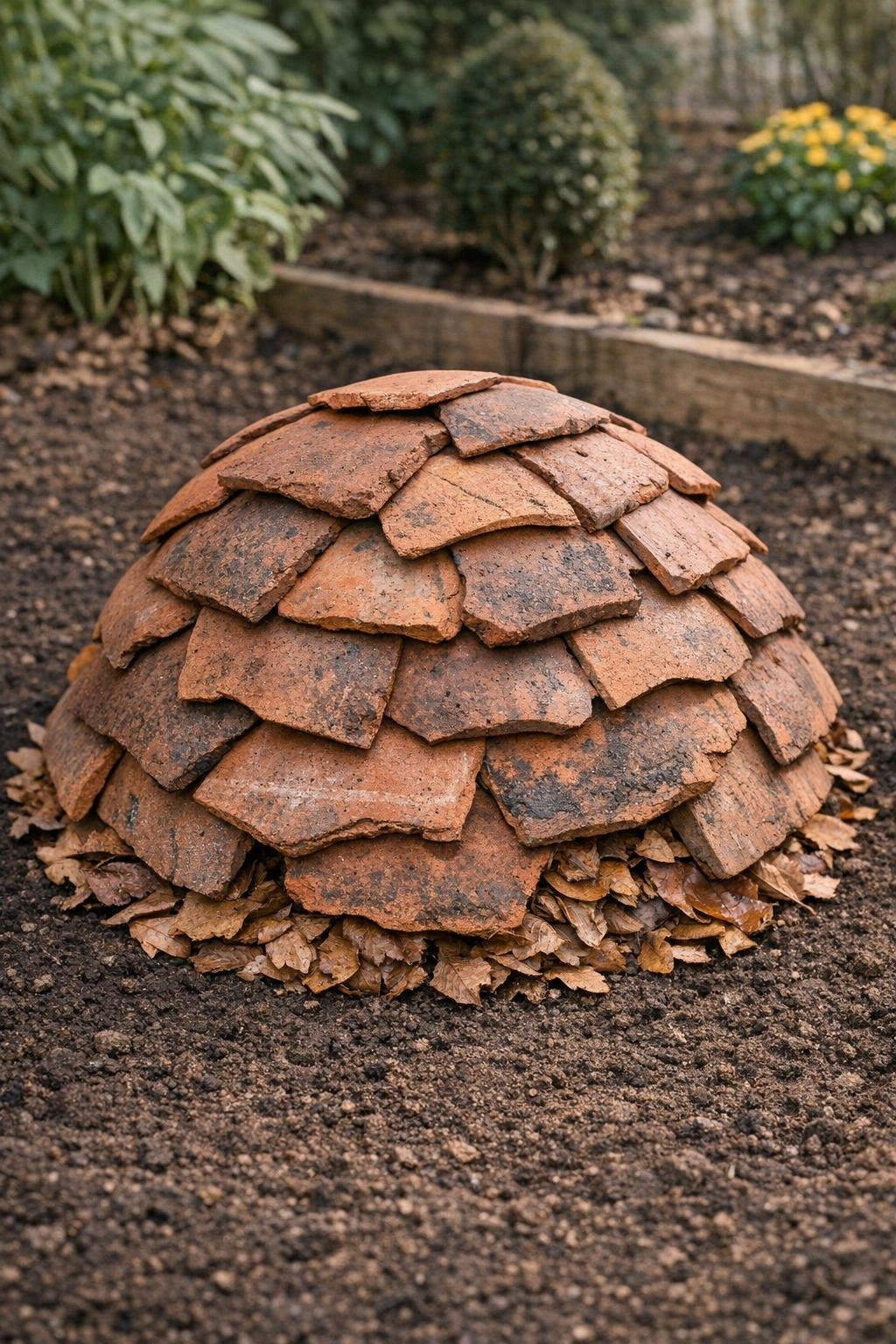
4. Stack the broken terracotta pieces over the leaves like overlapping shingles, creating a low dome that helps hold the leaf layer in place while leaving a little air space inside.
5. Keep the terracotta slightly off the main stem or crown if possible, so the plant is insulated without being pressed flat under the cover.
6. Tuck a few extra leaves into any larger gaps between pot pieces, but do not pack them tightly; the trapped air is part of what helps buffer the cold.
7. Leave the cover in place overnight during the cold snap, then remove or loosen it the next morning once temperatures rise above freezing so the plant can breathe and receive light.
8. Repeat on future frosty nights as needed, replacing damp leaves with dry ones if the insulation gets wet and heavy.
Variations & Tips
For picky weather: If the forecast is only dipping briefly to 32°F, use a thinner leaf layer; for colder nights in the upper 20s, make the leaf blanket thicker and extend it wider around the roots.
Best plants for this trick: I reach for this method most often for rosemary, newly planted mums, fall lettuce starts, strawberry crowns, and small perennial divisions that have not fully settled in yet.
Skip wet materials: Wet leaves mat down and lose insulating value fast, so I always use dry leaves and swap them out after rain or heavy dew.
Use the curve to your advantage: Terracotta shards with a gentle curve overlap more easily and create better air pockets than flat pieces, so save those broken rim sections when a pot cracks.
Morning matters: Do not leave the cover on longer than necessary once the sun is up, especially on tender herbs, because trapped warmth and moisture can encourage rot.
Make it family simple: If you are covering several plants before a cold night, set up one pile of leaves and sort terracotta pieces by size first; it turns a rushed evening garden chore into a quick assembly line.
Not for deep winter: This is a short-term frost buffer, not a full winterizing system, so for long freezes you will still want heavier mulch or a more permanent cold-weather cover.