
I love a Halloween project that looks dramatic but is built from the kind of humble materials most of us already have tucked away in the garage and linen closet. This floating phantom bride is exactly that sort of make: a bent chicken wire form, an old white bed sheet, and liquid laundry starch turn into a ghostly figure that looks far more complicated than it really is.
If you’re comfortable with a little hands-on shaping and you don’t mind letting the piece dry overnight, this is a very approachable weekend decoration. The key is to think of it like draping pastry dough or shaping a dumpling wrapper in the kitchen: the structure matters, but the folds are what bring the whole thing to life.
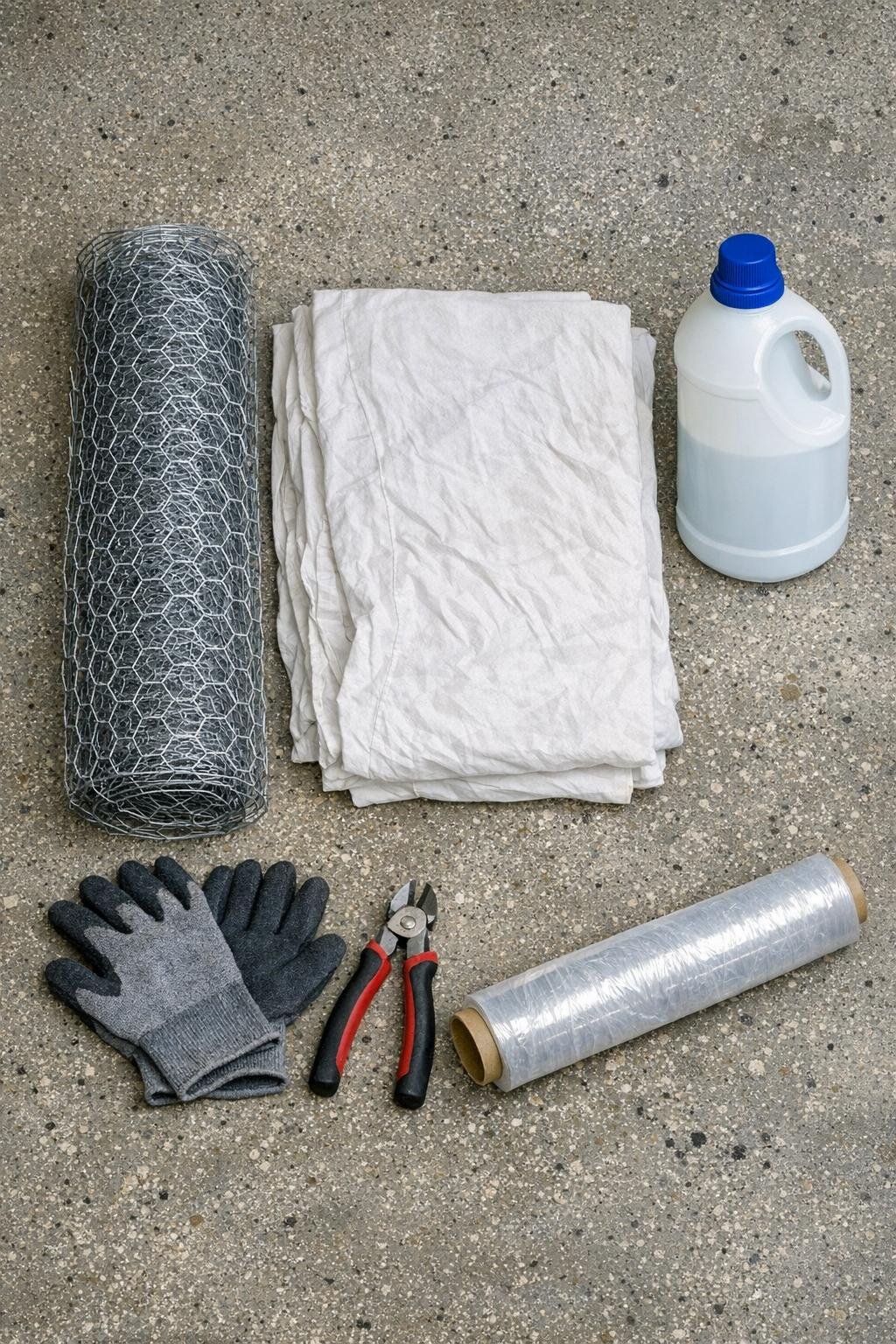
Materials
Instructions
1. Put on work gloves and clear a workspace on the garage floor or a protected surface. Chicken wire edges are sharp, so handle every cut edge slowly and deliberately.
2. Cut a section of chicken wire about 5 to 6 feet long. Crumple and squeeze it into a simple upright torso shape with a rounded head and one raised arm, keeping the form broad enough at the base to stand steadily.
3. Refine the silhouette with your hands by narrowing the neck, rounding the shoulders, and flaring the lower section like a gown. Don’t aim for anatomy; a loose, haunting outline works better than too much detail.
4. If you want the finished bride to be hollow and removable, wrap the wire form loosely in plastic wrap now. If you want better outdoor stability on a covered porch, leave the wire uncovered so it stays inside the finished piece.
5. Pour the liquid starch into a large bucket or tub. If you prefer a firmer result, mix equal parts white glue and water in the tub instead.
6. Submerge the white bed sheet in the starch mixture until it is fully saturated. Wring it lightly so it stays very wet but is not dripping everywhere.
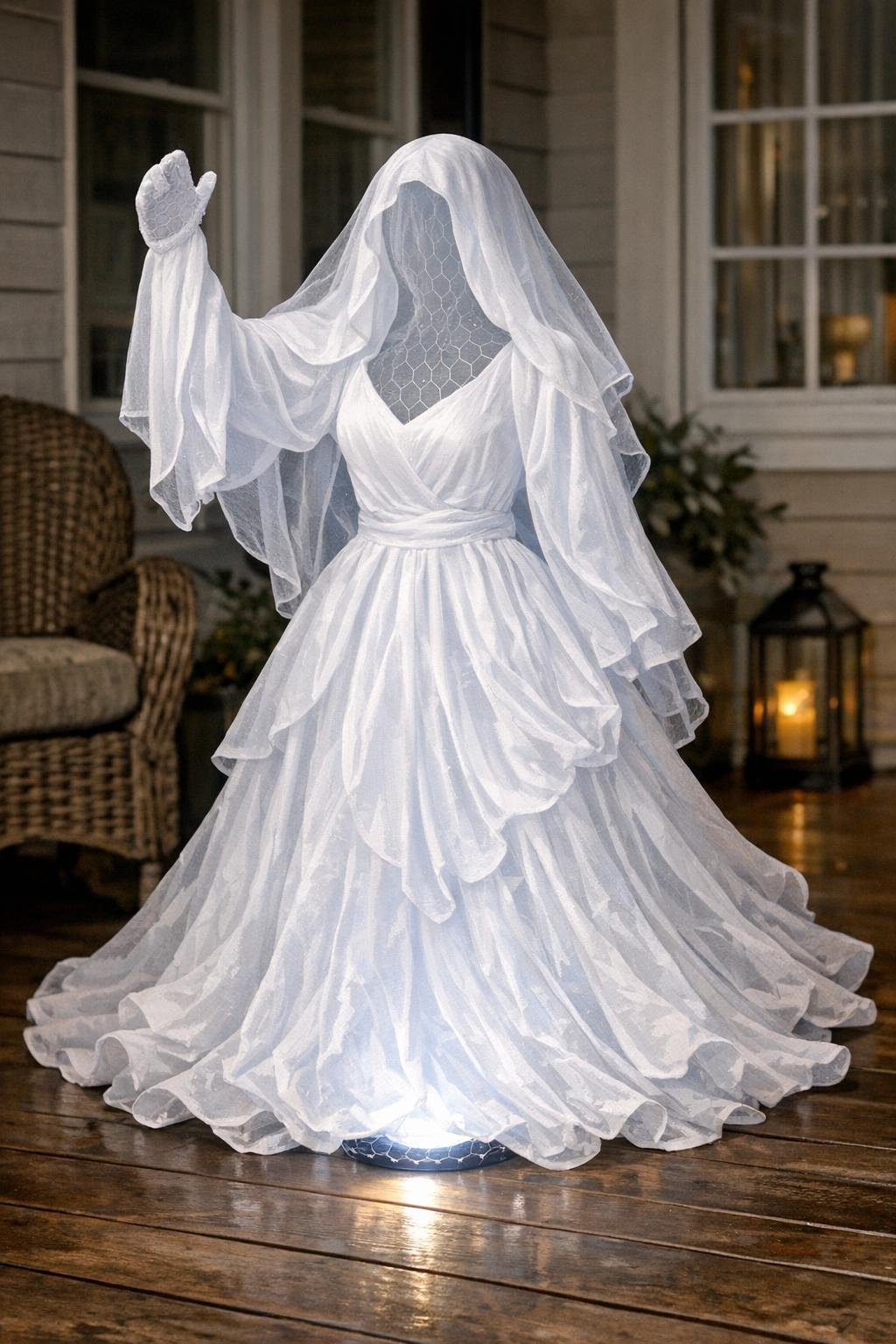
7. Drape the wet sheet over the chicken wire form, centering it over the head first and then guiding it down over the shoulders and body. Pull and arrange the fabric so one side suggests a veil and the lower half falls like a long gown.
8. Shape the folds with your hands while the sheet is still wet, opening some areas and pinching others so the figure looks airy rather than flat. Make sure the hem or lower folds touch the floor in several spots to create a stable stance when dry.
9. Let the piece dry undisturbed for 24 hours, or longer if your space is cool or humid. It should feel rigid and hold its shape before you move it.
10. If you wrapped the form in plastic wrap, gently lift the stiffened sheet shell off the wire after it dries completely. If you left the wire inside, check for any sharp points poking through and tuck them inward.
11. Place the finished phantom bride indoors or on a covered porch, and set an LED puck light on the ground underneath for an eerie glow. Never use an open flame beneath or near the fabric.
Variations & Tips
For a stiffer finish: Liquid starch is easy to work with, but the white glue and water mixture usually dries harder and holds up better over time.
For outdoor placement: This project does best indoors or on a covered porch. Starch can soften in rain and heavy humidity, while the glue version resists moisture a bit better.
For a lighter, floatier look: Use a thinner old sheet if you want more delicate folds. A heavy flannel sheet tends to read more bulky than ghostly.
For safer shaping: Keep gloves on any time you touch cut chicken wire. I treat it the way I treat a box grater in the kitchen: very useful, but not forgiving if I get careless.
For extra drama: Pose the raised arm so it peeks through the sheet as a subtle gesture. That small asymmetry gives the finished figure a much more lifelike silhouette.
For storage: If you make the hollow version, lift it off the mold and store it in a dry spot where the folds won’t be crushed. If needed, you can touch up softened areas with more starch or glue mixture later.