
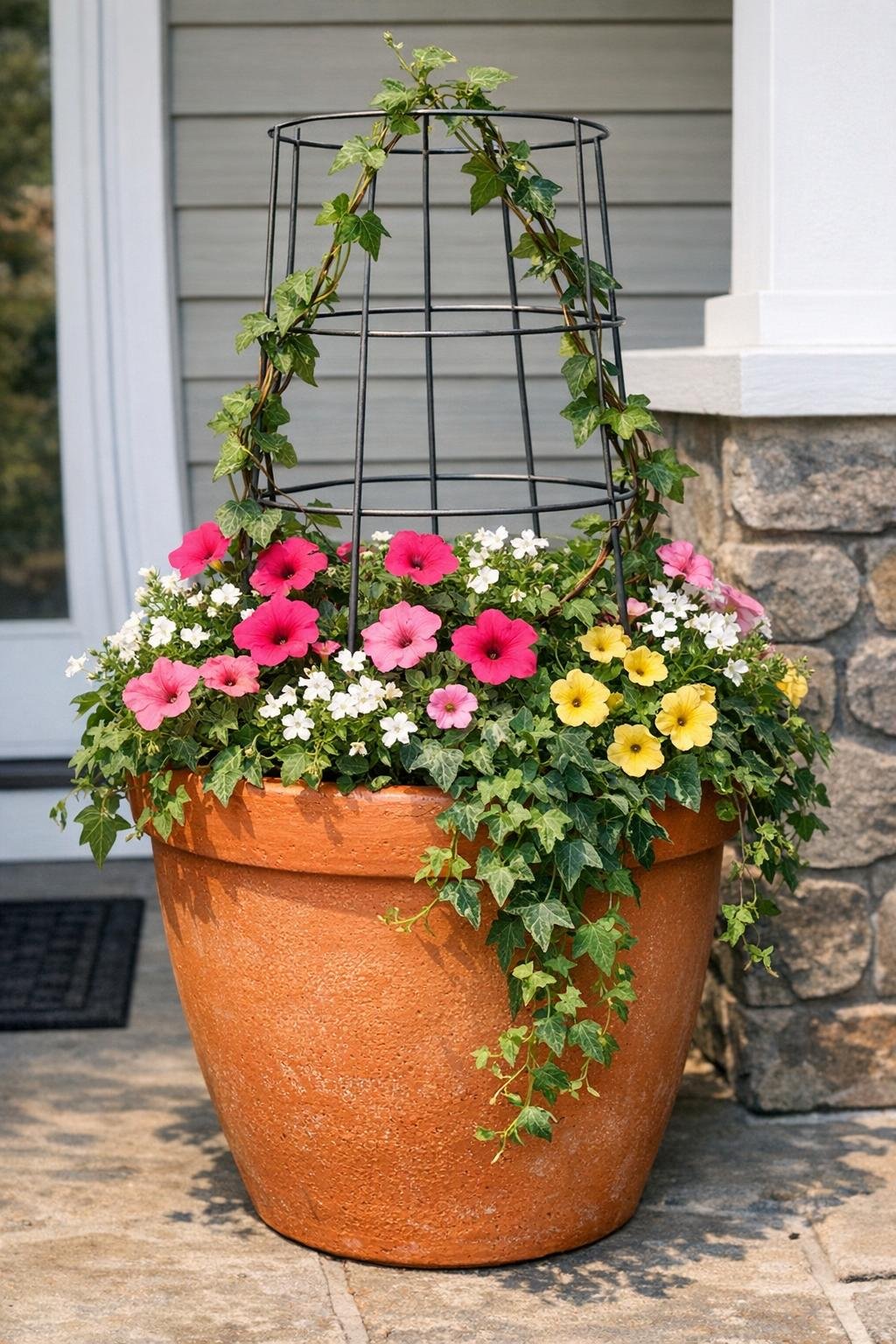
This porch planter is one of those simple projects that looks a lot fancier than the effort it takes. By setting wire tomato cages into large orange terracotta pots, you can create a tall, tidy container display that gives your front porch height, structure, and plenty of room for trailing or climbing plants.
I love projects like this because they make an entryway feel welcoming without needing complicated tools or carpentry. If you want a neat front porch idea that works for seasonal flowers, vines, or even twinkle lights later on, this is a very manageable weekend project for beginners and seasoned gardeners alike.
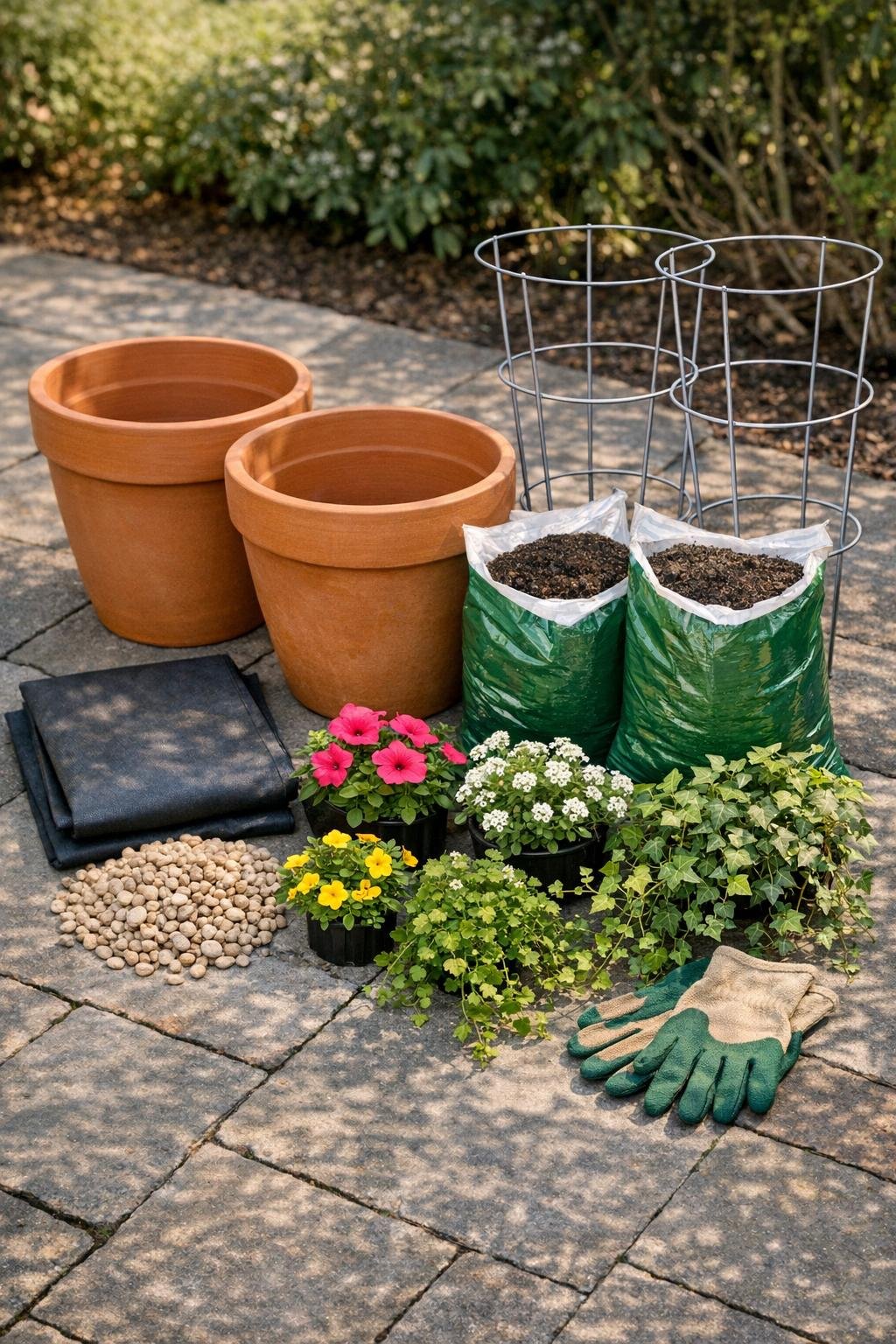
Materials
2 large orange terracotta pots, 16 to 18 inches wide
Instructions
1. Set your terracotta pots where you want them on the porch before filling, because they get heavy fast once planted.
2. Place a piece of landscape fabric or a pot liner over each drain hole to keep soil in while still letting water drain out.
3. Add 2 to 3 inches of pea gravel to the bottom of each pot for weight and stability.
4. Pour in enough potting mix so the tomato cage legs can sit down into the pot while the cage ring stays several inches above the rim.
5. Push one tomato cage firmly into the center of each pot until the legs are buried evenly and the cage stands straight.
6. If the cage feels wobbly, press the soil tighter around the legs or secure the lower wires with small landscape staples or zip ties tucked low inside the pot.
7. Add more potting mix around the cage, filling each pot to about 2 inches below the rim and keeping the cage centered.
8. Plant the upright or mounding flowers around the middle area of the pot, spacing them evenly between the cage legs.
9. Tuck the trailing plants near the outer edge so they can spill over the terracotta rim as they grow.
10. Plant one climbing vine at the base of each tomato cage and gently weave the first few stems through the lower wires for support.
11. Fill any gaps with extra potting mix, then press the soil gently around each plant so everything sits snug and level.
12. Water deeply until the soil is evenly moist and the plants settle into place, then straighten any stems on the cage if needed.
Variations & Tips
For a fuller look: Use an easy container formula of thriller, filler, and spiller. I usually choose one climbing plant for height, two mounding flowers for color, and two trailing plants to soften the rim.
For picky plant conditions: Match your plants to the porch light. If your front steps get blazing afternoon sun, go with sun lovers like petunias, calibrachoa, and sweet potato vine; for shadier spots, try coleus, impatiens, and ivy.
For extra stability: If your porch gets strong wind, choose a wider pot and add a little more gravel in the base. That extra weight helps the tall cage stay put, especially once vines start filling out.
For a cleaner finish: Turn the tomato cage so the smoothest, most even side faces front. It is a tiny detail, but it makes the whole planter look more intentional.
For seasonal swaps: In summer I like flowering vines and bright annuals, but in fall you can redo the same pot with mums, ornamental kale, and a few tucked-in mini pumpkins around the cage base.
For easy maintenance: Water terracotta planters a little more often than plastic ones, since clay dries out faster. A quick check with your finger an inch into the soil will tell you whether it is time for another drink.