
There’s a little bit of kitchen-style science behind these grown-crystal ornaments, and that’s exactly why I love them. You twist simple pipe cleaners into shapes, suspend them in a hot borax solution, and by morning they come out covered in sparkling crystals. It feels dramatic for such a low-effort project, which is my favorite kind of payoff.
This is a wonderful project for winter decorating, homemade gifts, or a snow-day activity with older kids and close supervision. The main trick is getting the mixture right: 3 tablespoons of borax per 1 cup of boiling water. Hot water can hold more borax than cold water, and as the solution cools, that extra borax has nowhere to go but onto the pipe cleaner shape, where it forms those chunky, glittering crystals.
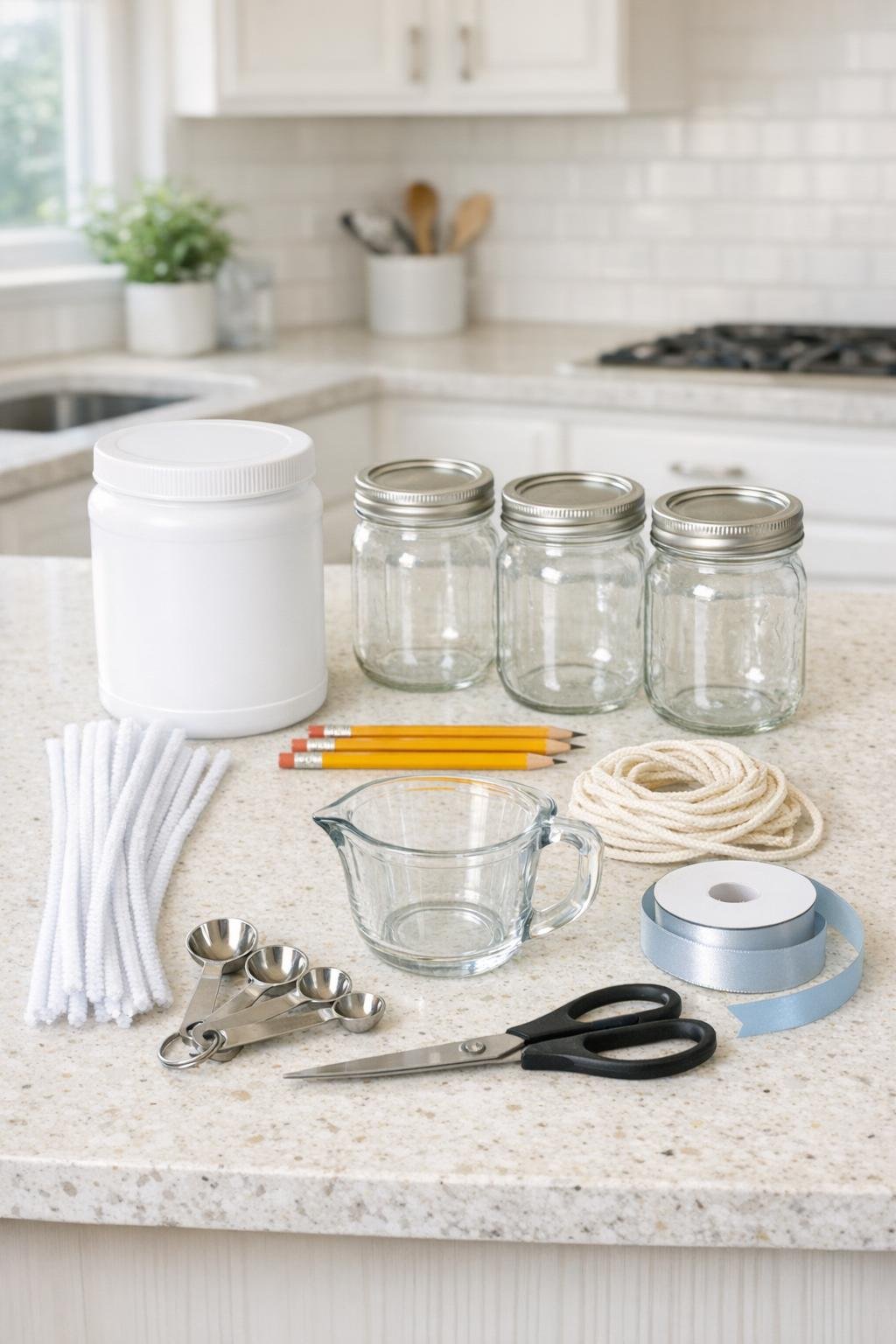
Materials
Instructions
1. Bend the pipe cleaners into snowflakes, stars, or other simple shapes, keeping each one smaller than the mouth of the jar. I like to leave a little open space in the design so the crystals can build on every edge.
2. Cut a piece of string for each shape and tie it securely to the top of the ornament. Tie the other end to the middle of a pencil so the shape can hang down into the jar.
3. Test the fit by laying the pencil across the jar rim and lowering the shape inside. Adjust the string until the pipe cleaner hangs freely without touching the bottom or sides of the glass.
4. Bring the water to a full boil; cooler water will not dissolve enough borax to grow good crystals. Pour 1 cup of boiling water into the heat-safe measuring cup for each ornament you plan to make.
5. Stir 3 level tablespoons of borax into each 1 cup of boiling water until fully dissolved. This strong hot mixture is the whole trick, because it creates a supersaturated solution: the hot water holds more borax than it can once it cools.
6. Carefully pour the borax solution into each jar, then lower in the pipe cleaner shapes. The jars should be labeled and set somewhere they will not be bumped, because the crystals form best when the solution stays completely still.
7. Leave the jars undisturbed overnight. As the water cools, the extra dissolved borax has nowhere to go but onto the pipe cleaners, where it collects in sparkling crystals.
8. In the morning, lift the ornaments out and set them on paper towels to dry completely. Handle them gently, because they are hard once dry but can shatter if dropped.
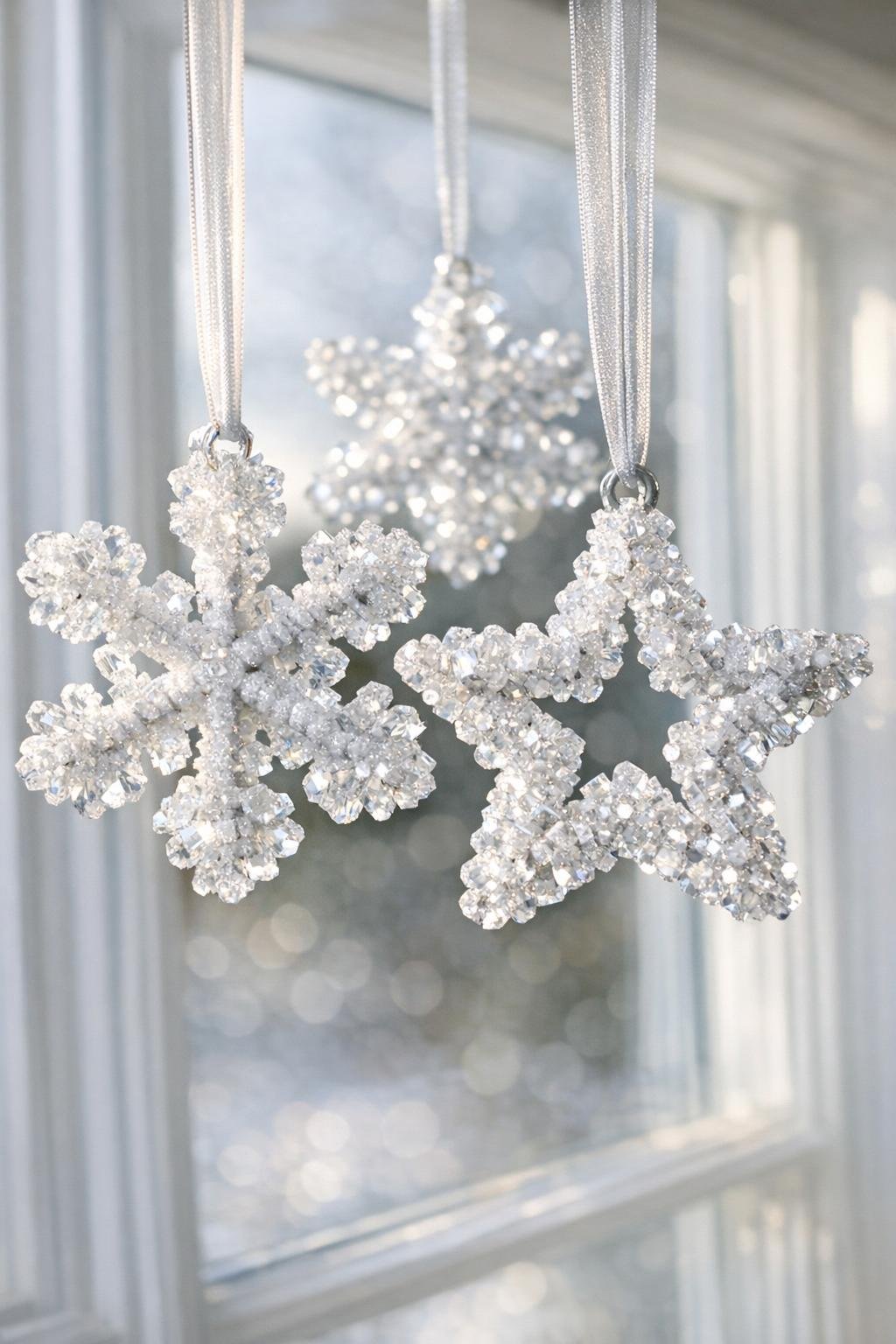
9. Untie the string from the pencil, replace it with ribbon if you like, and hang the ornaments on a tree, in a window, or from a garland. They catch the light beautifully, especially near a bright window on a gray Midwestern morning.
Variations & Tips
Shape choice: Snowflakes and stars are the easiest starters, but simple hearts, candy canes, and spirals also work well. Avoid very dense or oversized shapes, because they are more likely to touch the jar.
Jar size: Wide-mouth pint jars are the most forgiving. If you use smaller jars, make your pipe cleaner shapes noticeably smaller than you think you need.
For better crystal coverage: Make sure the water is truly boiling and the ratio stays exact at 3 tablespoons borax per 1 cup of water. A weaker mixture or merely hot tap water usually gives disappointing results.
If crystals form on the jar instead: That usually means the ornament is too close to the glass or the jar was bumped. Reposition the shape so it hangs in the center and try again with fresh solution.
Color ideas: White pipe cleaners give the most frosty look, which is why I prefer them for snowflakes. You can use colored pipe cleaners underneath for a jewel-toned crystal ornament, but keep the shapes simple so the color still shows through.
Safety note: Borax is a laundry product, not food, so this is best as an adult project or with close supervision. Label the jars, keep hands away from eyes and mouths, and do not reuse the measuring cup or spoon for cooking afterward.
Storage tip: Once fully dry, store the ornaments in a shallow box with tissue or paper towels between layers. They hold up nicely when protected, but they do not like being knocked around in a decoration bin.