
Old linen dish towels are one of those household things I can never quite throw away. Even when they’re too stained or frayed for the kitchen, the fabric still has body, softness, and that lovely nubby texture that makes handmade décor feel warm instead of overly polished. In this project, I turn three old linen dish towels into a simple autumn pumpkin trio that looks charming on a table, sideboard, or entry shelf.
I especially like this kind of craft because it’s forgiving, inexpensive, and quick enough to make in an afternoon. If you sew regularly, this will feel very easy, but even if you only mend buttons once a year, you can absolutely make these. The finished pumpkins have that relaxed, slightly rustic look that linen does so well, and they’re a good way to use up fabric scraps and tired towels that still deserve one more season.
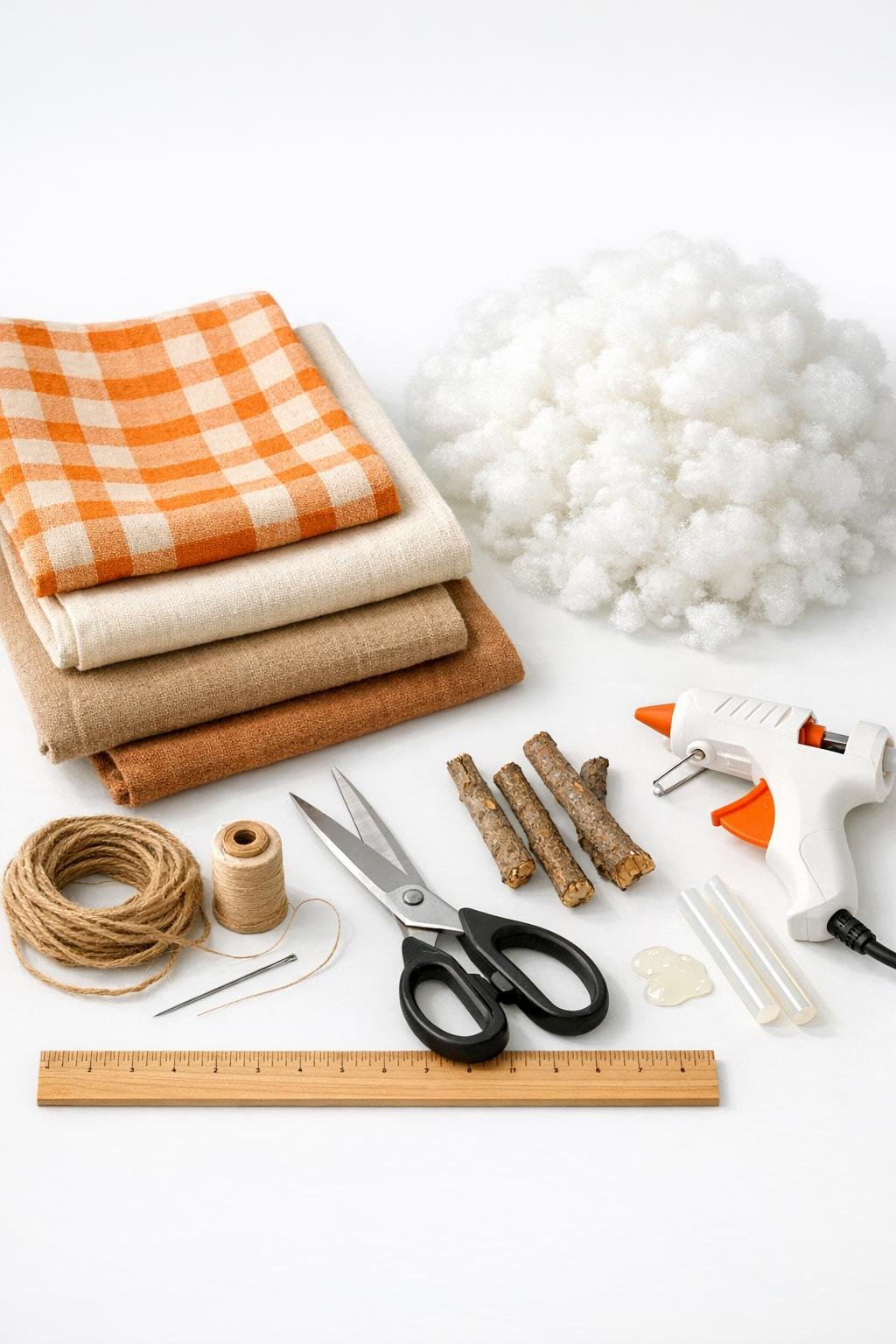
Materials
3 old linen dish towels, about 16 x 24 inches each
Instructions
1. Wash and fully dry the old linen dish towels, then trim away loose threads, worn hems, or badly stained areas so you’re working with clean, usable fabric.
2. Cut one large square from each towel, making the three pumpkins in graduated sizes: one 12-inch square, one 10-inch square, and one 8-inch square.
3. Fold the edges of the first square over by about 1/4 inch if they fray heavily, or leave them raw for a more rustic finish if the linen is stable.
4. Thread a needle with a doubled strand of thread and sew a running stitch all the way around the outer edge of the square, about 1/2 inch in from the edge.
5. Pull the thread gently to draw the fabric into a shallow pouch, then fill it firmly with fiberfill until it forms a round, squat pumpkin shape.
6. Pull the gathering thread tight, tuck in any raw edges, and knot securely to close the top opening; add a small dab of fabric glue if you want extra hold.
7. Repeat the stitching, stuffing, and gathering process with the other two squares so you have a trio of pumpkins in three sizes.
8. Cut or choose three short stick pieces for stems, keeping them slightly different in thickness and shape so the set looks natural.
9. Press the center top of each pumpkin down slightly with your fingers, then wrap jute twine from top to bottom around the pumpkin, crossing through the center to create 6 to 8 soft segments.
10. Tie the twine snugly at the top or bottom of each pumpkin, adjusting the wraps until the shape looks evenly ribbed but still soft.
11. Add a small amount of hot glue in the top center indentation and press a stick stem into place on each pumpkin, holding it steady for a few seconds.
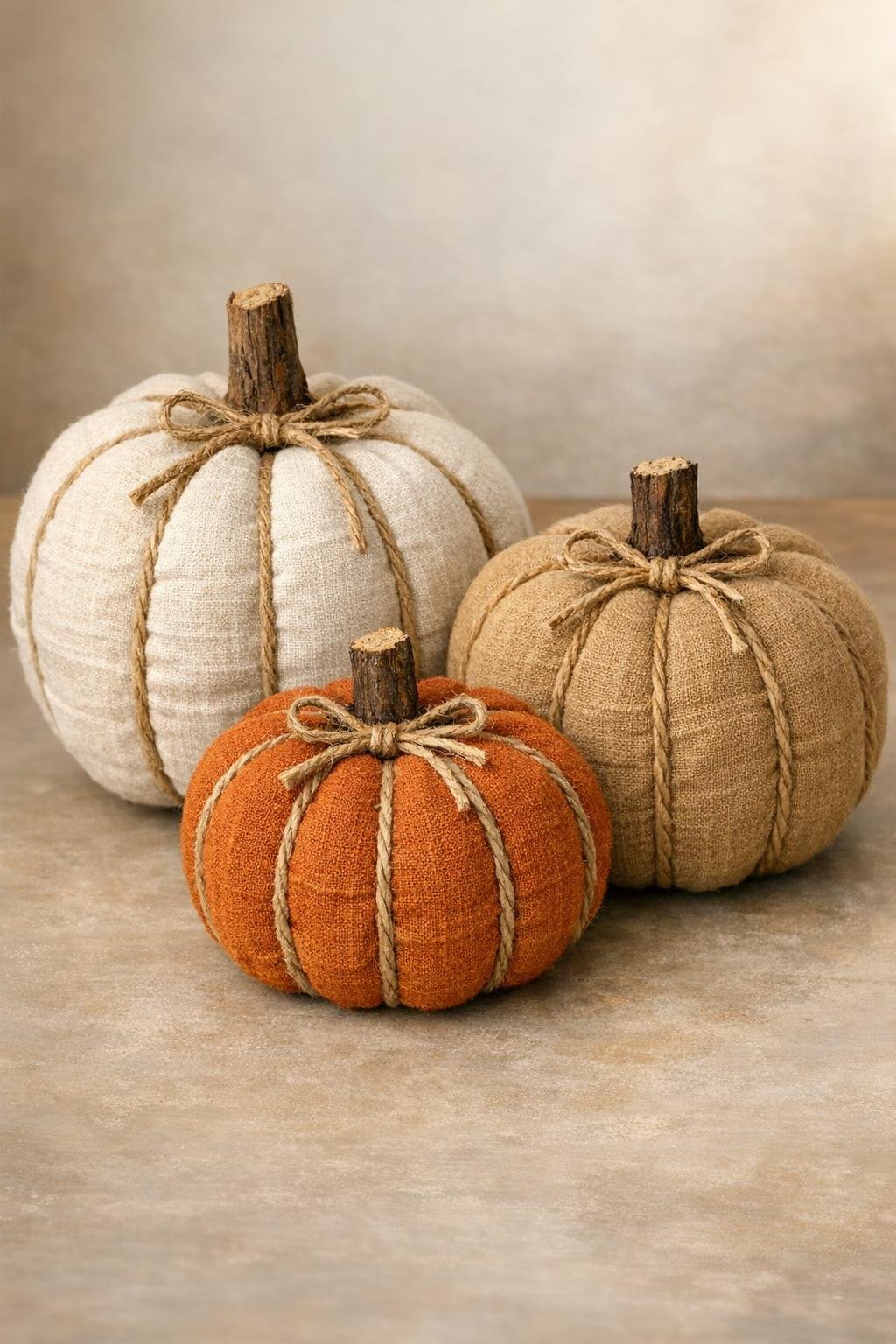
12. Fluff and rotate the pumpkins until the nicest side faces forward, then arrange the trio together with the largest at the back and the smallest in front.
Variations & Tips
Use the hems creatively: If your towels have a nice stripe or woven border, center that detail on the pumpkin body before stitching so it becomes part of the finished design.
Try different stuffing levels: Firmer stuffing gives you a plumper, more formal pumpkin, while lighter stuffing creates a slouchier shape that feels more relaxed and vintage.
Mix linen shades: I like using three different neutral towels—such as oatmeal, flax, and soft gray—because the trio looks collected over time instead of perfectly matched.
Add leaves: If you have scrap fabric or felt on hand, cut a few small leaf shapes and glue them near the stems for a fuller arrangement.
Skip perfect symmetry: Real pumpkins are a little lopsided, and these look better that way too; uneven ribs and slightly crooked stems actually make them more charming.
Make them scented: Tuck a teaspoon of dried cloves or a little cinnamon-scented stuffing sachet inside each pumpkin if you want them to double as subtle seasonal décor.