
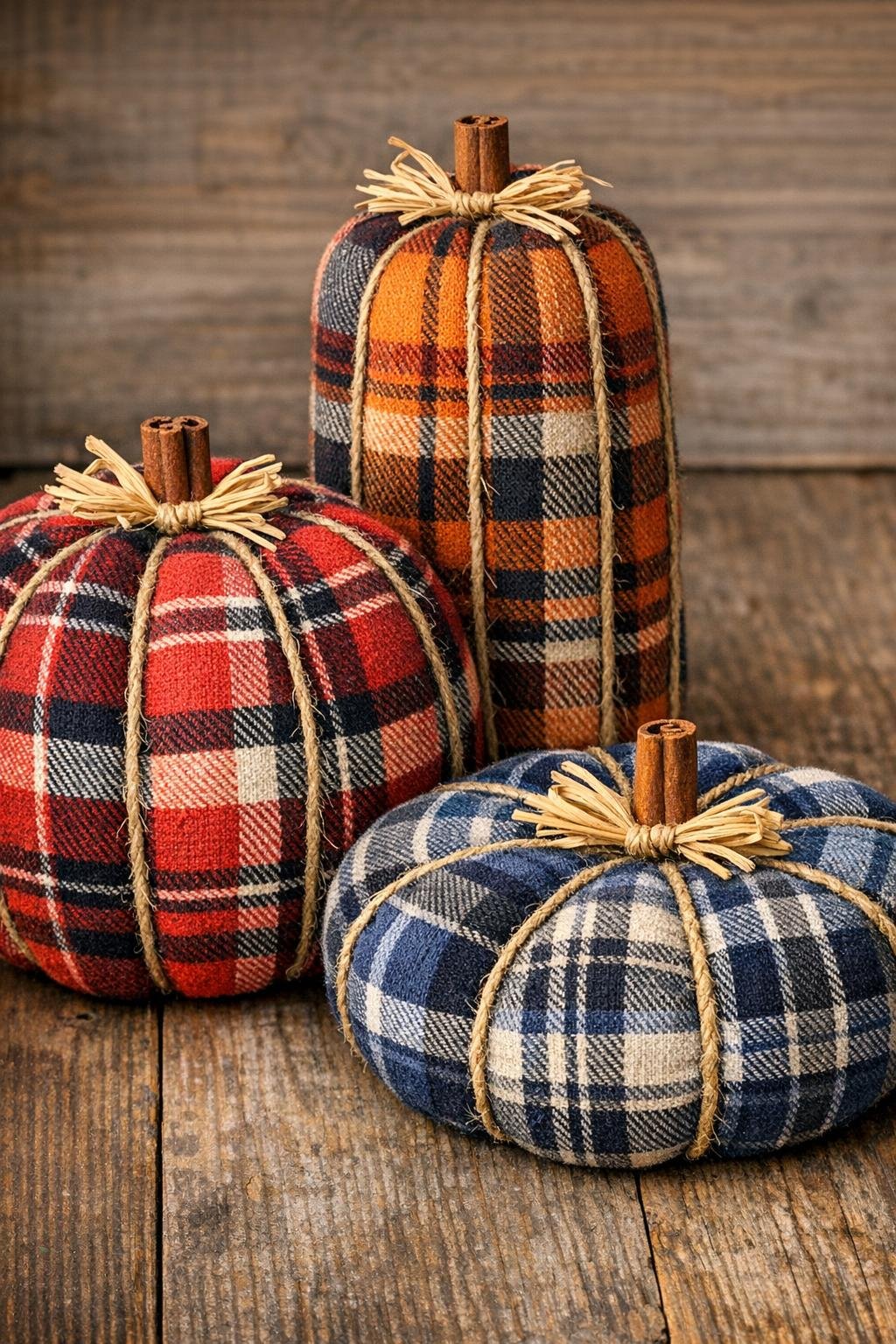
Old flannel shirts are one of those things I hate to throw away. Even when the elbows are worn through or the fit is long past saving, the fabric still has warmth, color, and that soft, brushed texture that feels especially right in fall. This 3-item autumn pumpkin decor project turns those shirts into a small coordinated set: a classic stuffed pumpkin, a taller stemmed pumpkin, and a flatter pumpkin that works beautifully tucked into a tray or layered on a mantel.
I like this kind of project because it is forgiving, inexpensive, and genuinely beginner-friendly. If you can cut fabric, gather it, and tie it off, you can make these. The plaid flannel does most of the decorating work for you, which reminds me a bit of cooking with great seasonal produce: when the ingredient already has character, you do not need to fuss much to get a lovely result.
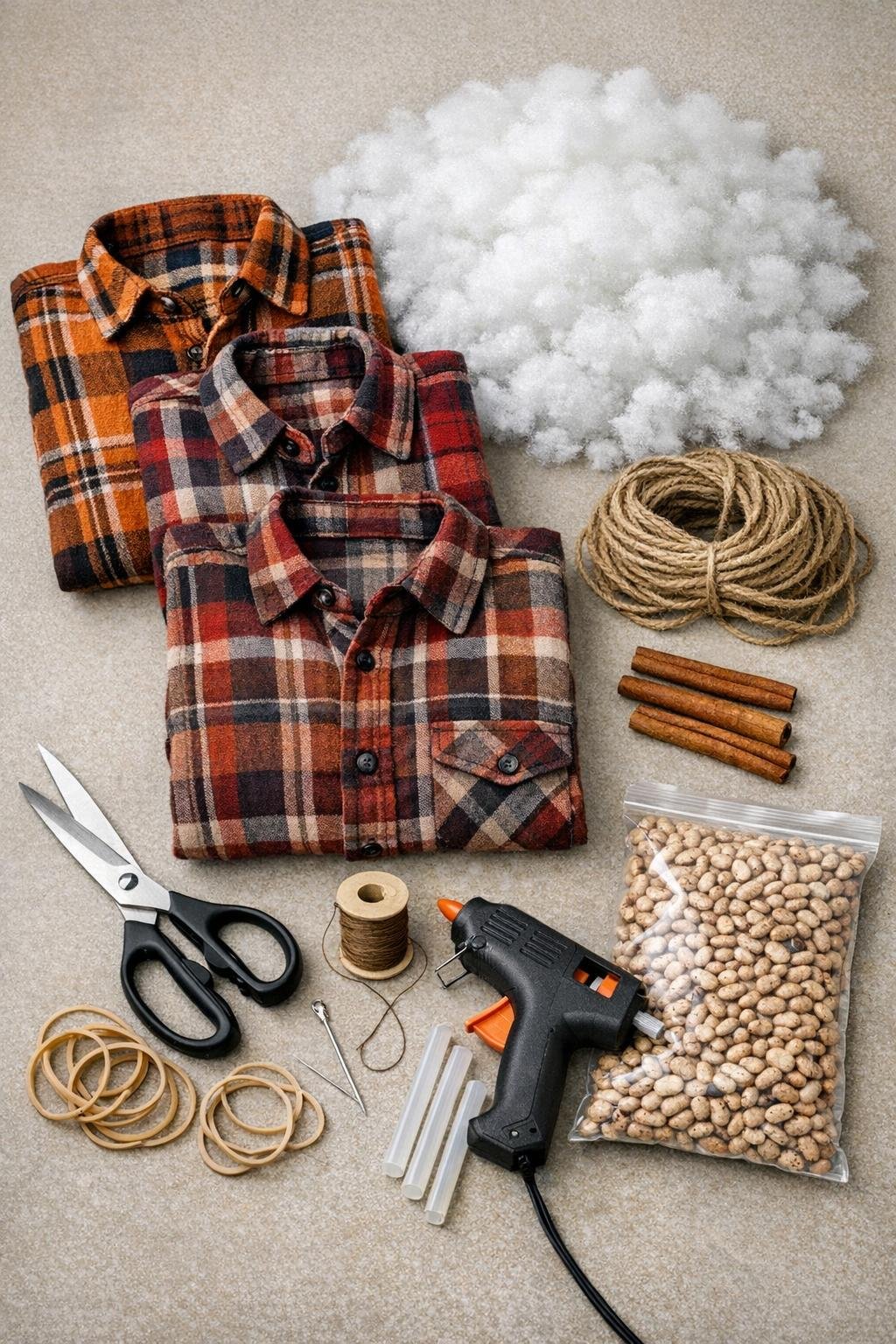
Materials
3 old flannel shirts, adult size, washed and dried
Instructions
1. Cut your flannel into three circles: one 18-inch circle for a large pumpkin, one 15-inch circle for a medium pumpkin, and one 12-inch circle for a flatter small pumpkin. Use different plaid sections so the finished trio looks coordinated but not identical.
2. Thread your needle with doubled thread and sew a loose running stitch all the way around the edge of each fabric circle, about 1/2 inch in from the raw edge. Do not pull it tight yet.
3. Place 1 cup of fiberfill and 1 cup of beans or rice in the center of the large circle. Pull the thread to gather the fabric into a ball, then add more stuffing as needed until the pumpkin looks full and rounded.
4. Knot the thread securely and wrap a rubber band around the gathered top to hold the shape. Tie jute twine tightly around the same spot to cover the rubber band and create a neat neck for the stem.
5. Repeat the process with the medium circle using about 3/4 cup fiberfill and 1/2 cup beans or rice, but stuff it slightly taller than wide for a more upright shape. Tie off the top the same way.
6. Make the small pumpkin with the 12-inch circle using about 1/2 cup fiberfill and 1/2 cup beans or rice, keeping it flatter and wider than the others. This lower profile gives the set a nice varied silhouette.
7. Push a cinnamon stick into the gathered top of each pumpkin and secure it with a small bead of hot glue if needed. Tuck any loose flannel edges inward around the stick so the stem area looks tidy.
8. To define the pumpkin sections, cut three 24-inch lengths of jute twine for the large pumpkin, two 22-inch lengths for the medium pumpkin, and two 20-inch lengths for the small pumpkin. Wrap each length from top to bottom around the pumpkin, crossing at the stem, and tie snugly so gentle segments form.
9. Fluff and adjust each pumpkin by tugging the stuffing and rotating the plaid until the most attractive side faces forward. Trim stray threads, then group the three pumpkins together as a finished autumn set.
Variations & Tips
Use shirt details creatively: If your flannel has a pocket, button placket, or cuff in good shape, center that feature on one pumpkin for extra character. I especially like a pocket on the flatter pumpkin because it shows well from the front.
Try different stuffing blends: Fiberfill makes the roundest pumpkin, but a mix of fiberfill and fabric scraps gives a weightier, slightly rustic shape. In my kitchen-minded way of thinking, it is much like texture in a good stuffing recipe: a blend usually gives the most interesting result.
Add real stems: Small sticks from the yard can replace cinnamon sticks if you want a more natural look. Just make sure they are dry and clean before gluing them in place.
Skip sewing if needed: You can gather the circles with a strong rubber band instead of a running stitch for a faster version. The stitched edge does look neater and holds better over time, though, so it is worth the few extra minutes.
Work with plaid placement: Before stuffing, rotate each fabric circle and decide which color area you want most visible. A little attention here makes the trio feel intentional rather than random.
Display idea: Arrange the three pumpkins on a wooden tray, tuck in a few faux leaves or acorns, and let the varied heights do the work. Because the flannel already brings so much warmth, you do not need many extras.