
I love a project that makes something thrifted feel custom, and this harvest basket liner is exactly that kind of win. Using two old linen tablecloths, I turn a plain wire or wicker harvest basket into a soft, washable liner that looks boutique-shop pretty but costs very little to make. If you’ve ever brought home a basket from a flea market, farmer’s market, or craft store and felt like it needed “something,” this is that something.
This is a great beginner sewing project because the shapes are simple, the seams are forgiving, and linen has that naturally relaxed look that doesn’t demand perfection. I also love that it fits into real life: I can sew it in an evening after work, toss produce or bread into the basket the next day, and remove the liner for washing whenever it needs it.
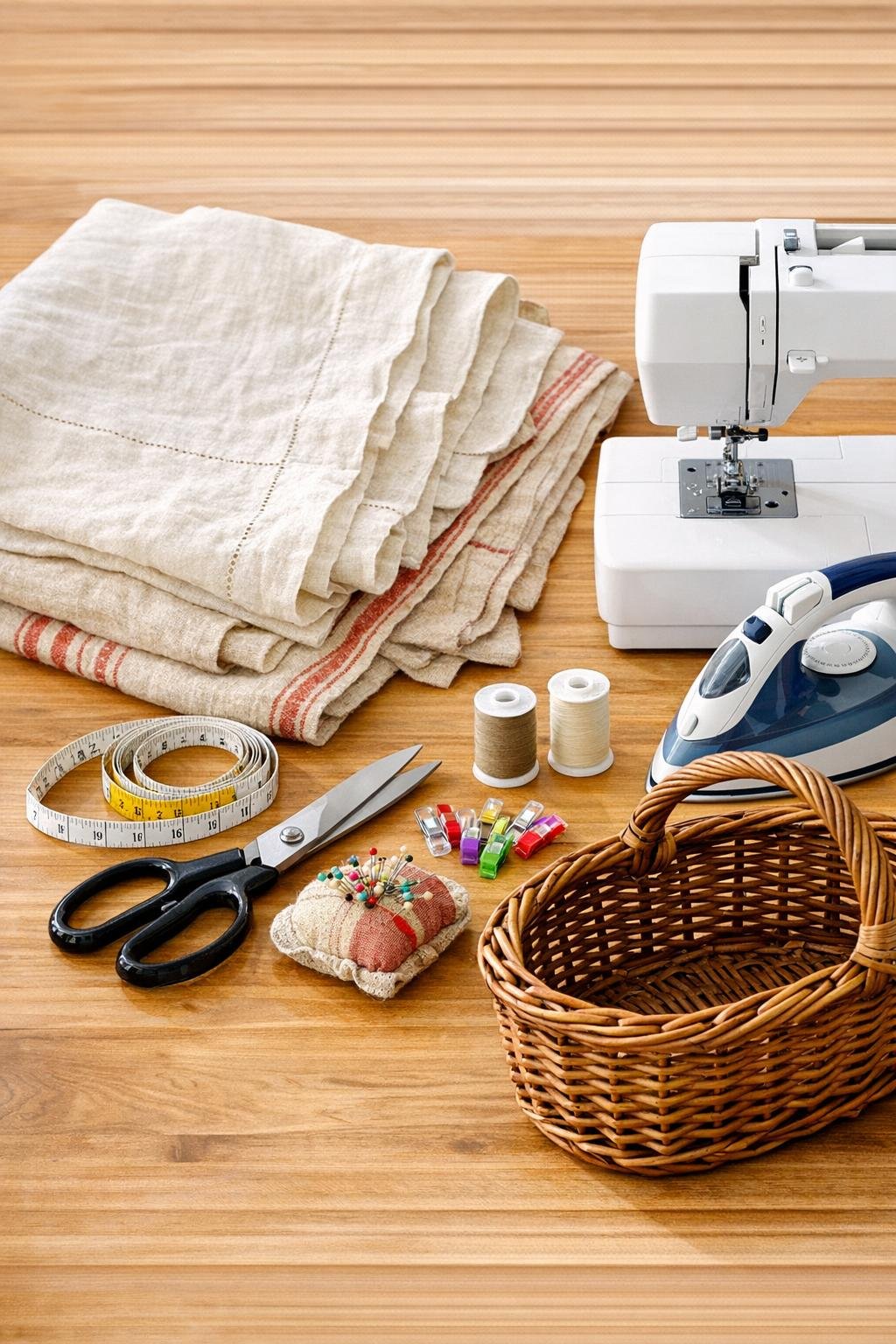
Materials
2 old linen tablecloths, about 52 x 70 inches each
Instructions
1. Wash, dry, and press both tablecloths so you’re working with clean, pre-shrunk fabric and accurate measurements.
2. Measure your basket: length, width, height, and the top opening, then add 1 inch for seam allowance and 2 inches at the top for a hem or casing.
3. Cut one large base-and-side panel from the first tablecloth by combining the basket bottom and all four side heights into one cross-shaped piece, or cut a bottom panel and four side panels if that layout wastes less fabric.
4. Cut a second set of the same pieces from the other tablecloth for the liner interior so the finished liner is fully reversible-looking and nicely sturdy.
5. If you want a patchwork look inspired by narrow cut strips, cut several 2- to 3-inch-wide strips from extra linen and piece them together into panels before trimming them to the final side-piece sizes.
6. Sew any strip-pieced panels first, pressing seams open as you go so the linen stays flat and the finished liner doesn’t feel bulky.
7. Join the side panels to the bottom panel, or fold and sew the cross-shaped panel at the corners, to create the outer liner shell.
8. Repeat the same construction with the second set of pieces to make the inner liner shell.
9. Place the two shells right sides together, pin around the top edge, and sew all the way around, leaving a 4-inch opening for turning.
10. Turn the liner right side out through the opening, push out the corners gently, and stitch the opening closed by hand or with a narrow topstitch.
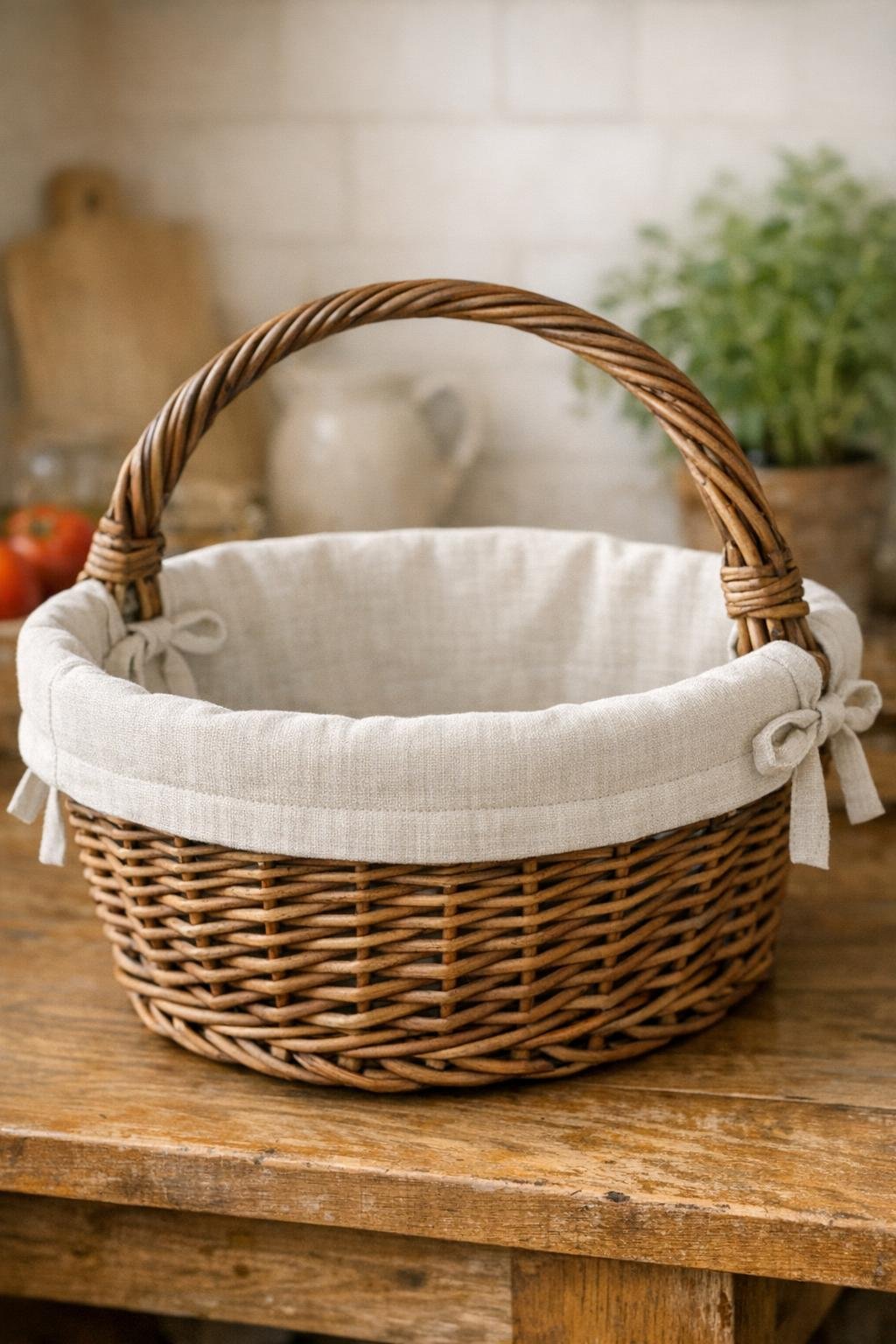
11. Fold the top edge down 1 inch to the outside and press it well so the liner forms a soft cuff over the basket rim.
12. For a secure fit, sew four tie tabs from the optional scrap fabric, each 8 inches long by 1 inch wide finished, and stitch them evenly around the cuff to tie onto the basket handles or rim.
13. If you prefer a snug fitted edge instead, sew a casing along the top fold and thread 1 1/2 yards of 1/4-inch elastic through it, then overlap and stitch the elastic ends.
14. Set the finished liner into the basket, adjust the corners and cuff, and tie or snug it into place so it sits evenly all the way around.
Variations & Tips
Patchwork version: If your thrifted tablecloths have stains or worn spots, cut around the good sections and piece the usable linen strips together. This is honestly one of my favorite ways to work because it makes the finished liner look more intentionally handmade.
Reversible finish: Use one tablecloth for the outside and a contrasting one for the inside so you can flip the cuff higher or lower depending on the season or what you’re storing.
No-sew adjustment: If your basket is mostly decorative, you can use iron-on hem tape for the cuff and hand-stitch just the side seams, though a machine-sewn liner will hold up much better for produce.
Best fabric choice: Linen and linen-blend tablecloths drape beautifully without being flimsy. If one cloth feels too thin, interface only the bottom panel to give the liner a little more body.
Washability tip: I always make liners just a bit roomy rather than super tight, because linen softens and shifts after washing. A slightly relaxed fit still looks charming and is much easier to put back in the basket when life is busy.
Pretty edge detail: Add a row of topstitching around the cuff or sew on narrow cotton lace for a farmhouse look. It’s a small detail, but it makes thrifted fabric feel surprisingly polished.