
This simple garden hack turns one ordinary gray cinder block and two basic shed staples into a tidy little soil-amendment mixing station. If you like blending compost, fertilizer, lime, or other dry amendments into potting soil without dragging out a wheelbarrow, this is a wonderfully practical trick that still earns its keep in a backyard garden.
I’m always looking for ways to make garden chores feel a little less fussy, especially in the busy seasons when I’m juggling dinner, family life, and whatever needs planting next. This setup is best for gardeners who want a quick, low-cost way to portion and mix small batches of soil ingredients right where they’re working.
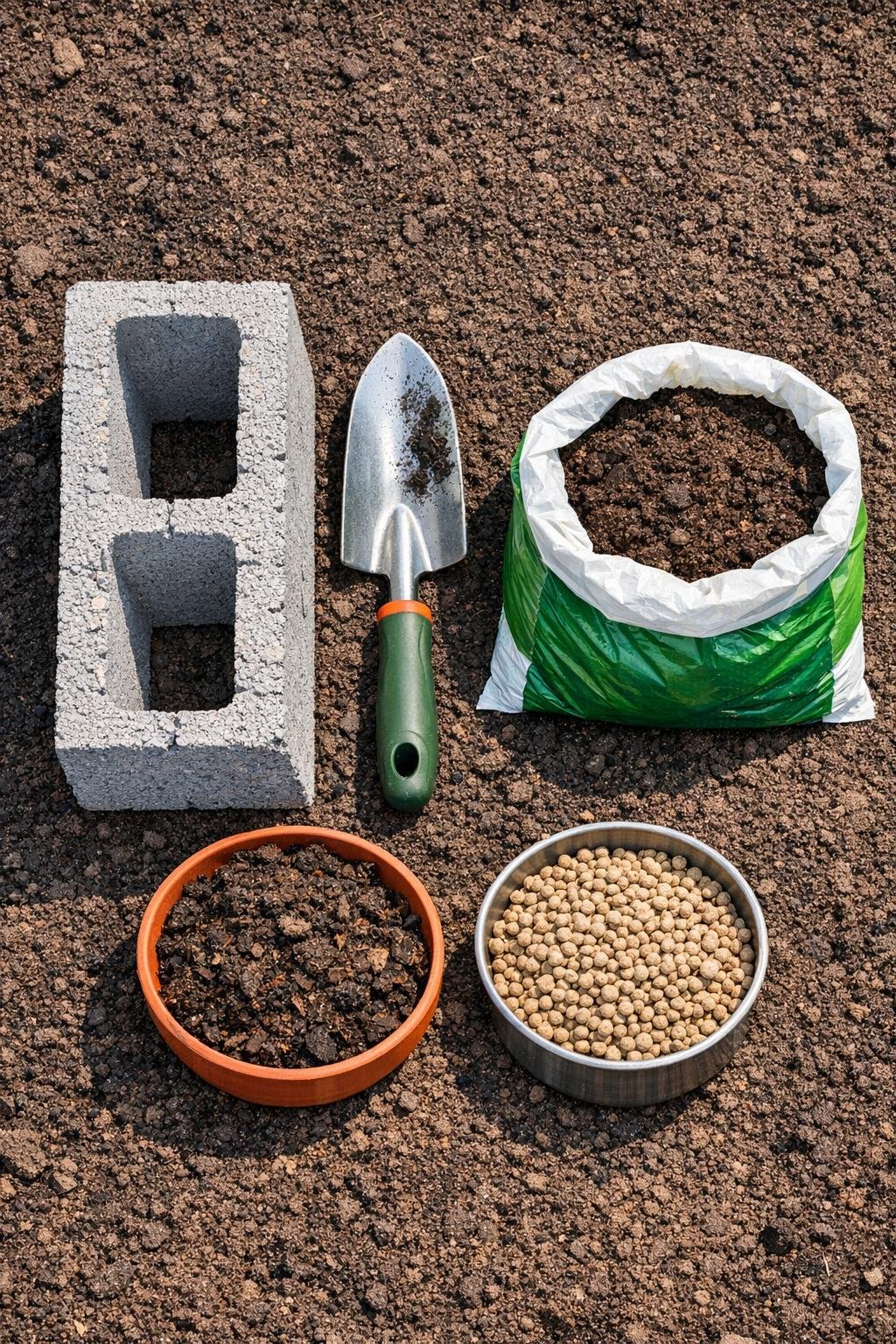
Materials
Instructions
1. Set the cinder block on a flat patch of ground with the two hollow openings facing up. Brush away loose debris so the block sits steady and doesn’t wobble while you work.
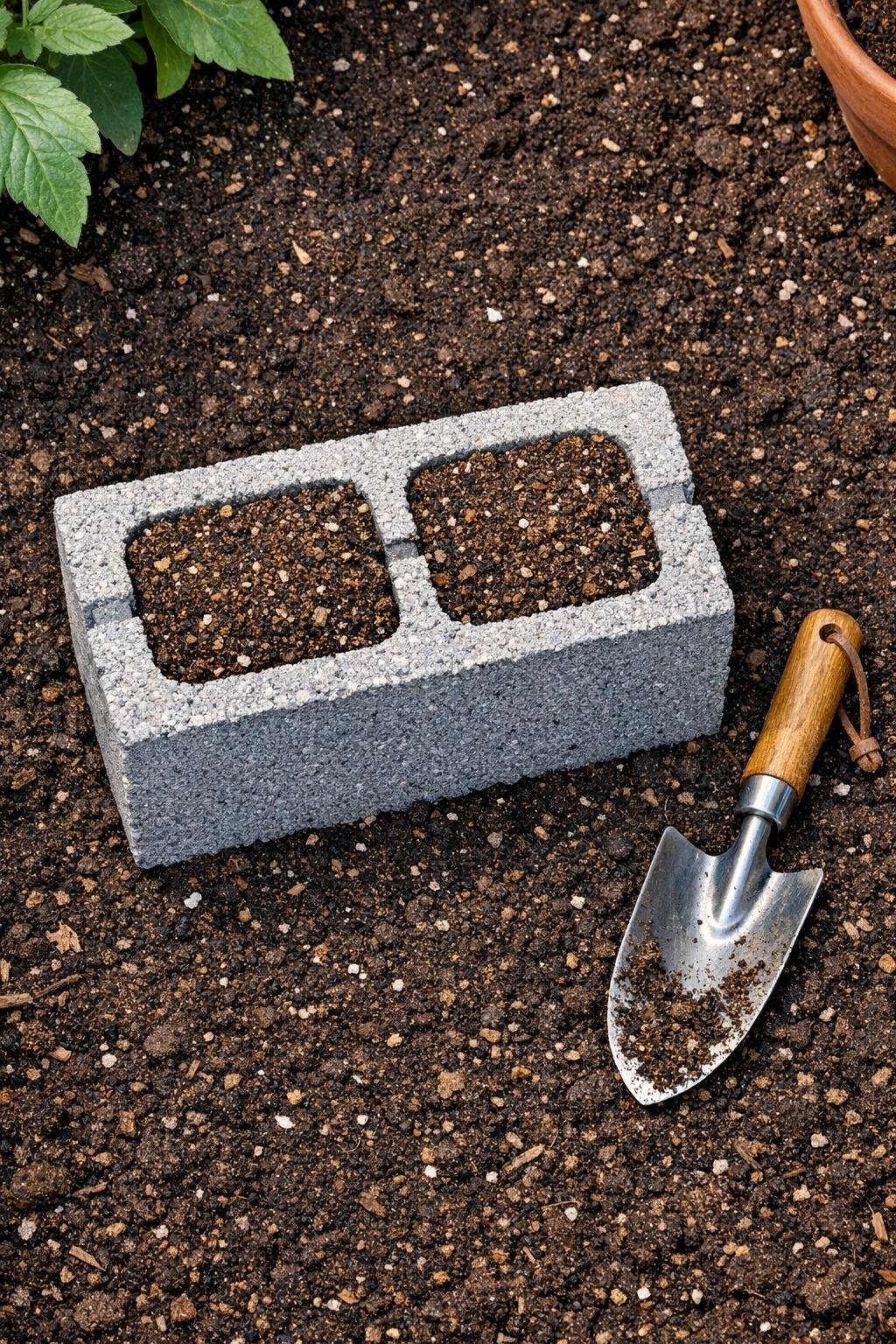
2. Use one opening in the cinder block for your base soil and fill it with about 1 quart of potting soil. Fill the second opening with the remaining 1 quart so you can portion ingredients evenly.
3. Add 1/2 cup of compost or worm castings to each opening. Sprinkle 1 tablespoon of granular fertilizer, lime, or another dry amendment into each side so the mix stays balanced.
4. Use the garden trowel to stir each opening separately, scraping down to the bottom corners of the block so no pockets of amendment are left behind. Fold and turn the mix until the color looks even throughout.
5. Tap the side of the cinder block lightly with the trowel to settle the mixture, then give it one final stir. This helps you see whether the ingredients are distributed evenly before you use the soil.
6. Scoop the finished amended soil directly from the block into containers, raised beds, or planting holes. Refill and repeat in small batches whenever you need more, rather than mixing a large amount all at once.
Variations & Tips
For seed-starting mix: Skip strong fertilizers and use compost or worm castings very lightly so the blend stays gentle for young roots.
For raised beds: Mix several small batches instead of one giant one. I find this keeps the amendments more consistent, especially when I’m working quickly before supper.
For picky plants: Just like picky eaters at my table, some plants like things simpler. Herbs and seedlings often do better with a milder mix than heavy feeders like tomatoes and squash.
Keep it dry: This method works best with dry or slightly damp ingredients. If the soil is soggy, it clumps in the corners of the block and won’t blend as evenly.
Use dedicated garden tools: Keep one small trowel just for amendments if you can. It makes cleanup easier and helps avoid carrying fertilizer residue to other jobs.
Batch control: One nice thing about using the cinder block openings as mixing cups is that they naturally help with portioning. Once you find a recipe your plants love, you can repeat it opening by opening without guessing.