
There’s something satisfying about turning a few plain, inexpensive pieces into a garden helper that looks far more clever than costly. This compost aeration tower is one of those projects. It starts with a 4-foot length of white PVC pipe, just like the one in the hero photo, and with a few drilled holes plus a couple of dollar store finds, it becomes a simple tool that helps air reach the middle of a compost pile right when the season is winding down and everything needs one last boost.
Out here, I’ve always believed the best garden solutions are the ones you can make on the workbench in an afternoon and use for years. This is a good project for beginners, renters with a compost corner, or anyone who wants a tidier, easier way to keep fall leaves and kitchen scraps breaking down without constant turning.
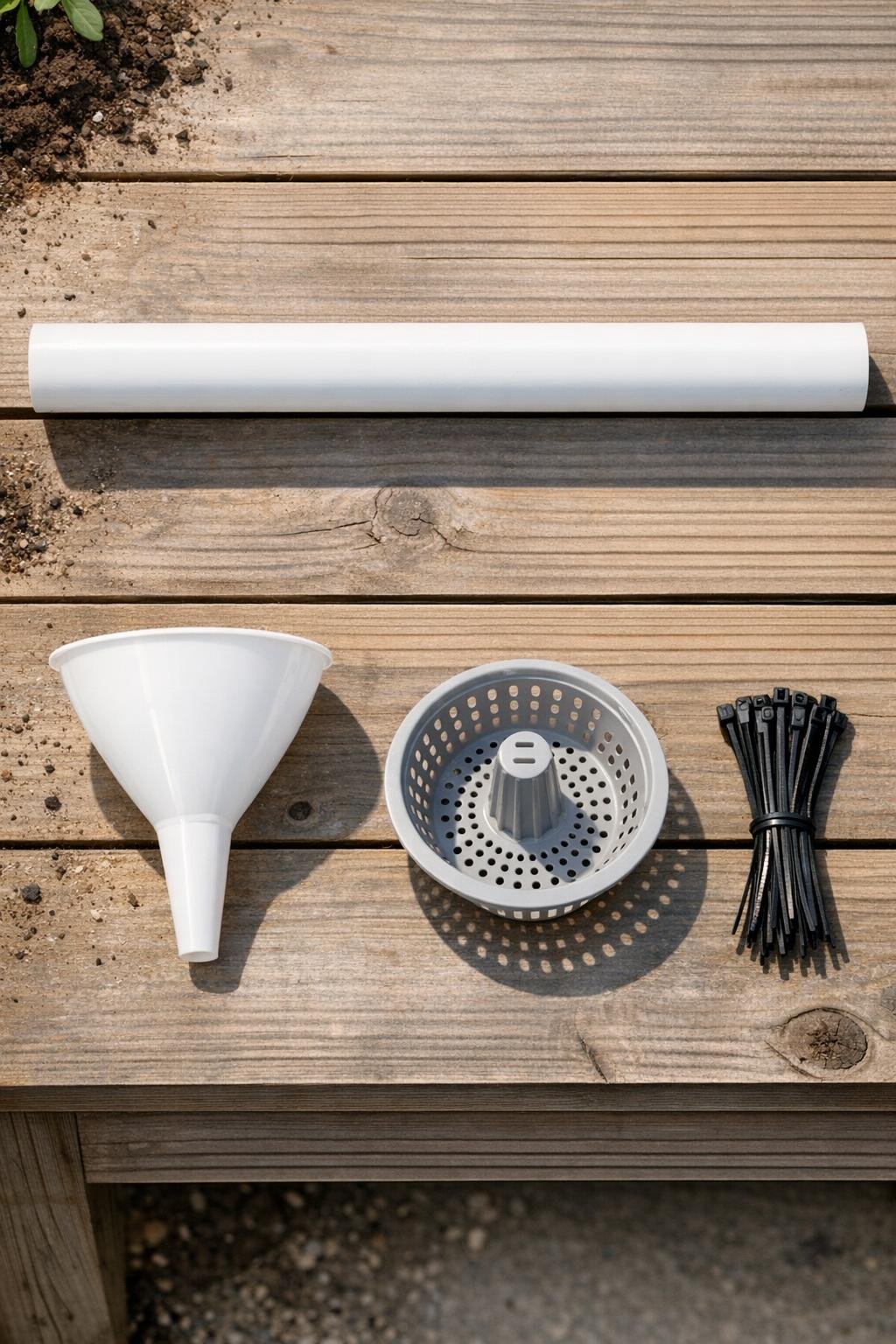
Materials
Instructions
1. Wipe down the 4-foot white PVC pipe and mark drilling rows from about 4 inches above the bottom to 4 inches below the top. Space the marks 2 inches apart around the pipe so the air holes will be evenly distributed.
2. Drill 1/2-inch holes at each mark, rotating the pipe as you go until all sides have ventilation holes. Leave the bottom 4 inches solid so the tower stays stronger when pushed into the compost.
3. Smooth every drilled opening with the sandpaper so there are no rough plastic burrs. Sand the top rim and bottom edge lightly too, since those are the spots your hands will touch most.
4. Fit the plastic sink strainer basket over the bottom opening of the pipe to act as a critter guard and keep big debris from clogging the inside. Fasten it in place with 3 zip ties threaded through the strainer holes and around the pipe.
5. Place the plastic funnel into the top opening of the pipe with the narrow end pointing down into the tube. Secure it with the remaining 3 zip ties so it stays put when you add water or a compost starter tea later on.
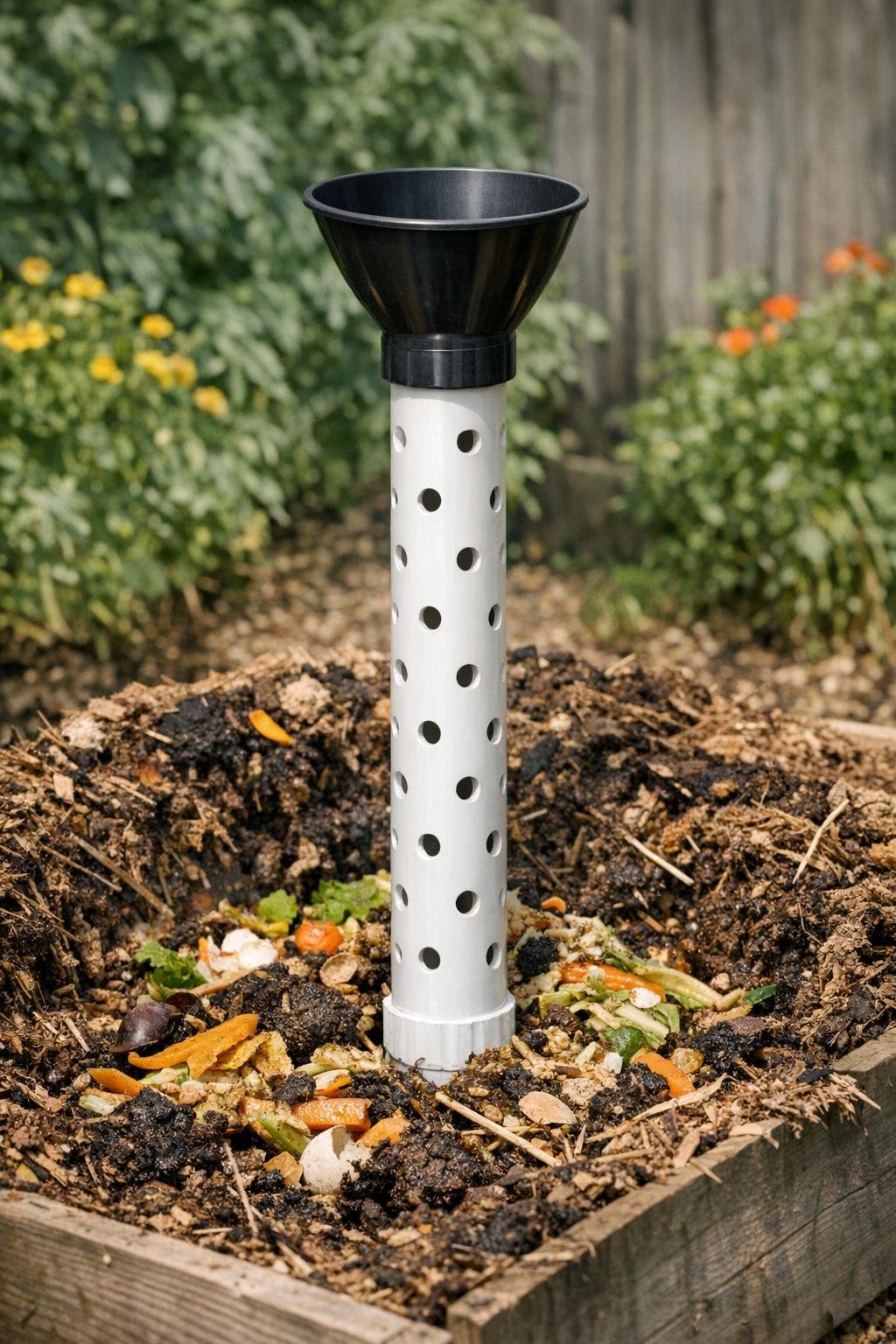
6. Push the finished tower vertically into the center of your compost pile, burying the solid lower section first for stability. Leave the funnel top exposed above the pile so air and water can move down through the perforated pipe.
7. Add a little water through the funnel when the pile is dry, and twist the tower gently every couple of weeks to keep the surrounding material from packing too tightly. At the end of the season, pull it out, rinse it clean, and set it back into the pile or store it for spring.
Variations & Tips
For smaller bins: Cut the PVC pipe down to 24 to 36 inches if you use a compact compost bin or enclosed tumbler-style setup. You still want a few inches left above the compost surface so the top stays easy to reach.
For faster airflow: Drill staggered holes instead of straight lines if you want air to disperse more evenly through dense fall leaves. I’ve found this especially helpful when the pile is heavy with wet grass clippings.
For easier watering: Use a wider funnel if you plan to pour in diluted compost tea or saved rainwater. A broad opening is less fussy, especially when you’re working in gloves on a chilly autumn afternoon.
For pest prevention: Check that the bottom strainer fits snugly and replace it if it cracks in winter weather. That little guard does a fine job of keeping chunky material and curious critters from getting up inside the pipe.
For a cleaner look: Trim the zip tie tails close after tightening them. It’s a small thing, but it gives the tower that neat, store-bought finish neighbors always notice.
My best compost tip: This tower works best in a pile built with a balance of browns and greens, not a soggy heap of one or the other. Around here, I save dry leaves like gold every fall, because they’re the secret to a sweet-smelling compost pile come spring.