
I love a project that gives you a lot of visual payoff without asking you to build a full piece of furniture from scratch, and this cedar-slat plant stand does exactly that. By laying warm cedar slats over sturdy gray cinder blocks, you get a patio display surface that looks clean, modern, and intentional while still being budget-friendly and very doable for a weekend afternoon.
This is a great project for anyone who wants a stronger, more polished alternative to flimsy plant tables. Cedar holds up beautifully outdoors, and cinder blocks bring the kind of weight and durability that make sense on a breezy patio or backyard corner. If you’re comfortable measuring, sanding, and driving a few exterior screws, you can make this with confidence.
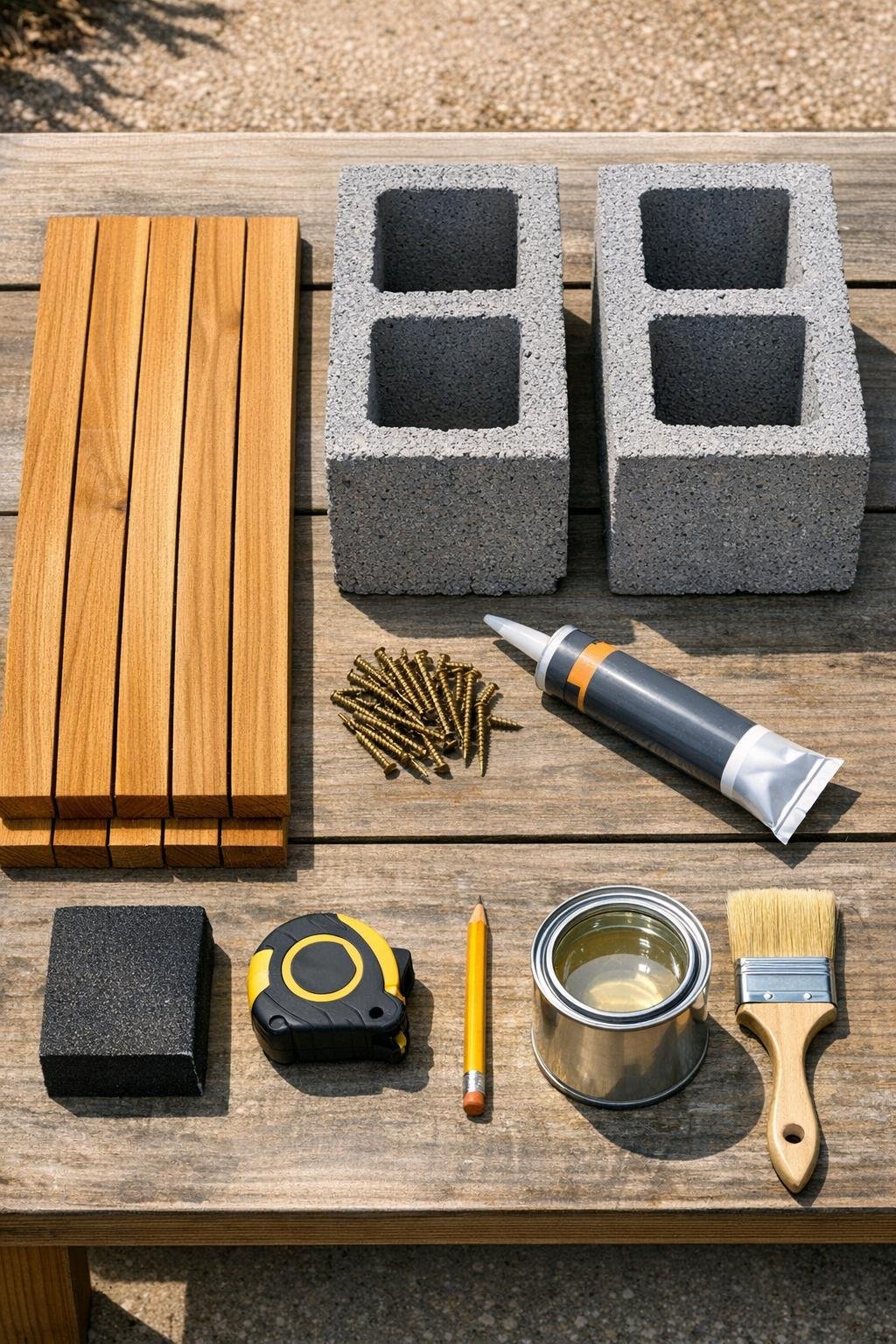
Materials
Instructions
1. Choose a flat patio or backyard spot and set the four cinder blocks in two parallel pairs, spacing them so the cedar slats will span across evenly with about 2 to 3 inches of overhang on each side.
2. Measure across the full length of the block layout and confirm all four blocks are level and aligned; adjust by nudging the blocks until the top surfaces are even.
3. Sand all cedar slats first with 120-grit and then with 220-grit sandpaper, rounding any sharp corners lightly so the finished top feels smooth to the touch.
4. Wipe the cedar slats clean with a dry rag, then brush on a thin, even coat of clear outdoor wood sealer to all sides and let them dry fully according to the product directions.
5. Place the sealed cedar slats across the tops of the cinder blocks, keeping the slats parallel and leaving about a 1/4-inch gap between each one for drainage and a neat, modern look.
6. Mark the underside of each end slat where it crosses the cinder blocks so you know exactly where to secure them without shifting your spacing.
7. Lift one slat at a time and run a bead of exterior construction adhesive along each cinder block contact point, then set the slat back in place and press firmly.
8. Drive exterior screws down through the cedar slats at the marked support points only where the slats sit over the hollow edges of the blocks or into added wood cleats if you prefer a removable top; keep screw placement consistent for a tidy finish.
9. Add felt or rubber pads anywhere the blocks contact delicate patio surfaces, then test the stand by pressing down on several points to make sure the top feels stable and does not rock.
10. Arrange potted herbs, trailing plants, or small flowering containers on top, keeping the heaviest pots centered over the cinder blocks for the best long-term support.
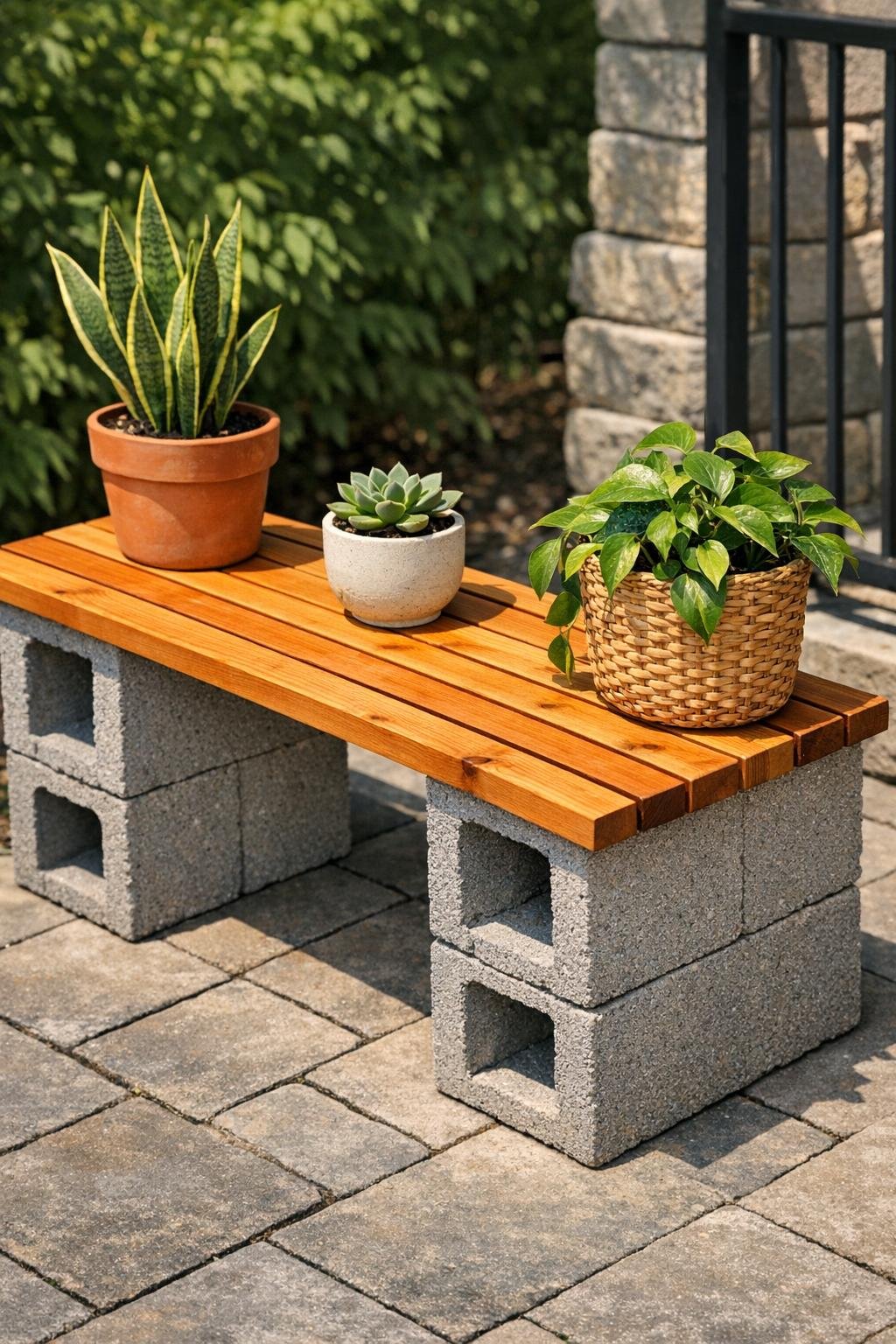
Variations & Tips
Longer stand: For a wider patio wall or fence line, add a third pair of cinder blocks and use longer cedar slats, but keep the supports evenly spaced so the top does not sag.
Softer finish: If you want a slightly richer tone, use a cedar-toned exterior sealer instead of clear. I like this option when the patio has lots of brick, terracotta, or warm stone nearby.
No-fastener option: If you want the top to remain easy to lift off, skip the screws and rely on construction adhesive sparingly or leave the slats unattached and add two cedar battens underneath to keep them aligned as a panel.
Plant placement: Group pots in odd numbers and vary the heights for a more finished look. As someone who spends a lot of time thinking about balance on a serving platter, I use the same instinct here—repeat shapes, but not too perfectly.
Weather protection: Recoat the cedar once a year if the stand sits in full sun or catches a lot of rain. Cedar ages gracefully, but a fresh sealer keeps that warm color much longer.
Safety note: Before loading it up with heavy planters, make sure the cinder blocks are sitting on a solid, level surface and that all hollow cores are oriented consistently for maximum stability.