
If your garden beds always seem to end the season with a mountain of stems, vines, and dried leaves, this little shredding cage is one of those practical builds that earns its keep right away. I like projects that solve a real household problem without needing a workshop full of tools, and this one uses wire hardware cloth plus two inexpensive dollar-store helpers to turn loose garden debris into smaller, compost-friendly pieces fast.
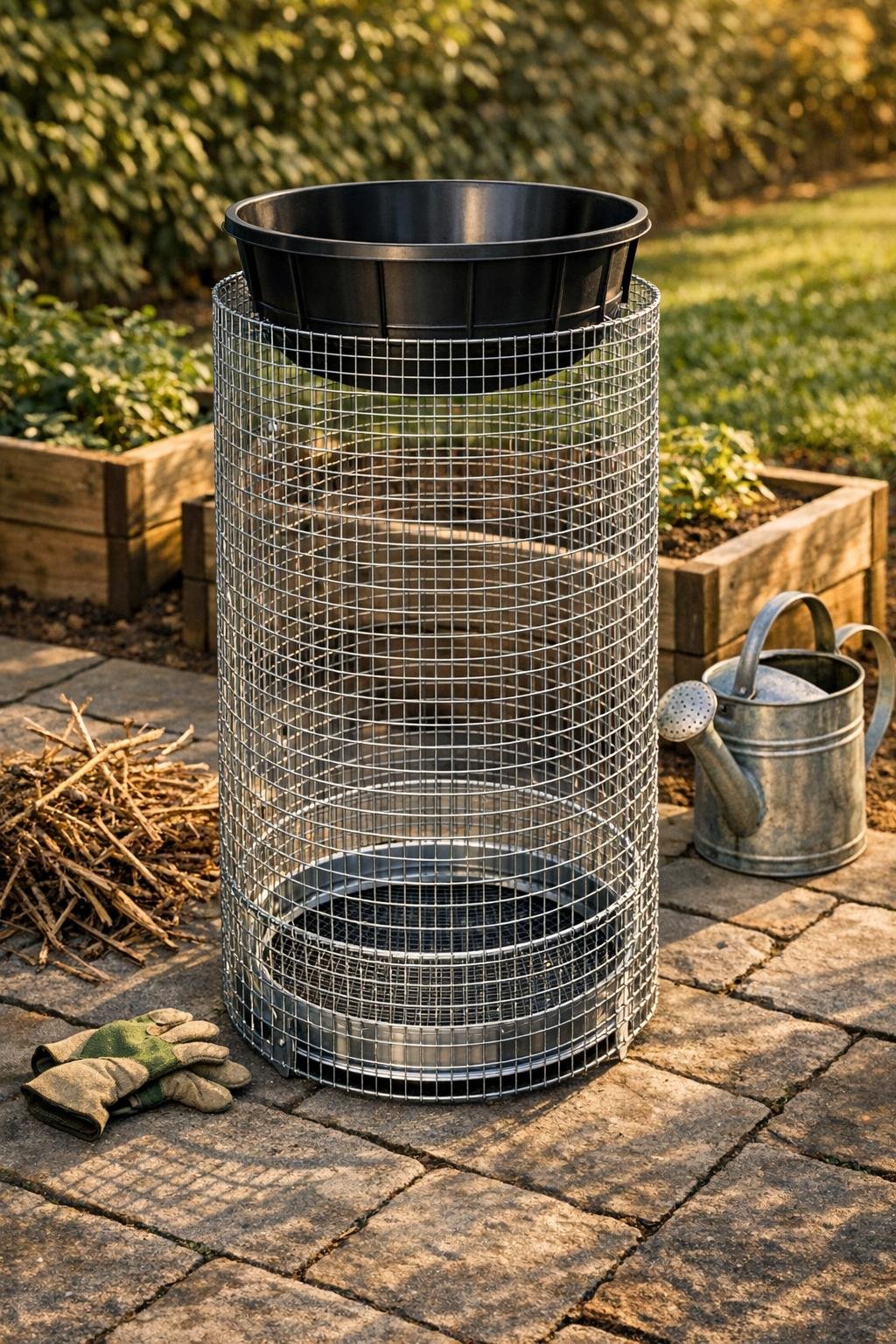
What I love most is that it looks surprisingly tidy and purposeful when it’s finished. The silver wire cylinder stays recognizable from the start, but the added handles and catch base make it feel like a smart store-bought yard tool instead of a makeshift contraption. If you’re a home gardener, a backyard composter, or just someone who wants fall cleanup to go quicker, this is an easy afternoon project with a big payoff.
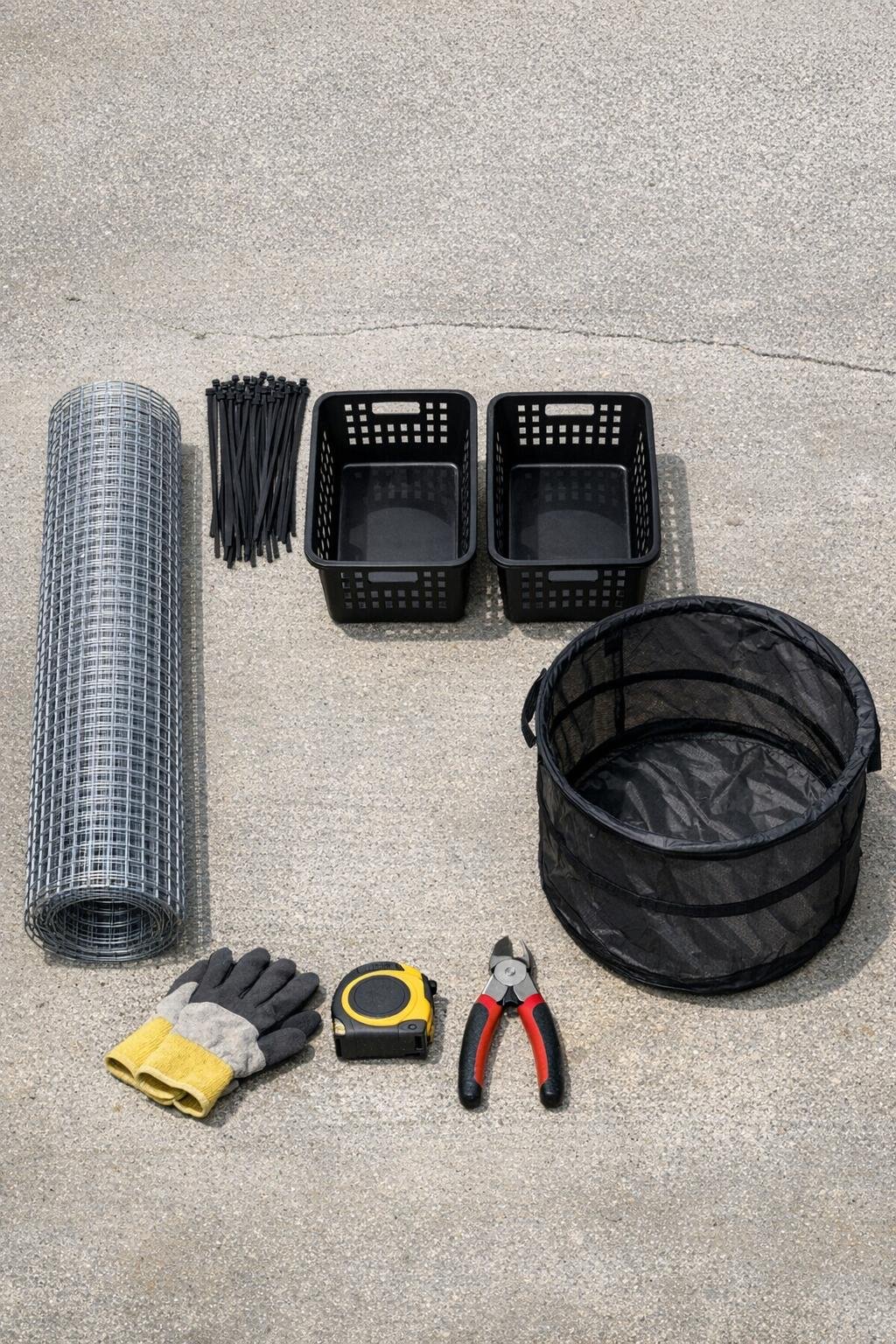
Materials
Instructions
1. Cut a 60-inch length of hardware cloth and gently bend it into a cylinder about 18 to 19 inches across, keeping the silver wire shape visible and even all the way around.
2. Overlap the short ends by 2 inches and punch through matching openings in the mesh with your cutter tips or awl, then secure the seam with 8 zip ties spaced from top to bottom.
3. Fold the top cut edge down by 1 inch all the way around and press it flat with gloved hands so the rim is sturdier and safer to handle.
4. Fold the bottom cut edge up by 1 inch in the same way, creating a firm base ring that helps the cage sit flatter on the ground.
5. Turn one plastic basket upside down and center it over the top opening; use the basket rim as a guide to mark four evenly spaced attachment points around the cage.
6. Punch or widen holes through the hardware cloth at those marks, then zip-tie the upside-down basket firmly to the top rim to create a raised feed collar that helps keep stems contained while you chop or stomp them down.
7. Set the second plastic basket right-side up under the cage and check that the wire cylinder nests neatly inside it; trim or adjust the bottom edge slightly if needed so it sits steady.
8. Open the pop-up mesh laundry hamper and drop it into the lower basket, then set the wire cylinder down inside so the hamper acts as a removable catch liner for shredded leaves and brittle stems.
9. Wrap duct tape around any rough wire joins, the zip-tie heads, and the basket contact points so the finished piece looks cleaner and feels easier on your hands.
10. Cut the rope into two 18-inch lengths and tie each length to opposite sides of the upper basket rim, then reinforce each handle connection with 2 more zip ties.
11. Clip a carabiner at four points where the mesh hamper meets the top section so you can unhook and lift the liner out quickly when it fills with shredded debris.
12. If you want extra weather protection, lightly spray the outside seams and folded rims with clear or silver metal-safe spray paint and let it dry completely.
13. To use it, load dry garden debris through the top collar in loose layers, then chop with hand pruners inside the cage or press it down with a stick so the smaller pieces fall into the lined base.
Variations & Tips
For smaller spaces: Cut the hardware cloth to 48 inches instead of 60 inches for a narrower cage that stores more easily but still handles a good armful of dry stems.
For tougher debris: This works best with dry end-of-season material, not fresh green vines. I let piles sit for a few sunny days first, just like I do when I’m trying to make kitchen prep easier before a big family meal.
For safer handling: Always keep the folded wire edge step; it makes a huge difference. If any point still feels scratchy, add another layer of duct tape right away.
For easier emptying: A mesh hamper liner is my favorite because you can lift the whole load out at once, but a heavy-duty garden bag can be clipped in the same way if that’s what you have.
To keep it neat-looking: Trim every zip-tie tail flush and line up the seam at the back. Those little finishing touches are what make a simple yard project look surprisingly polished.
Best use tip: Don’t overfill the cage in one go. Smaller batches shred faster, fall through the wire better, and give you a fluffier pile for compost or mulch.