
By the time the garden starts winding down, I’m always looking for one more simple job I can do that makes spring easier. This bucket stake cleaner is one of those little workhorses that looks clever, costs very little, and saves me from dragging muddy tomato cages, bamboo stakes, and plant supports all over the yard. It’s basically a rinse-and-scrub station made from a white 5-gallon bucket plus two easy dollar store add-ons, and once you use it, you’ll wonder why you didn’t make one sooner.
I like this project because it’s practical without being fussy. If you’ve got a drill and a few minutes, you can put together a sturdy cleaner that helps knock dirt and old plant bits off your supports before you store them away. It’s especially nice for home gardeners who want a tidier shed, cleaner hands, and less mess tracked across the porch or garage.
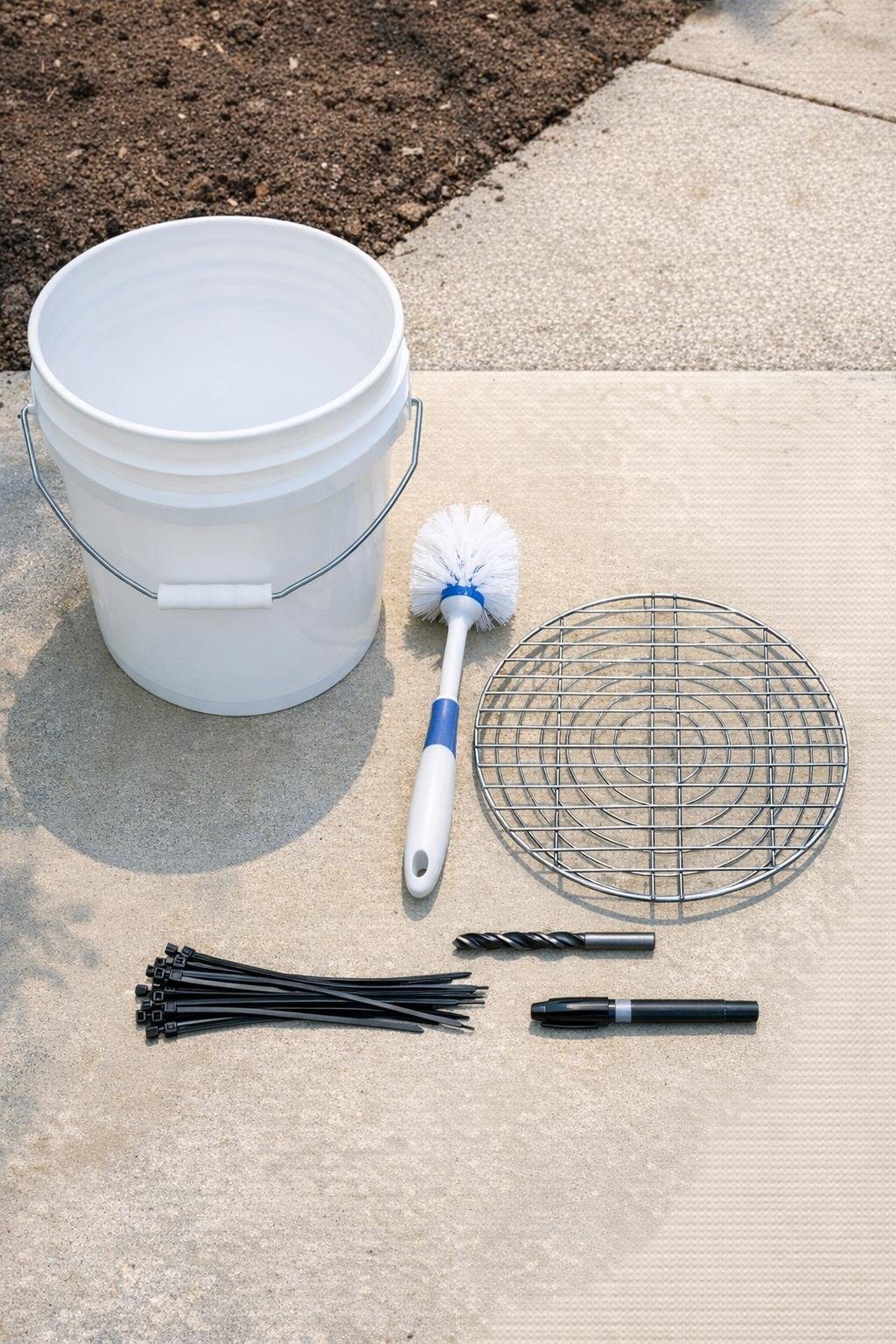
Materials
Instructions
1. Wash out the 5-gallon bucket and dry it well so your marker lines are easy to see. Set it upright and mark a ring of stake holes around the upper sides, placing them about 2 1/2 inches apart.
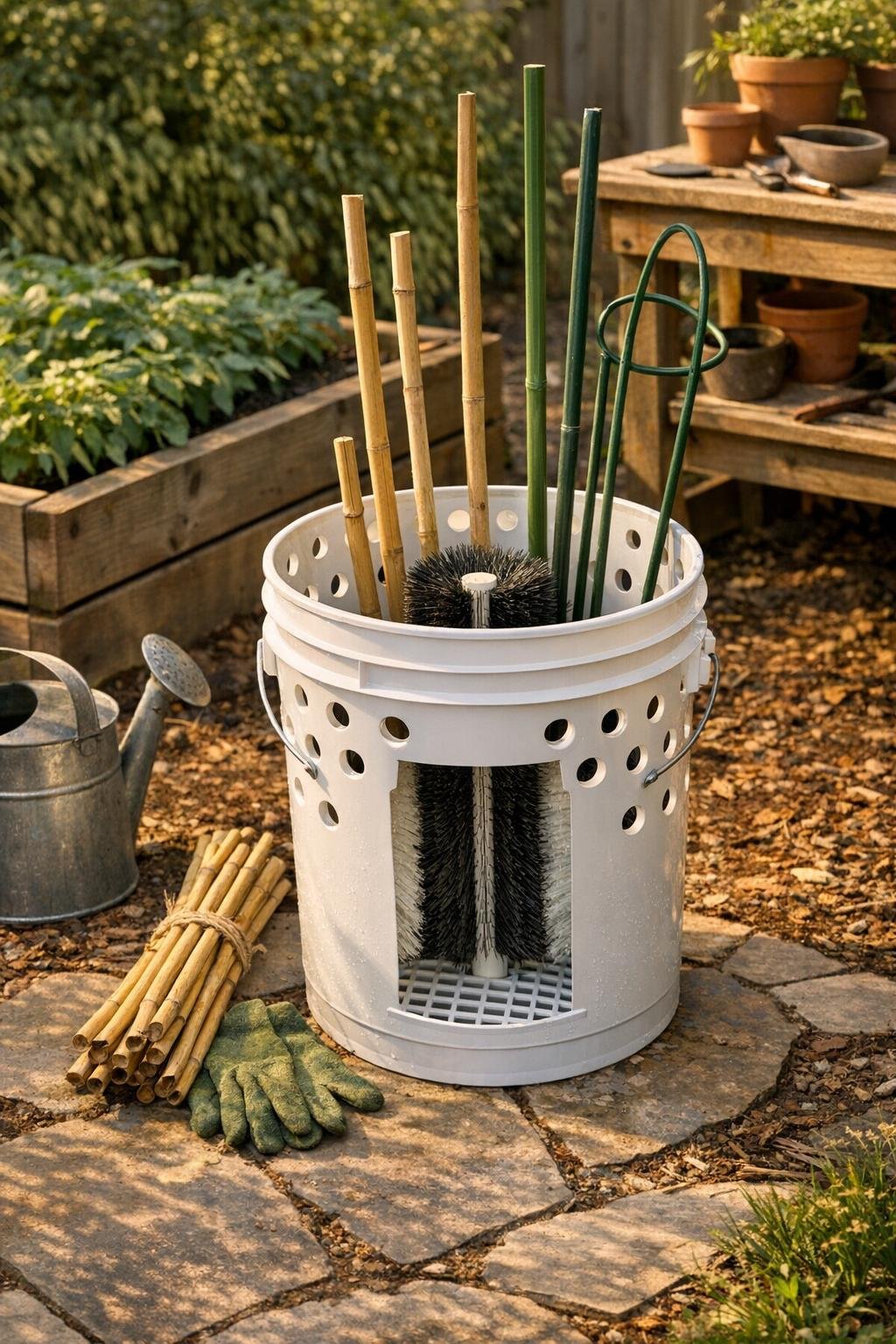
2. Drill 10 to 14 holes around the bucket sides, making each hole about 3/4 inch wide so common garden stakes and slim supports can slide through easily. Keep the holes level with each other and about 3 inches down from the rim.
3. Turn the bucket over and center the round cooling rack over the bottom. Use the marker to note 4 evenly spaced tie points near the outer edge of the rack.
4. Drill 4 small holes through the bucket bottom where you marked the tie points. Thread zip ties through the rack and bucket bottom, then pull them tight so the rack sits flat and secure as a scraping grate.
5. Stand the bucket upright again and remove the handle from the toilet brush if it twists off; if not, cut it short enough to fit inside the bucket without sticking up past the rim. Position the brush head inside the bucket so the bristles press against one interior wall just below the ring of holes.
6. Drill 2 small holes side by side through the bucket wall where the brush head sits, then zip-tie the brush firmly in place from the outside. The bristles should stay snug against the inside wall so stakes rub against them as you pull them through.
7. Fill the bucket with about 2 gallons of warm water and stir in 1/2 cup dish soap. The water level should sit below the side holes so it can slosh and clean without pouring straight out.
8. Slide one dirty stake down through a side hole so it drags across the brush and toward the cooling rack at the bottom. Twist and pump it up and down several times so the bristles scrub it and the rack knocks off stuck-on soil.
9. Repeat with all your plant stakes, slim tomato supports, and bamboo poles, changing the water once it gets muddy. For extra-dirty pieces, let them soak in the bucket for 5 minutes before scrubbing them through again.
10. Empty the bucket, rinse everything clean, and leave the cleaner upside down to drain. Store it in the shed with the brush still attached so it’s ready for the next garden cleanup day.
Variations & Tips
For thicker supports: If you clean chunky tomato stakes or heavier fiberglass rods, make a few holes 1 inch wide instead of keeping them all the same size.
For muddy jobs: Add a second toilet brush on the opposite inside wall for more scrubbing power. I like this if I’m cleaning a whole season’s worth at once and don’t want to keep going back over each piece.
For picky storage spaces: If your shed is tight on room, leave the bucket plain and stack light garden supplies inside when it’s dry. I’m always trying to make every container do double duty around here.
To protect metal stakes: Dry cleaned metal supports with an old towel before storing to help prevent rust. A quick wipe now saves frustration later.
Soap swap: A splash of vinegar works nicely if you want help cutting mineral film, but don’t mix vinegar with any bleach product. I keep this cleaner simple and family-safe with dish soap most of the time.
Make it look polished: Trim the zip tie tails neatly and rinse off marker lines with rubbing alcohol once you’re done drilling. That tiny finishing step makes the whole thing look much more intentional.
Best use note: This works best for straight or gently curved plant supports, not wide tomato cages. For cages, I stand the cleaner beside me and use the brush side to scrub sections by hand.