
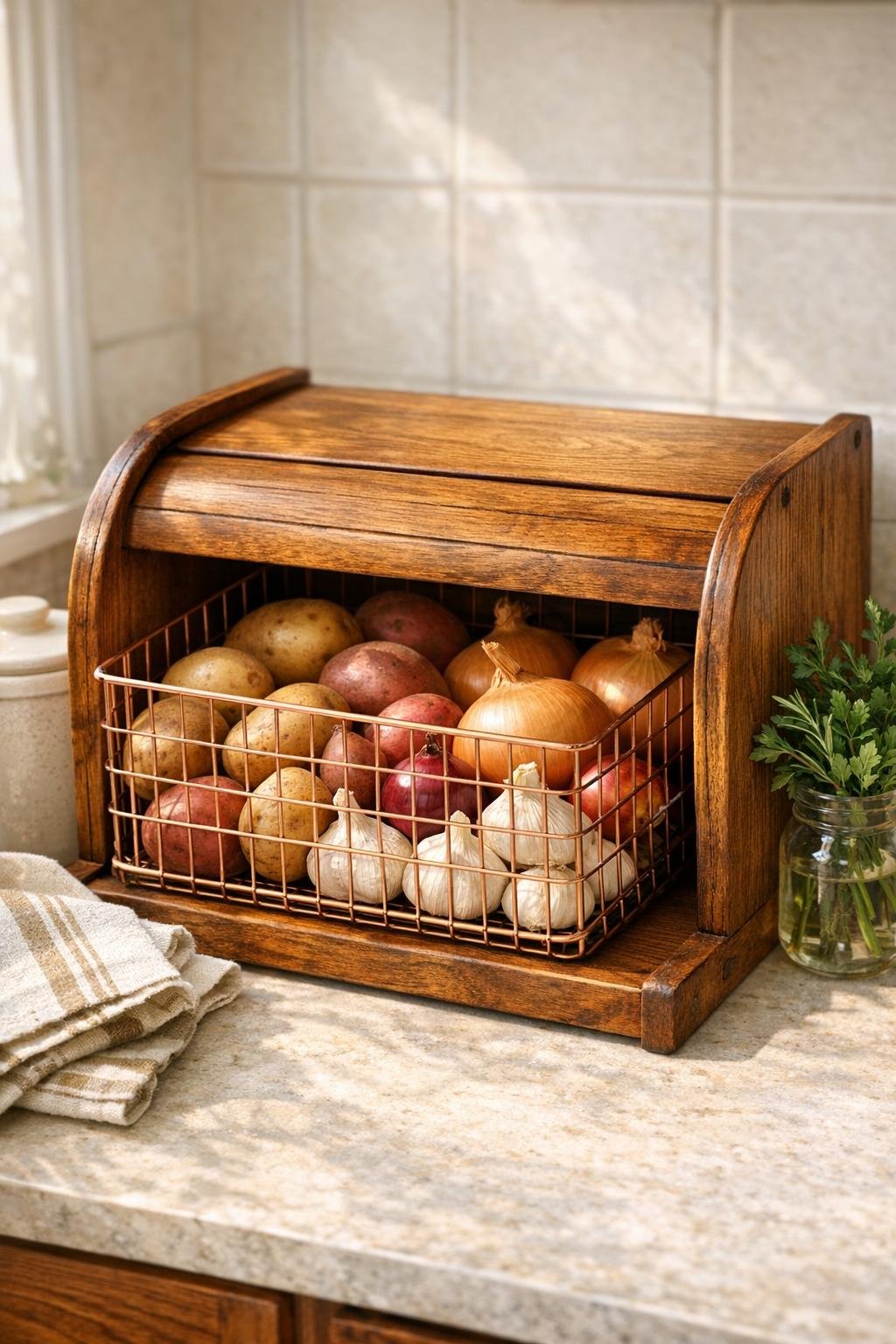
I love a kitchen project that solves a real-life problem without taking over the whole counter, and this little produce bin does exactly that. By removing the lid from a wooden bread box and sliding a small wire basket inside, you get a roomy, easy-to-reach spot for onions, potatoes, garlic, or snack fruit that looks warm and tidy instead of cluttered.
What makes this one especially worth doing is that it feels finished and intentional, not like a random basket shoved on a shelf. I’d make this for anyone who wants a prettier way to store produce in a family kitchen, especially if you like practical pieces that still add charm to your countertop.
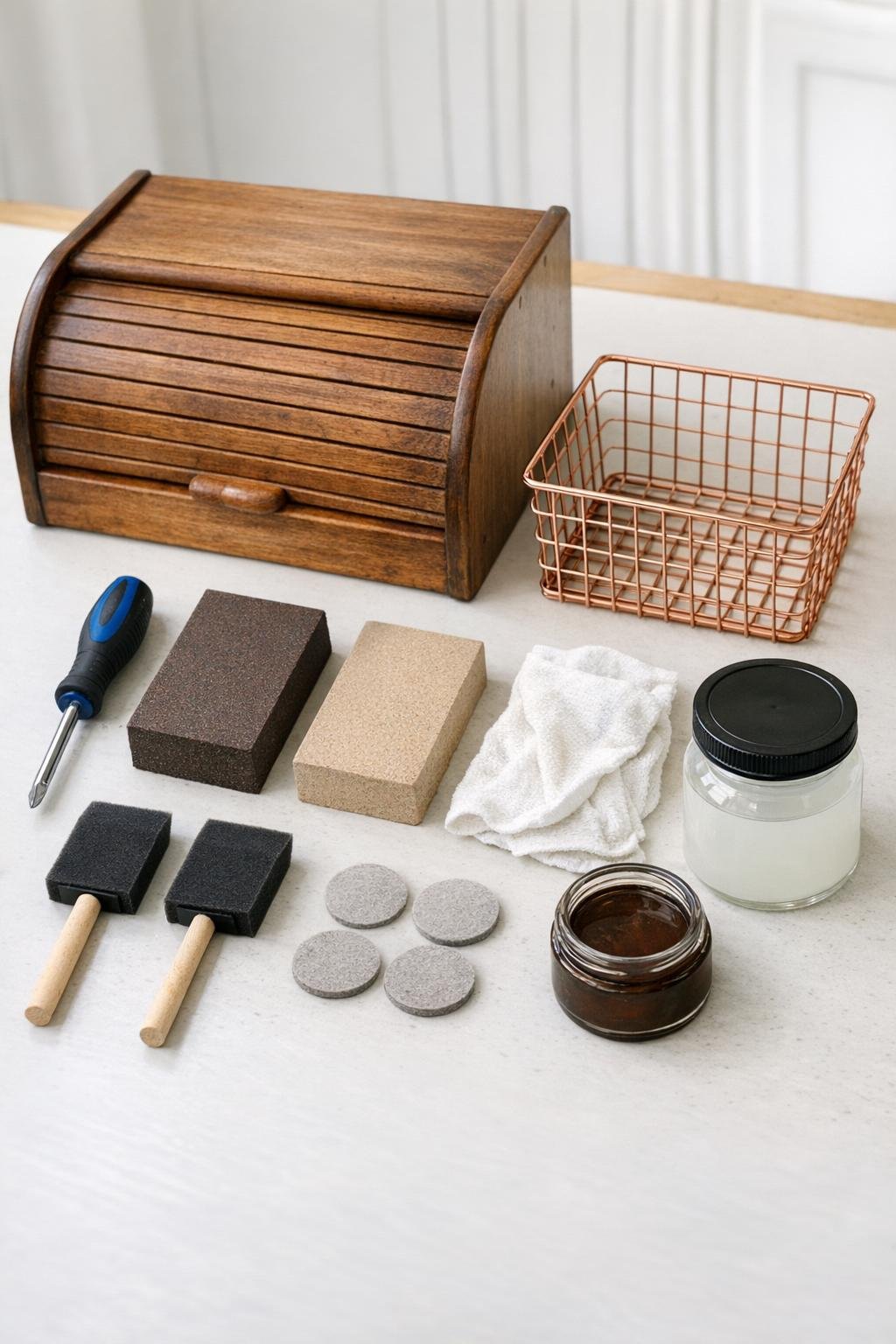
Materials
1 vintage wooden bread box, about 16 to 18 inches wide, 10 to 12 inches deep, and 8 to 10 inches tall
Instructions
1. Empty the bread box and test-fit the wire basket inside before changing anything; the basket should slide in easily with a little breathing room on the sides and front.
2. Remove the bread box lid by unscrewing the hardware or sliding out the hinge pins, then set the screws aside in case you want to reuse them later.
3. Wipe the entire bread box inside and out to remove crumbs, grease, and dust, then let it dry completely so the finish goes on smoothly.
4. Sand the cut or exposed lid edges first with 120 grit, then go over the whole exterior lightly with 220 grit to smooth the surface without stripping all the character.
5. If the bread box has any loose trim or joints, add a tiny bead of wood glue, clamp or press it in place, and let it set according to the glue instructions.
6. Apply a light coat of wood stain, conditioner, or furniture wax to even out the finish and bring warmth back to the wood, then buff off any extra after a few minutes.
7. Brush on a thin coat of matte or satin clear topcoat over the outside and the exposed top edges, keeping the inside base light so the basket still slides smoothly.
8. Let the topcoat dry fully, then add the felt pads to the bottom corners of the bread box so it won’t scratch your counter when loaded with produce.
9. Slide the copper wire basket into the bread box opening until it sits centered, with enough of the basket front exposed to grab and pull forward easily.
10. Fill the basket generously with produce that stores well at room temperature, like 3 to 4 pounds of potatoes, 2 pounds of onions, and 3 or 4 heads of garlic, keeping softer fruit separate if needed.
11. Place the finished produce bin on the countertop, pantry shelf, or coffee station area where you naturally reach for everyday ingredients and can still get good airflow around the basket.
Variations & Tips
For picky eaters: If your family grabs fruit more than onions, use this same setup for apples, oranges, or packaged snacks so the healthy choices are the first thing kids see.
Best basket fit: Look for a basket that fills most of the bread box opening without scraping; a snug-looking fit is prettier, but you still want enough room to slide it out for cleaning.
Keep produce fresher: Stick to dry goods like potatoes, onions, shallots, and garlic, and don’t overpack them so air can still move through the wire basket.
Finish choice: I like a matte or satin topcoat because it looks soft and homey in a family kitchen, while still making the wood easier to wipe down after busy dinners.
Easy cleaning: Lift out the basket once a week, shake out the papery bits, and wipe the bread box interior with a barely damp cloth to keep everything neat.
Style it nicely: A tiny crock of wooden spoons or a folded dish towel beside the bin makes it feel intentional, almost like a little produce station instead of basic storage.