
This little garden hack is one of those projects that feels almost too simple to work, and then you try it once and wonder why you ever wrestled with dull shovel edges the hard way. By soaking a gray cinder block and pairing it with two inexpensive dollar store basics, you can make a fast, mess-contained sharpening station that helps clean up and refresh the working edge on spades, hoes, and other garden tools right in the driveway.
I love projects like this because they fit real life: low cost, no power tools, and easy to pull together on a weeknight after work when the garden is looking a little tired at the end of the season. If you have a few hand tools that are crusted with soil and no longer cutting cleanly, this is a practical setup that gives them a noticeably better edge without turning tool maintenance into a whole weekend project.
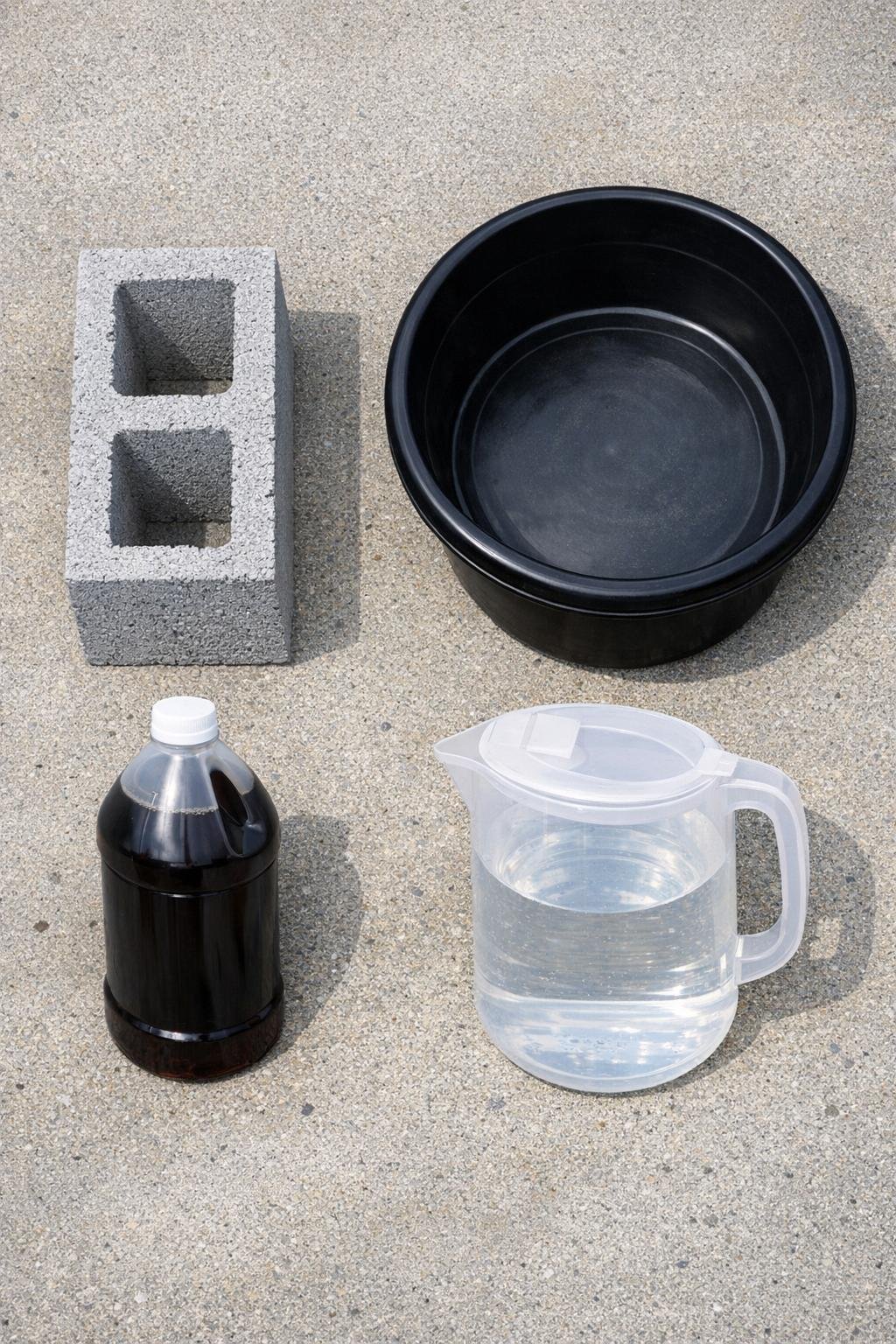
Materials
Instructions
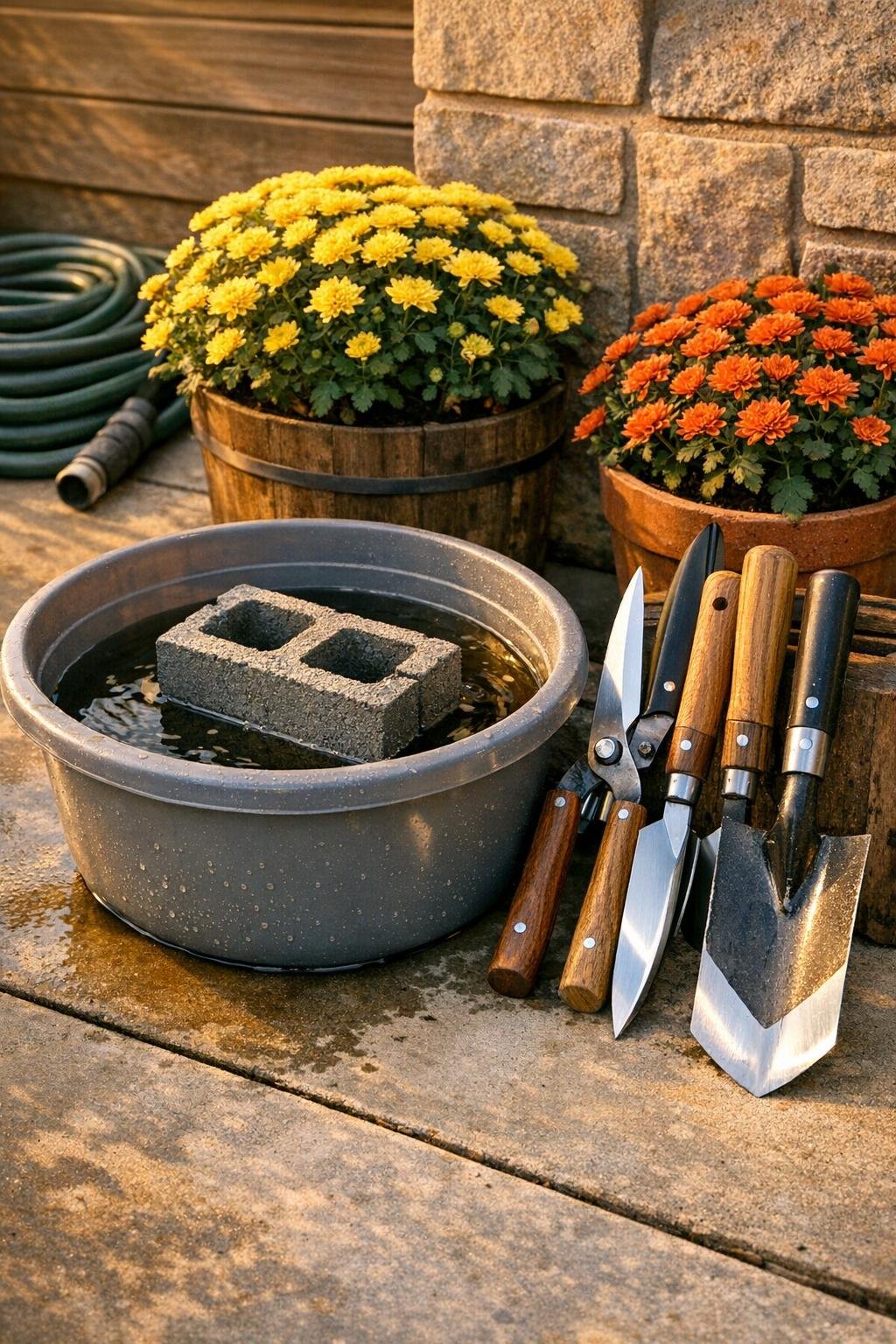
1. Set the plastic basin on a flat concrete surface outdoors, then place the gray cinder block inside it with the broad face up. Pour in the vinegar and enough water to fully submerge the block.
2. Let the block soak for 20 to 30 minutes so the pores fill with liquid and the surface becomes slightly softer and more effective for grinding and flushing away metal dust. Put on gloves while you wait and brush loose dirt off the tool edges you plan to sharpen.
3. Lift one tool and hold the beveled edge at roughly a 30- to 45-degree angle against the wet cinder block. Drag the blade across the gritty surface in one direction, using long, even strokes from heel to tip.
4. Make 10 to 15 passes on one side of the blade, then check the edge for a cleaner, brighter bevel. For heavily worn tools, repeat in sets of 10 passes until the edge looks even all the way across.
5. If the tool has a burr on the back side, give the flat side 2 or 3 light passes against the block to knock it off without creating a second bevel. Wipe the blade with a rag so you can see your progress clearly.
6. For hoes and edgers, work from one corner to the other and keep the original shape of the cutting edge rather than trying to make it knife-sharp. The goal is a crisp working edge that bites into soil and roots more easily.
7. Re-wet the top of the cinder block with some of the soaking liquid as you work so the surface stays slick and gritty instead of chalky and dry. Scrub off thick metal slurry with the stiff brush if the surface starts to clog.
8. Continue sharpening each garden tool one at a time, using steady pressure instead of force. Most average shovel and hoe edges need about 20 to 30 total passes to get back to a strong, usable finish.
9. Rinse or wipe each sharpened blade clean, then dry it thoroughly with a towel. If you normally oil your tools for storage, add a light coat after drying to help prevent rust over winter.
10. Empty the basin, rinse the cinder block, and let it dry completely before storing it for next season. Keep the basin and block together so your sharpening station is ready the next time your garden tools start feeling dull.
Variations & Tips
For very rusty tools: Let the blade sit against the wet block for a minute, then scrub first before sharpening; removing flaky rust helps the block cut the metal more evenly.
If you only have plain water: You can still use the soaked cinder block with water alone; the vinegar just helps loosen grime and keeps the slurry moving nicely across the surface.
Best tools for this method: I use this most for shovels, hoes, half-moon edgers, and mattock edges. It is not my first choice for fine pruners or precision hand tools that need a more refined sharpening stone.
Keep the angle consistent: The edge improves faster with moderate, repeatable strokes than with heavy pressure. When I rush after a long workday, I remind myself that consistency beats muscle every time.
Make cleanup easier: Set the basin near a hose before you start so rinsing the block and tools takes two minutes instead of becoming one more chore you put off until next weekend.
Add a storage habit: Once the tools are dry, hang them up or stand them indoors off bare soil. A freshly sharpened edge lasts longer when it is clean, dry, and not sitting outside in damp grass.