
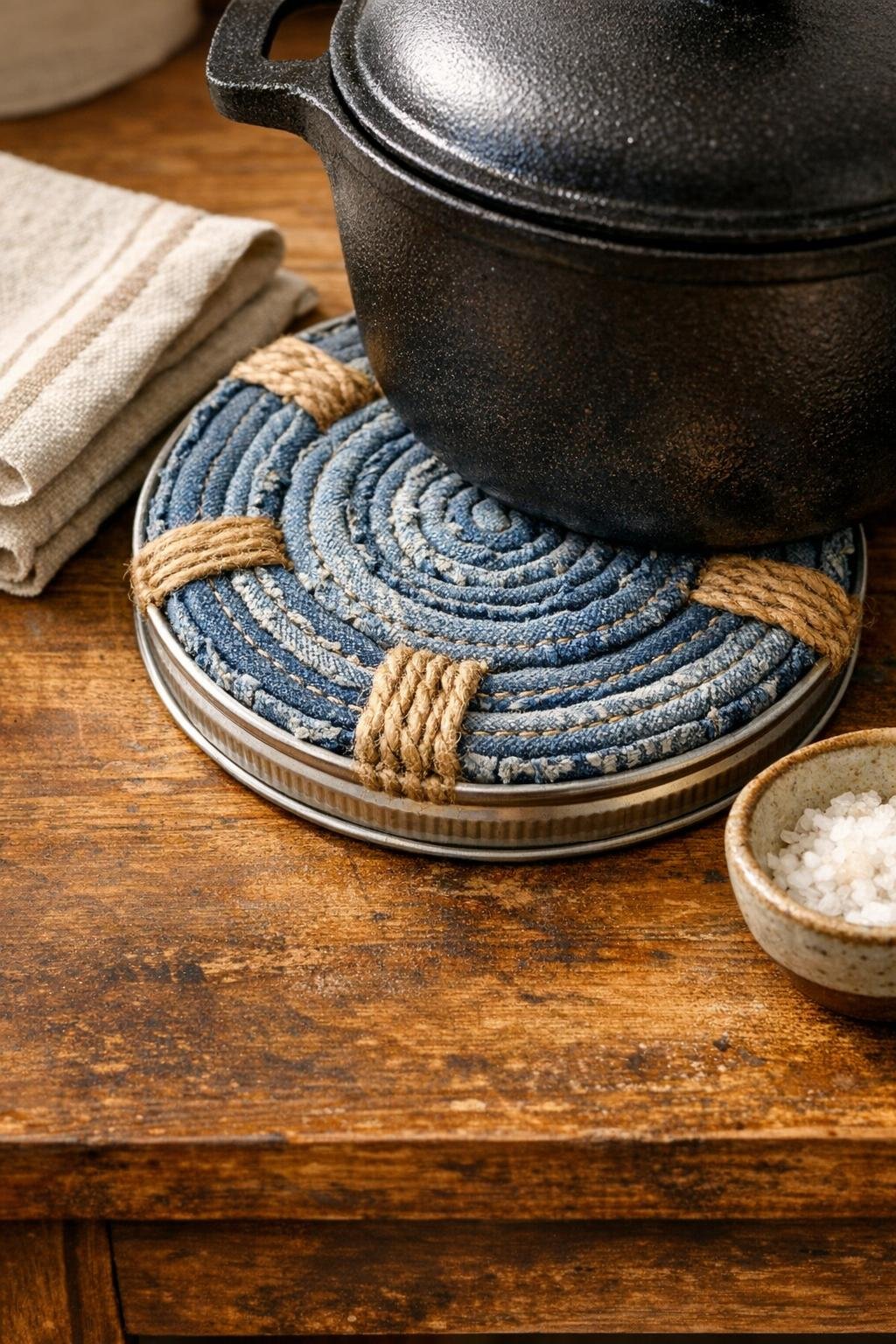
There’s something deeply satisfying about turning worn-out denim into something sturdy and useful, and this rolled jean trivet is one of those projects that looks far more special than the effort it takes. By wrapping faded jean strips around a metal jar lid and binding everything with simple dollar store twine, you get a thick, rustic trivet with beautiful texture, a soft blue palette, and enough substance to actually protect your table.
I love projects like this because they use humble materials in a practical way. If you’ve got an old pair of jeans with good fabric left in the legs, this is an easy afternoon make for beginners, thrift-minded crafters, or anyone who enjoys a handmade kitchen touch that feels both homey and polished.
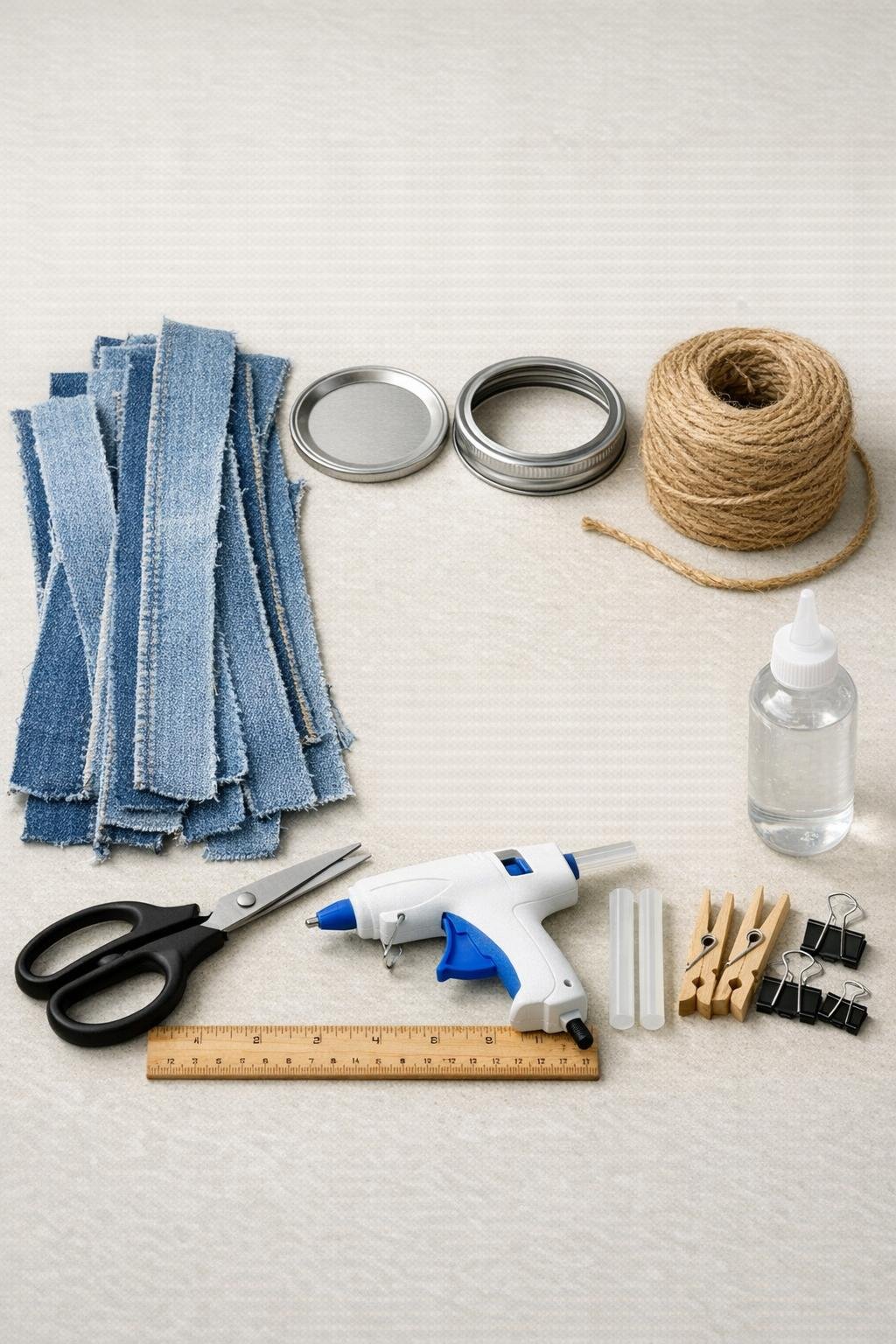
Materials
Instructions
1. Cut the denim from the jeans into long continuous strips about 1 inch wide, trimming away bulky seams and pocket layers so the strips stay flexible and coil smoothly.
2. If needed, join shorter denim strips by overlapping the ends by 1 inch and securing them with a thin line of hot glue so you have one long working strip at least 8 to 10 feet long.
3. Set the flat canning lid insert inside the metal ring and run a bead of hot glue around the edge to keep the two pieces from shifting while you wrap.
4. Fold the first 1 inch of the denim strip over the outer edge of the lid and glue it down firmly, then begin wrapping the strip snugly around the lid to cover the metal completely.
5. Add a dot of hot glue every 2 to 3 inches as you wrap, pulling the denim tight so the faded blue fabric lies flat and forms a smooth padded edge.
6. Once the lid is covered, continue rolling the denim strip around the outside of that wrapped center to build a larger flat spiral, adding small dots of hot glue between layers as you go.
7. After every full round, wrap jute twine tightly around the outer edge of the denim coil two or three times and knot or glue it at the back; this keeps the spiral compressed and creates the striped rustic look.
8. Keep alternating denim coiling and twine-wrapping until the trivet reaches about 7 to 8 inches across, which usually takes 5 to 6 full outer rounds beyond the lid.
9. Use binder clips or clothespins around the edge for 10 to 15 minutes if any section wants to spring loose, especially on the last two outer rounds.
10. Tuck the final 2 inches of denim under the last coil, trim away excess bulk, and glue it neatly at the back so the front stays round and clean.
11. Run a thin bead of fabric glue across the back of the entire spiral, especially where the twine crosses the denim, and let it dry fully to strengthen the trivet without making the front stiff or shiny.
12. Trim any frayed threads, press the trivet flat with your hands, and let it cure for at least 1 hour before setting a hot dish on it.
Variations & Tips
Use different jean tones: Mix light and dark denim strips from multiple pairs of jeans for a more striped, patchwork effect. I think this looks especially nice if your kitchen has a farmhouse or casual collected feel.
Make a larger hot-pad: Start with a wide-mouth canning lid and keep coiling until the piece reaches 9 inches across if you want something generous enough for Dutch ovens and larger serving bowls.
Choose softer denim sections: The best parts for this are usually the thigh and leg panels. I avoid heavy seams unless I want a more rugged, lumpy texture.
Swap the twine look: Cotton clothesline or soft macramé cord also works if you want a cleaner, slightly more finished edge than rustic jute gives.
Keep it flat: If the trivet starts cupping as you coil, loosen your tension slightly and press each round outward before gluing the next section. A flat shape matters more than an extra-tight wrap.
Add a backing: For delicate tabletops, glue a circle of thin cork or felt to the back once everything is dry. That little finishing touch makes the trivet feel more polished and protects wood surfaces beautifully.
Gift set idea: Make two or three in slightly different sizes and tie them with extra twine. As someone who spends plenty of time in the kitchen, I can tell you handmade trivets are the kind of useful gift people actually keep using.