
I love a project that feels a little bit like kitchen magic: humble ingredients go in, something far more luxurious comes out, and the trick is mostly in the technique. This one starts with a pile of old t-shirts that were headed for the donate bag and turns them into one long, stretchy “yarn” you make yourself with a spiral cut and a good hard pull. If you have never made t-shirt yarn before, that stretch-and-curl moment is the part that wins everybody over.
This is for anyone who wants a big, satisfying, no-tools-heavy project that can be finished in an afternoon. There are no knitting needles here, no sewing, and no expensive jumbo yarn to buy. The finished piece is weighty, soft, and wonderfully washable, which I appreciate as someone who likes handmade things to be lived with, not tiptoed around.
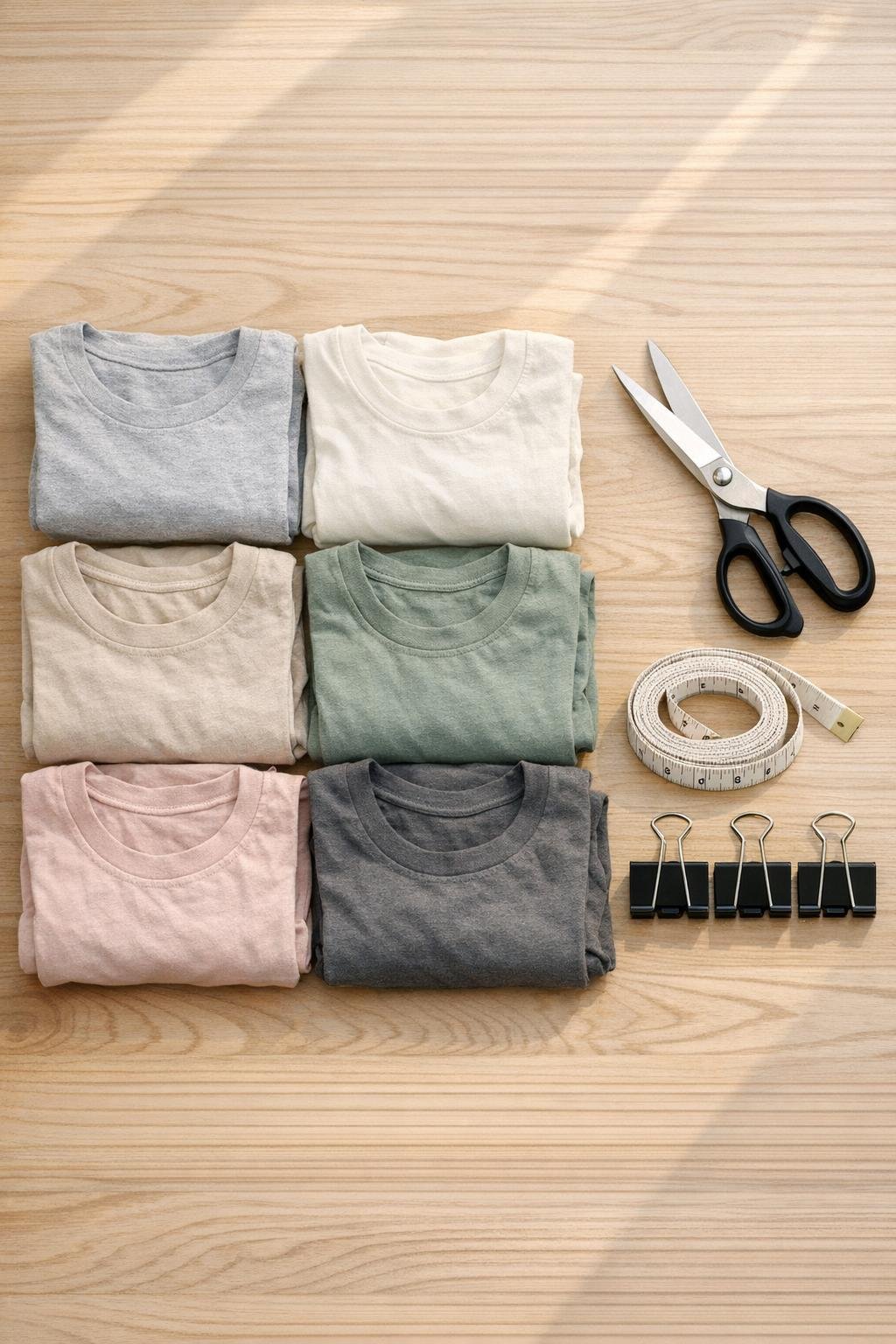
Materials
Instructions
1. Choose eight t-shirts with similar stretch and medium-weight knit; avoid thick side seams, collars with heavy embellishment, or shirts with brittle, cracked prints across most of the body. Wash and dry them first so the finished throw can later go straight into the washing machine without surprises.
2. Lay one shirt flat and smooth it well, then cut straight across the body just below the armpits to remove the sleeves and upper chest. Cut off the bottom hem too, so you are left with a clean tube of fabric.
3. Flatten that fabric tube with the side seams lined up, then starting at the bottom edge, cut around and around in a continuous spiral strip about 2 inches wide. Keep going in one unbroken path until the whole tube becomes one very long strip.
4. Grab one end of the strip and pull it firmly section by section until the cut edges curl inward and the flat strip transforms into a soft, rounded rope. That curling is the magic here, and it makes the yarn look surprisingly polished with almost no effort.
5. Repeat the same cut-and-stretch process with all eight shirts, keeping the strips in loose piles or clipped bundles so they do not tangle. You should end up with a generous amount of thick, drapey t-shirt yarn for a full throw.
6. Join two strips without sewing by cutting a 1-inch slit about 2 inches from the end of each strip. Slip the end of strip B through the slit in strip A, then pass the far end of strip B through its own slit and pull gently to tighten into a neat slit-and-loop knot.
7. Continue joining all the strips shirt to shirt until you have one very long continuous length. Keep the knots snug but not strained, and position them so they lie flat rather than bunching.
8. To cast on, leave a tail about 18 inches long and make 16 loops for a medium throw, or anywhere from 15 to 20 loops depending on how wide you want it. Slip those loops one by one onto one forearm, keeping them evenly loose so the blanket will drape instead of stiffen.
9. Knit the first row by taking the working yarn in your hand and pulling a new loop through the first loop on your forearm, then transferring that new loop to the other forearm. Repeat all the way across until every loop has moved to the opposite arm.
10. Work the next rows the same way, passing loops hand to hand and forearm to forearm. I will be honest: the first three rows feel like wrestling an octopus, and then all at once it clicks and becomes pleasantly rhythmic.
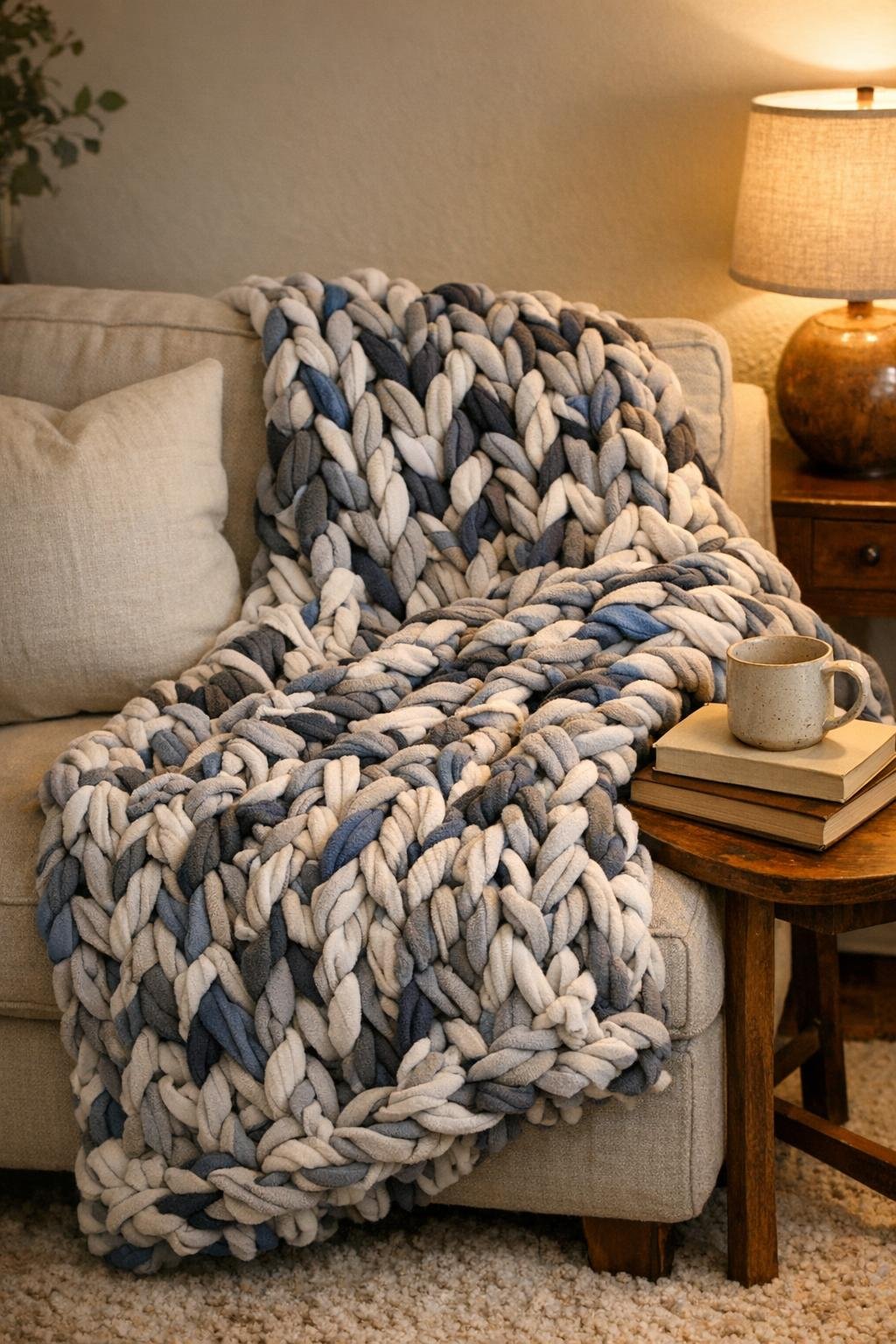
11. Continue until the throw measures about 48 by 60 inches, or stop sooner if you prefer a lap blanket; with eight large shirts, you will get a satisfyingly substantial piece rather than a skimpy sample. Once the motion clicks, the full throw usually takes about two hours.
12. Bind off by knitting the first two loops of a row as usual, then lifting the first loop over the second and off your arm; knit one more loop and repeat across. Cut the yarn leaving an 18-inch tail, pull it through the last loop to secure, then weave the tail and cast-on end through nearby stitches with your fingers and tug them flat.
Variations & Tips
Color planning: Sort shirts before cutting if you want a more intentional look. All heather grays and creams feel very modern, while alternating dark and light shirts gives you broad, subtle stripes without any extra work.
Best shirt type: Plain cotton jersey makes the nicest yarn because it stretches and curls cleanly. Very slippery rayon blends can sag more, and thick polos or heavy athletic shirts tend to make bulkier, less even strips.
If your strip breaks: Just treat the broken end like any other end and join it with the same slit-and-loop knot. Once the blanket is knitted, those joins disappear into the texture surprisingly well.
Width control: Fewer cast-on loops make a narrower, denser throw, while more loops make it wider and slightly airier. For most adult t-shirts, 16 to 18 loops is the sweet spot for a couch throw with nice presence.
Tension tip: Keep every loop about the same size and resist the urge to pull too tight, especially in the first rows. T-shirt yarn has weight, so even stitches matter more than firm stitches if you want that relaxed, expensive-looking drape.
Washing advantage: This is my favorite practical detail: it is literally made of t-shirts, so it can go right into the washing machine on a gentle cycle. Lay it flat or drape it over a drying rack to dry so the weight does not stretch it out.
Gift version: Make a smaller 36-by-48-inch lap throw from 5 or 6 shirts if you are short on material. Tie it with a wide cotton ribbon for gifting, and include a little note that it is machine washable.