
Pre-frost deep root watering is one of those old-school garden habits that looks almost too simple to matter, and then you try it and wonder why you didn’t do it years earlier. In this version, I’m turning short sections of white PVC pipe into sturdy watering spikes, then pairing them with one everyday yard item to keep leaves and mulch from clogging the opening. The result is a practical little system that sends water down where roots actually need it instead of letting it sit on the surface and evaporate.
I like this project for anyone growing shrubs, roses, tomatoes, peppers, hydrangeas, young trees, or any planting that benefits from deeper soaking before cold weather or during dry spells. It’s inexpensive, fast, and refreshingly no-nonsense—very much the gardening equivalent of a good stockpot meal in my kitchen: basic ingredients, smart method, excellent payoff.
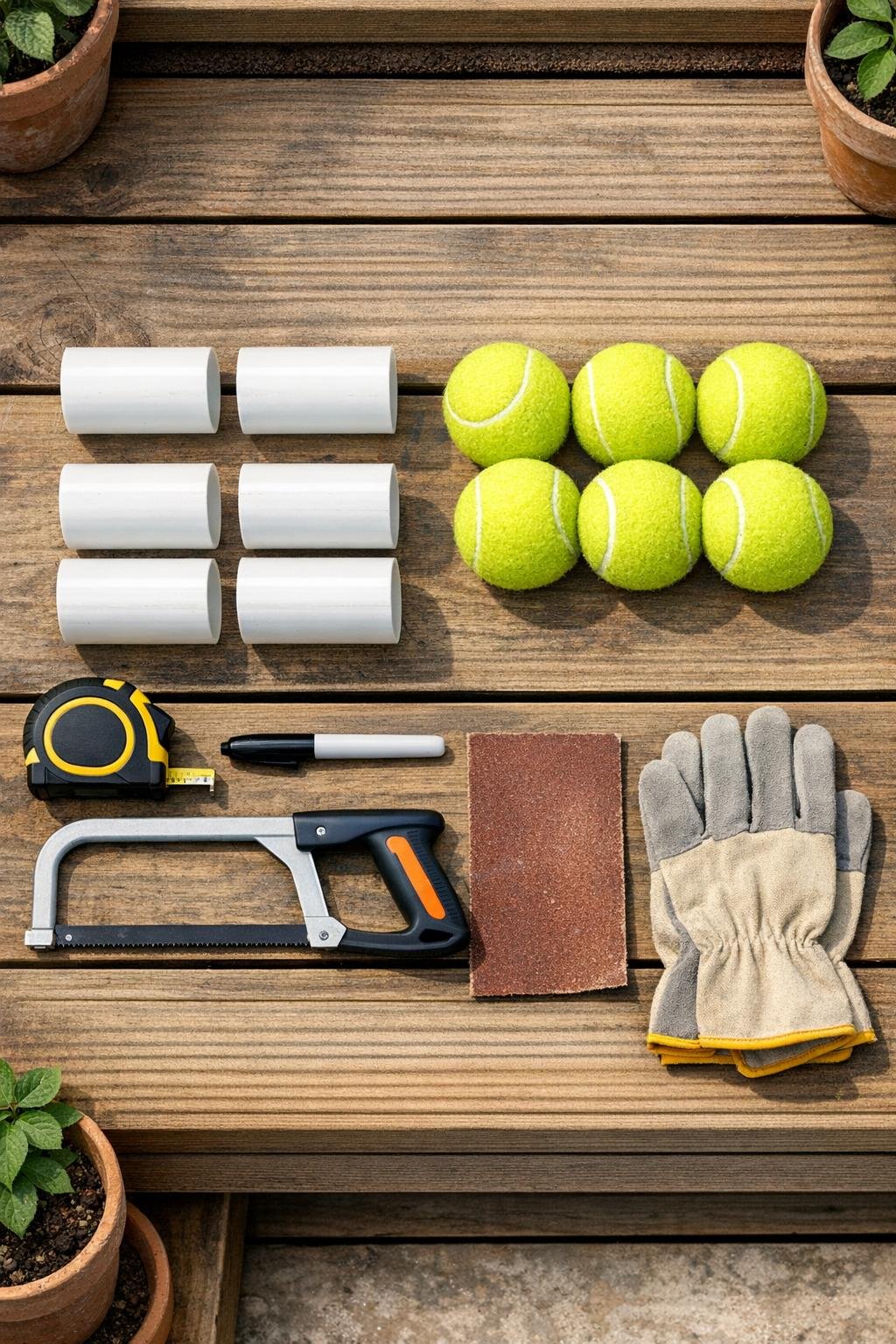
Materials
4 white PVC pipe sections, 2-inch diameter, each cut to 12 inches long
Instructions
1. Measure and mark the PVC into 12-inch sections if it is not already cut, then use the hacksaw to cut each piece straight across. These short lengths are long enough to reach below the top few inches of soil without being awkward to place.
2. Cut a shallow angle off the bottom end of each pipe section so one side comes to a gentle point. This beveled end helps the spike slide into the soil much more easily.
3. Smooth the freshly cut top and bottom edges with sandpaper until they feel blunt and even. Don’t skip this—clean edges are safer to handle and much kinder to your hands later.
4. Use the hacksaw to cut an X-shaped slit about 1 inch wide in each tennis ball. Keep the opening just large enough to push over the pipe snugly.
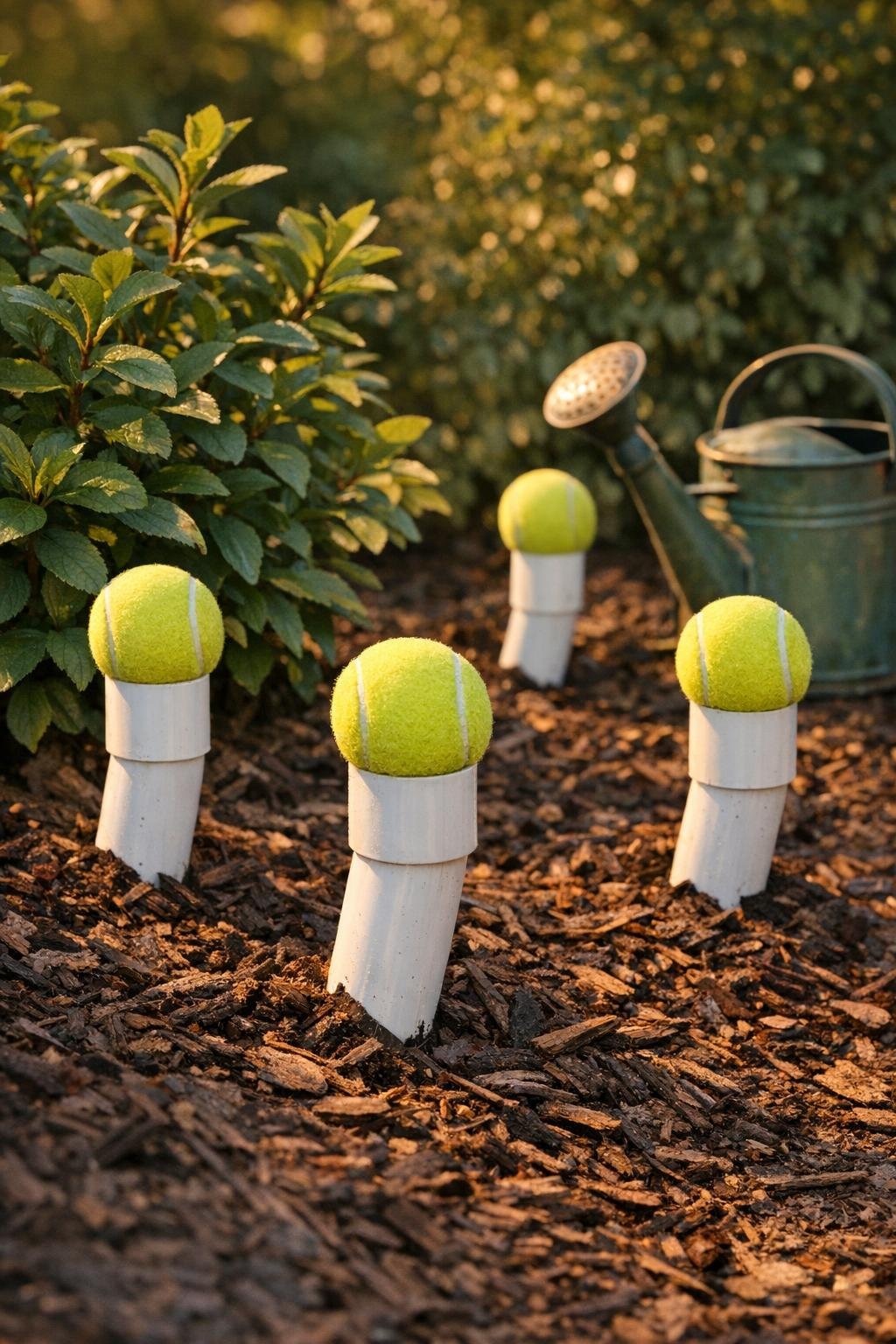
5. Press one tennis ball onto the top of each pipe section until it sits securely like a cap. This simple cover keeps mulch, leaves, and curious critters out while still letting you pull it off quickly when it’s time to water.
6. Push each spike into the soil 6 to 8 inches deep near the plant’s drip line, with the tennis-ball-capped top left 1 to 2 inches above the soil. For larger shrubs or young trees, place two spikes on opposite sides for broader deep watering.
7. Before frost or during a dry stretch, remove the tennis ball and slowly pour water directly into the pipe until the soil around the root zone is deeply soaked. Replace the cap after watering to keep the opening clear between uses.
Variations & Tips
For vegetable beds: Use one spike for every large tomato, pepper, or eggplant, placing it a few inches away from the stem so water moves outward through the root zone instead of pooling at the base.
For shrubs and roses: Two to four spikes spaced evenly around a larger plant give a much deeper, more balanced soak than a quick surface spray.
For tougher soil: If your ground is compacted, make a pilot hole first with a metal rod, broom handle, or scrap stake before inserting the PVC spike.
To improve visibility: If you want the spikes easier to spot in winter, add a band of outdoor paint near the top of the PVC or use bright new tennis balls so they don’t disappear into the mulch.
Best watering pace: Pour slowly rather than all at once. A gradual fill gives the water time to move outward into the surrounding soil instead of backing up the pipe.
Seasonal maintenance: Pull the spikes at the end of the season, rinse out any soil, and store them dry. They last beautifully, and this is the sort of humble garden trick that keeps earning its place year after year.